

On AI, creators, & cultures of experimentation: Cannes 2026

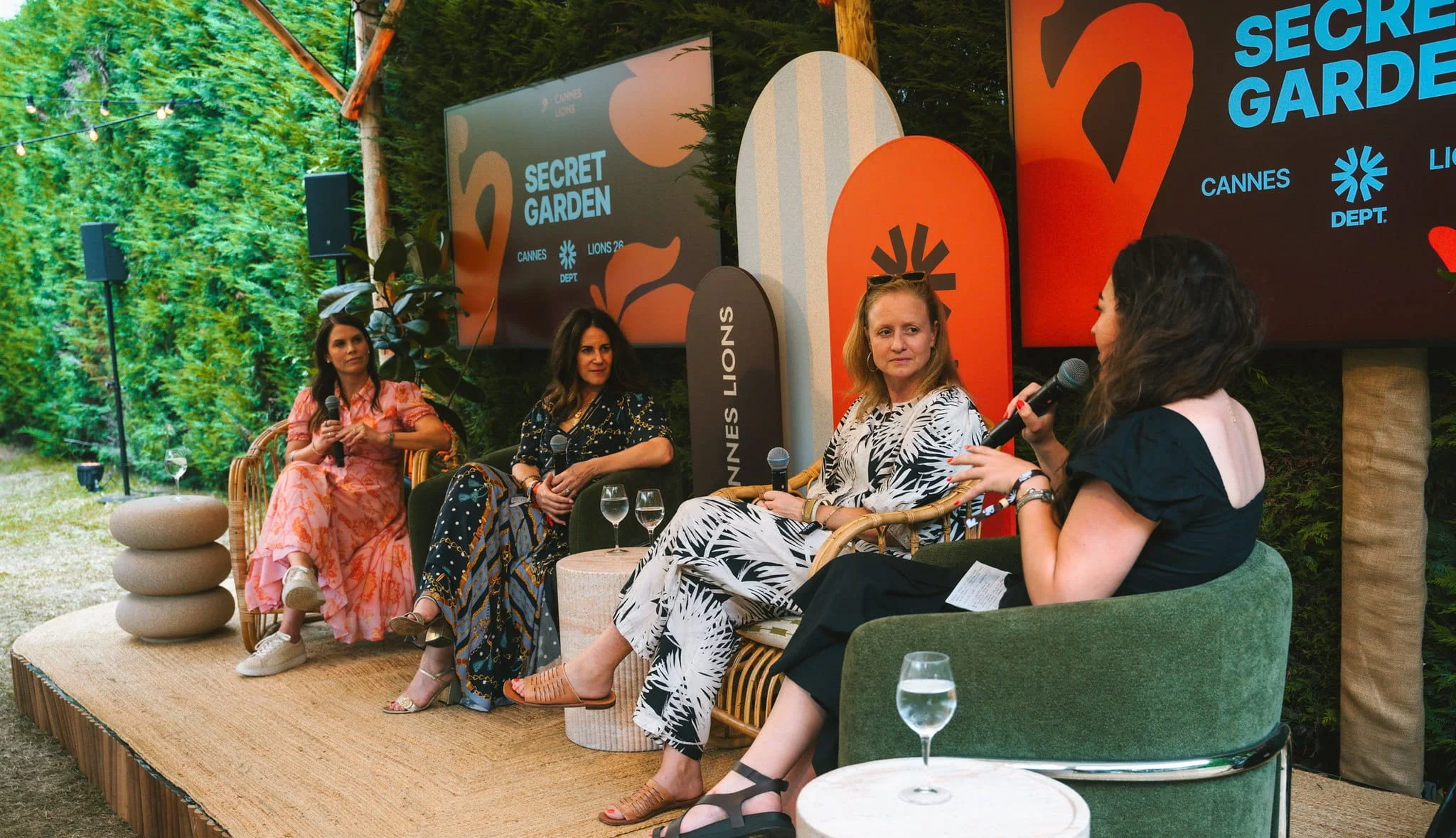
Cannes Lions is known for awards, creative celebration, yachts, rosé, and creative energy spilling out onto the Croisette.
But away from the main-stage noise and heat, DEPT® had its own corner of calm, the Secret Garden. Just off the Croisette, under the trees, it became a place to step out of the rush, cool down, and get into the conversations that Cannes is really for.
Because behind the glamour, the most interesting moments at Cannes were what leaders are trying to figure out next.
Over three days of panels, three core themes kept coming up.

When everyone can make more, humanity becomes the differentiator
Just because AI has made content easier to produce doesn’t make attention more valuable. It makes distinctiveness more valuable.
In Wednesday’s What Broke the Internet? panel, one line summed this up, “Craft is not the polish we expect it to be anymore.”
For a long time, brands have treated craft as perfection. The work had to be beautifully designed, tightly edited, retouched, and approved until every rough edge was smoothed out. But when AI can make things look polished in seconds, polish alone is no longer proof of quality.
In many cases, the rough edges are the proof.
They show that a human was involved. They give people something to recognize, react to, and believe in. That doesn’t mean brands should abandon standards or let chaos take over, but the old visual language of premium is changing.
The same applies to creators. On DEPT®’s You Can’t Brief Your Way Into Culture panel, former Bachelorette and creator Jenn Tran put it simply, “Trust your creators. Let them speak to their communities in the way only they can.”
AI can help with the logic of creator marketing, but it can’t replace the magic of empathy, timing, community fluency, and trust. That is why the best creator work is moving away from one-off activations and toward real relationships built over time.
It also changes how brands should test ideas. One of the strongest points from What Broke the Internet? was that a single social post can act like a focus group. For brands skeptical of taking risks, start small and test with a narrow audience. Watch engagement, read the sentiment, and learn from your community.
The recent Heinz example brings this to life. After it had to black-tape its logos at the World Cup, people started taking photos and sharing the absurdity. Heinz posted about it on social, saw the reaction, and turned the moment into a broader campaign.
AI is moving from tool to teammate
For a while now, marketers have been talking about AI as something you “use.”
But at Cannes, the conversations were about what happens when AI starts becoming part of the environment around us.
On DEPT®’s panel with Fortune, Lessons from the most innovative CMOs: Rethinking growth in a B2A world, one panelist shared a habit that captured this shift perfectly. They described wearing a small microphone around the office, letting an unconscious stream of thoughts flow into Codex so they could better understand what they could improve, where their teams could improve, and where to move next.
The takeaway being that voice is the way forward.
Panel host Kamal Ahmed of Fortune connected this to a recent conversation with SAP CEO Christian Klein, who challenged leaders to imagine an office without keyboards, where people constantly interact with AI via voice.
More than just a shift to a new interface, this idea changes the role AI plays in the workday.
Instead of being something we turn to when we need help completing a task, AI becomes a constant collaborator, capturing loose thoughts, shaping ideas as they emerge, and helping teams move from intention to action faster. In a B2A (Business-to-agent) world, where customer journeys are filtered and influenced by AI before a person ever gets involved, that matters.
AI transformation can’t live on the side of someone’s desk
Antonia Wade of PwC put it bluntly. If organizations want people to change how they work, they have to stop asking them to find time for transformation on top of everything else.
Most companies say AI is a priority. Then they ask already-stretched teams to experiment with it between meetings, client work, reporting cycles, and quarterly targets. The result is scattered pilots, uneven adoption, and a lot of pressure on individuals to figure it out on their own.
PwC is taking a different approach. Antonia described a new model that her teams will implement, in which she encourages everyone to spend 20% of their time helping another team succeed. Four days a week, you do your job. One day a week, you help build the conditions for everyone else to do their jobs better.
The same logic applies to leadership. Antonia argued that leaders need to be clearer about the destination and less controlling about the route. AKA set the outcome, give teams room to experiment, and let new workflows emerge.
Right now, the “correct” process probably doesn’t exist. Teams are still discovering it.



Using technology to become more human at scale
As we depart Cannes 2026, we’re leaving with a renewed vision for building organizations with AI and giving teams enough space to experiment with new models. And we’re remembering that in a world where anything can be generated, copied, optimized, and distributed instantly, the things that travel furthest are still the hardest to fake: taste, trust, timing, relationships, and a real point of view.
As Cannes 2026 fades away, the test is whether you can turn the promise of AI into better systems, sharper ideas, and more meaningful relationships with the people you’re trying to reach.