How today’s top CMOs are putting AI to work: Lessons from Cannes 2026

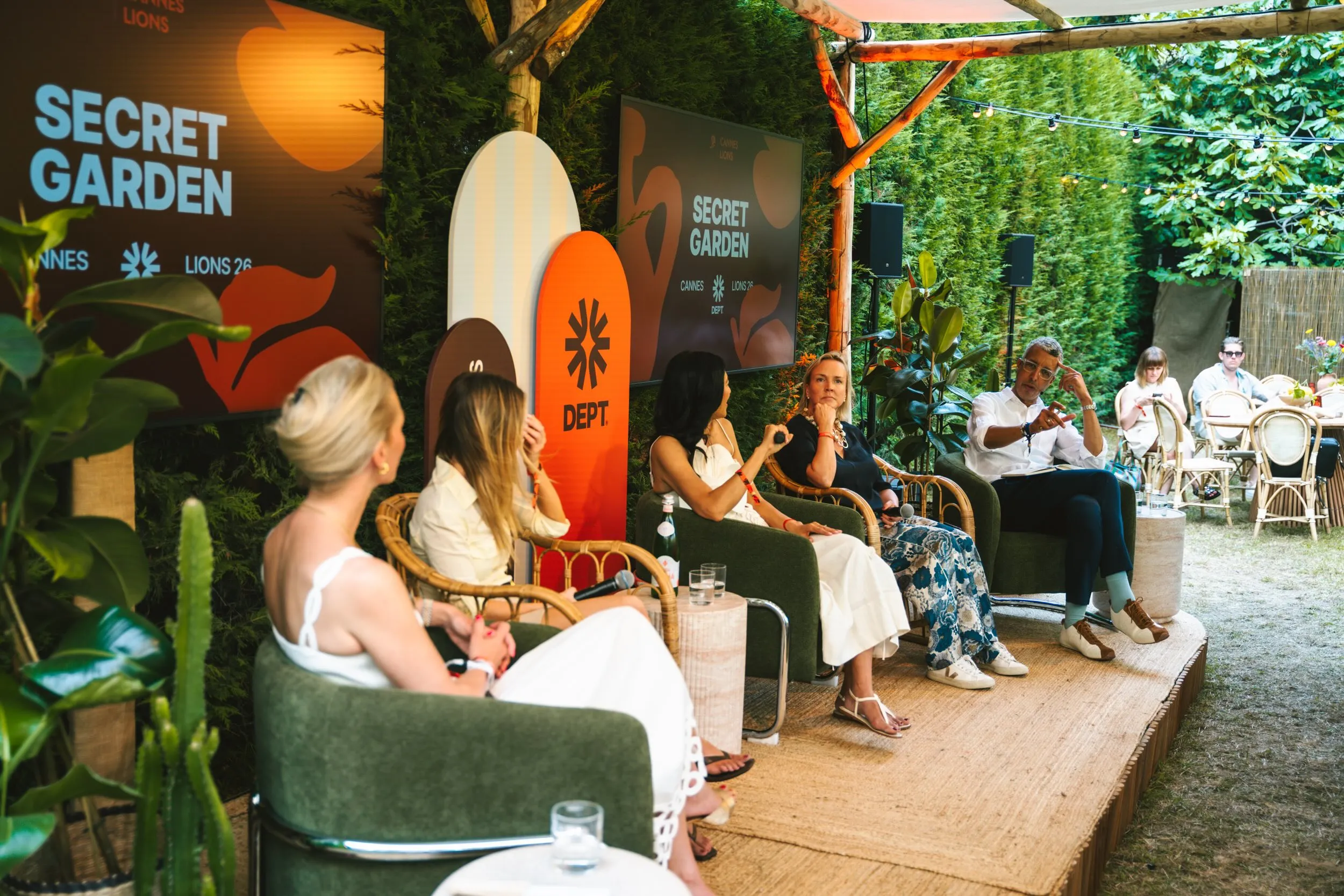
Artificial intelligence dominated the conversation at Cannes Lions this year.
Amid the chatter about where AI is headed, how it’s being operationalized, and what a business-to-agent world will look like, we also wanted to hear how some of the people building and leading with it are approaching it within their own organizations.
So we brought together leaders from Spotify, Snap, PwC, and more, alongside Fortune’s Kamal Ahmed, for a conversation about how AI is changing the way they work, lead teams, and build products. The discussion was full of practical examples—from wearing a microphone to capture ideas throughout the day to giving employees dedicated experimentation time—that offered a candid look inside how these leaders are adapting their own businesses.
Here are five ideas that stood out.
The most important thinking happens away from the keyboard
When asked where marketers should begin with AI, one panelist’s advice wasn’t to start with the technology but with curiosity. Ask where your organization could work better. For example, which teams are moving too slowly or which workflows aren’t delivering the quality you want? Then use AI to help explore those questions.
As an example, she shared a habit she’d only recently adopted: wearing a small microphone clipped to her shirt throughout the day so she can capture a continuous stream of observations, questions, and ideas in Codex. She then uses AI to help spot patterns, reflect on what she and her teams could do better, and identify where to focus next.
Panel host Kamal Ahmed connected that idea to a recent conversation with SAP CEO Christian Klein.
“We’ve all got to consider an office without keyboards… That’s the kind of disruptive change people may not be thinking about substantially enough.”
Taken together, their comments pointed to a future where AI isn’t something you stop to use, but something that’s continuously present throughout the workday. Voice may become a much more natural way to capture ideas, challenge assumptions, and shape work as it happens.
Set a destination, not every step
Asked how leaders should navigate such a significant period of AI-driven change, CMO of PwC Antonia Wade emphasized that some fundamentals of leadership remain the same: being transparent about what’s changing, supporting people through it, and setting a clear, compelling vision. What’s different, she said, is how much control leaders should have over the process.
Rather than prescribing exactly how work gets done, she believes leaders should give teams the freedom to experiment while staying aligned on the outcome.
“Create a vision and don’t really mind how people get there. Say, ‘We’re all going to meet in Barbados in a year. I don’t care how you get there—you can fly, take a boat, go via China.’ Be less controlling about the process, because that’s where the experimentation happens. Be clear about the outcome you want to achieve.”
It’s a practical leadership shift for organizations adopting AI. Rather than expecting teams to follow a predefined workflow, leaders can create more room for experimentation by aligning people around a shared destination and letting new ways of working emerge along the way.
“As we’re moving into a fully agentic marketing organization, we’ve really started with what are the outcomes and then let’s work back from that into the processes.”
Make transformation part of the job
Wade also shared how PwC is putting those leadership principles into practice. Rather than expecting employees to fit AI experimentation around their existing workload, the company is creating dedicated space for transformation.
“We’ve created enough work this financial year to cover us for a few months, so we can genuinely go all in on the transformation journey. Otherwise, it always feels like side-of-the-desk work.”
She also described how PwC is changing the way teams work together, borrowing a phrase from NASA: “Everybody’s job is to not let this fail.” To reinforce that mindset, she is encouraging employees on her team to spend about 20% of their time helping another team succeed.
“Four days a week you do your job, and one day a week you’re all-in on transformation and creating an environment where everybody in PwC can be more successful.”
Overall, her message was that if transformation is treated as something employees squeeze in between meetings, it rarely happens. By creating dedicated capacity and making cross-functional collaboration an incentivized part of the job itself, organizations have a much better chance of turning experimentation into lasting change.
Design for AI-native customers
While many AI discussions focus on helping people adopt new technology, Snap CMO Grace Kao offered a different perspective. The customers she’s focused on marketing to aren’t facing the AI adoption hurdle because they’re already AI natives.
Drawing on her own experience as a parent, she pointed out that today’s kids and teenagers are growing up in a world where AI is a normal extension of their digital world. For them, interacting with AI doesn’t feel novel, as it’s increasingly just a part of everyday life.
“I have a 15-year-old and a 17-year-old. They’re living through the generation where AI has now been invented. This next generation of customers is going to be AI natives. That operating system is very, very real. AI is just going to be seamlessly part of the world.”
While many organizations are focused on introducing customers to AI-powered experiences, the next generation will expect them. As brands think about future products, services, and customer journeys, those expectations may become just as important as the technology itself.
Keep acting like a challenger
Spotify may be celebrating its 20th anniversary this year, but Global Head of Business Marketing Bridget Evans said she still encourages her team to think and operate like a challenger brand. Staying curious, moving quickly, and constantly testing ideas are what keep the company (and herself) creative, even as the app becomes a household name.
“I still think of us as an underdog and a challenger brand. That mentality pushes more creativity… Rather than taking the stance that we’re this big company that’s been around for 20 years, it’s still a continuous testing, testing, testing challenger brand model.”
She believes AI augments that mindset by making experimentation faster and easier. Rather than simply pitching new ideas, marketing teams can now quickly build prototypes, explore possibilities, and contribute much earlier in the product development process.
“Marketing, now with the help of AI, is getting much more involved in product. We can code a mock—not to launch—but to bring an idea to life. We can actually show something in the meeting rather than pitch the idea in words.”
By reducing the effort needed to test and communicate ideas, AI allows Evans and her team to experiment more often, contribute earlier, and maintain the curiosity that often defines challenger brands.
“I think people feel quite empowered that they can put something forth using AI and potentially either see it in the app or see it as some sort of product that we can ultimately offer to the brands and advertisers we’re serving.”
The conversation continues
One of the best parts of Cannes Lions is hearing how leaders are approaching change in real time, both where they think we’re headed and what they’re already doing differently. We hope these ideas spark a few conversations in your own organization.
This conversation was just one of many that took place in the DEPT® Secret Garden throughout Cannes Lions. We’ll be sharing more of the ideas, conversations, and perspectives that stood out over the coming weeks, along with opportunities to join us at future DEPT® events throughout the year.