
The World Cup campaigns we paid attention to this summer (and why)

If you spent any time watching the 2026 World Cup, you probably found it easy to ignore most of the sponsorships.
Paying millions to slap a logo on a stadium barrier isn’t the flex it used to be.
The campaigns that actually broke through this summer succeeded because they stopped treating fans as passive targets and started treating them as people with real, practical problems.
Instead of trying to inspire us with generic messaging, the smartest brands made themselves useful, with moments built for capture.
Solving the midday match crisis
Stella Artois realized that most weekday matches conflicted directly with North American working hours. They created “Work From Bar,” putting up a $100,000 fund to reimburse midday beers as “expenses” and building a fully equipped co-working space inside a Manhattan sports bar. It worked because it tapped into a funny, relatable truth about trying to hide from your boss to watch a match.
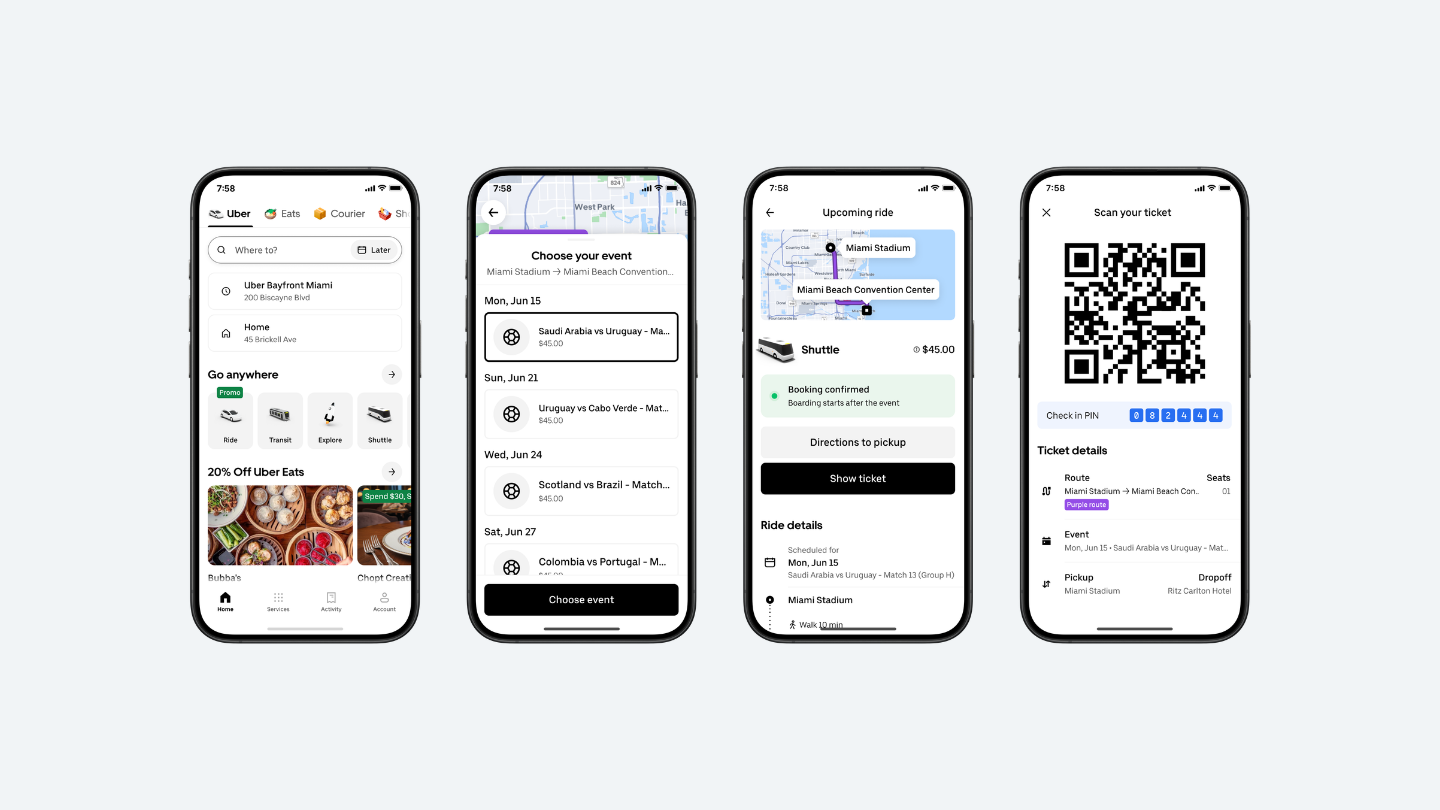
Image courtesy of Uber
Uber took a similar approach by tackling the absolute nightmare of leaving a stadium. They introduced flat-rate, surge-free stadium shuttles and group-sized vans. By tackling real transit friction at the exact moment of peak frustration, they earned genuine customer appreciation.
Scrapping the global copy-paste template
We also saw the limits of the one-size-fits-all global campaign.
Coca-Cola customized all sixteen of their fan zones across North America’s host cities. In Miami, the activations featured Latin-infused music and local street food. In Vancouver, they brought in coastal food trucks and local art. It required a massive operational effort, but it showed an understanding of regional identity that a standardized corporate campaign can’t match.
Designing for the camera
If you want people to share your on-the-ground activations, you have to design them to be captured.
Adidas floated a massive barge down New York’s East River with a giant statue of Lamine Yamal. Around the same time, SportChek set up Canada’s first floating futsal pitch in Toronto’s Harbourfront.
More than traditional billboards, they were visually arresting spaces that naturally compelled people to pull out their phones and share them on social media.
Participating in the banter
Building trust in 2026 is showing up like a fan, not whether you’re perfectly polished.
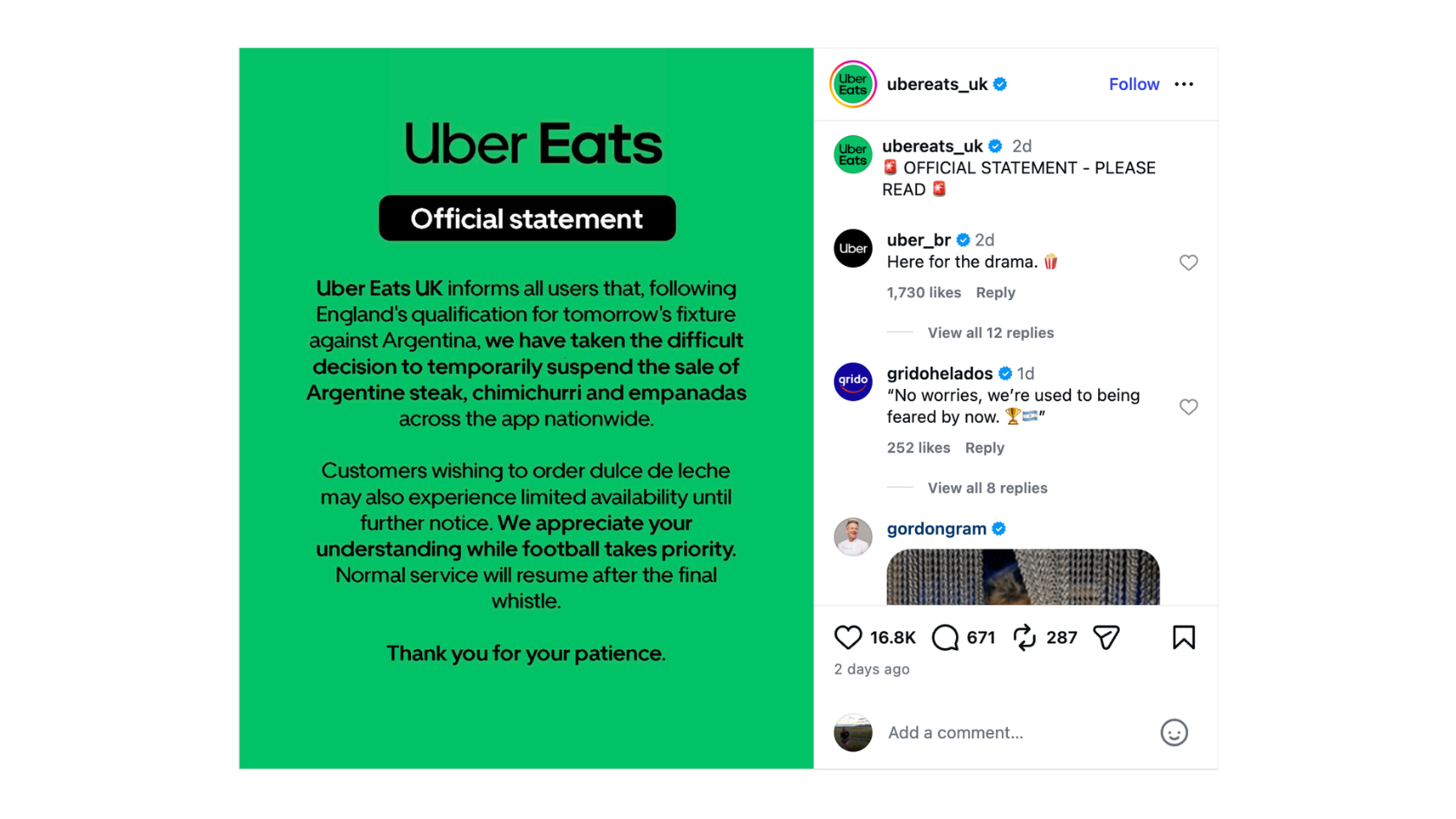
During the England vs. Argentina match, Uber Eats UK joked that they were temporarily banning the sale of Argentine steak and empanadas on the app. The banter quickly went viral, pulling in Uber’s South American teams and celebrity chefs. It worked because it felt slightly chaotic and natively understood the playful tribalism of soccer fandom.
What you can take away from all of this
Looking closely at these campaigns, you can pull out three practical lessons for your brand planning a major launch.
1. Make yourself genuinely useful
Before you build a campaign, find a real-life inconvenience your audience deals with and solve it. If you make someone’s day a little easier—whether that’s helping them sneak away from work or avoiding a surge price—they’ll naturally pay attention.
2. Build things people naturally want to share
An on-the-ground setup shouldn’t need a forced hashtag to get traction. It should be visually interesting enough that people instantly want to photograph it. If your activation doesn’t look great through a phone camera, it won’t travel far on social media.
3. Ditch the global copy-paste playbook
Your audience isn’t a single, massive demographic. Treating them like one is a quick way to get ignored. It takes more work to customize your campaigns for local communities, but that extra effort is what makes a massive brand feel personal.
A great activation doesn’t require a massive budget or a sweeping, high-concept strategy. It really just comes down to being a decent guest at the party.
If your brand can make the audience laugh, solve a minor daily headache, or give them a cool visual to share, you’re already doing better than the vast majority of traditional sponsors. The next time you’re planning a major brand campaign, skip the logo-slapping and focus on how you can actually show up for the people you’re trying to reach.