
Adobe Summit 2026 showed what’s next — Now comes the work of getting ready


Adobe Summit 2026 made one thing clear…
Adobe is pushing hard toward a more agentic future for customer experience.
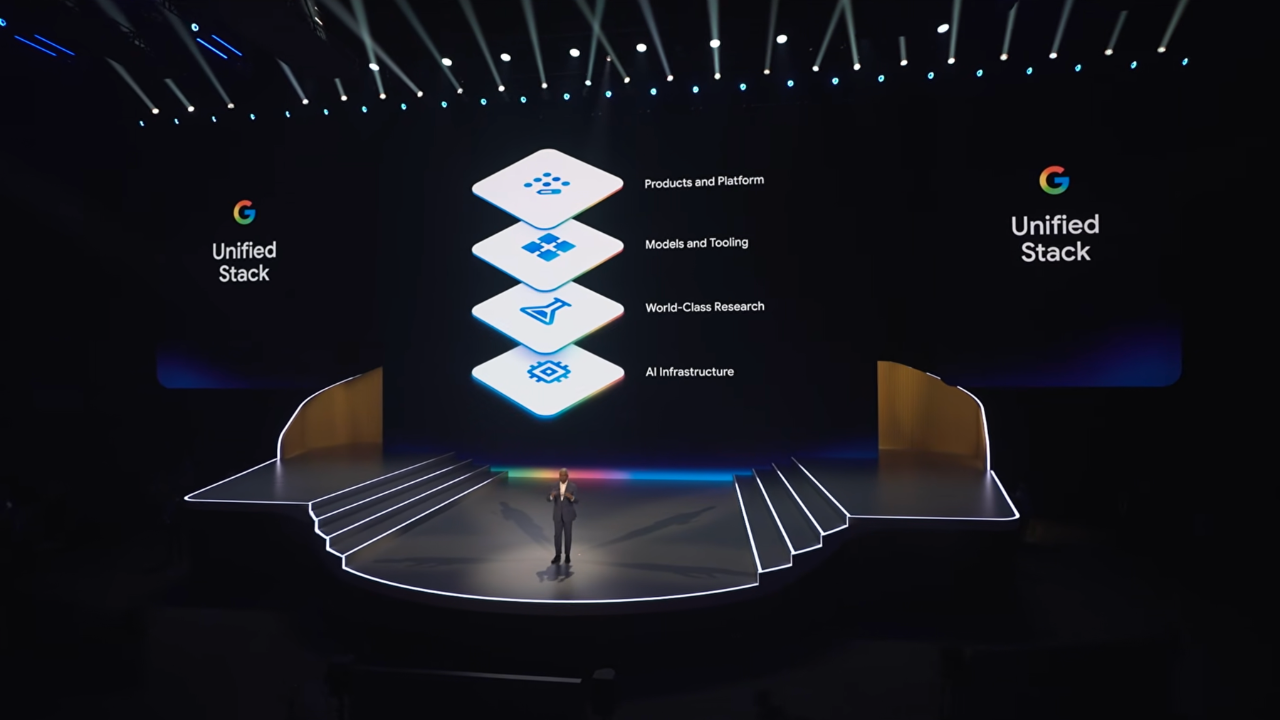
Across the keynote stage, the message was bigger than a product update. Adobe’s direction is toward a more connected system — one in which content, journeys, decisioning, brand governance, and optimization work together intelligently, with AI playing a more active role across the whole stack.
It’s a compelling vision, but only if your current implementation is positioned to benefit from it.
If your content workflows are still slow, your data is difficult to activate, governance is inconsistent, or adoption has stalled inside the business, then the next wave of capability will not automatically create value. It will put pressure on the parts of the system that are already underperforming.
The gap worth paying attention to isn’t hype versus reality, but the chasm between what Adobe is making possible and what many businesses are currently set up to use.
What Adobe put on stage
Adobe Summit 2026 focused on a specific future state where AI goes beyond supporting marketing work to helping run it end-to-end.
Through announcements like Adobe CX Enterprise, CX Enterprise Coworker, expanded GenStudio capabilities, Brand Intelligence, and a new brand visibility solution, Adobe showed us that customer experience is moving toward a more connected model, where content, journeys, decisioning, and optimization operate less like separate functions and more like parts of a single system.
The significant shift in Adobe’s vision of the future comes down to scale and orchestration.
Content creation, personalization, brand governance, and performance are no longer treated as separate motions. They are tied together through workflows that can span systems, leverage context, and keep activity aligned with both business goals and brand standards. Adobe even extended that logic to the evolving discovery landscape, with a brand visibility solution designed to help companies appear accurately across AI interfaces.
Just as important was Adobe’s view of brand. With Brand Intelligence, it moved beyond static guidelines toward a dynamic system that learns from feedback, approvals, annotations, and the messy judgment calls that usually live in people’s heads.
Adobe is shifting from content velocity to connected systems by bringing brand, content, and customer experience into closer alignment.
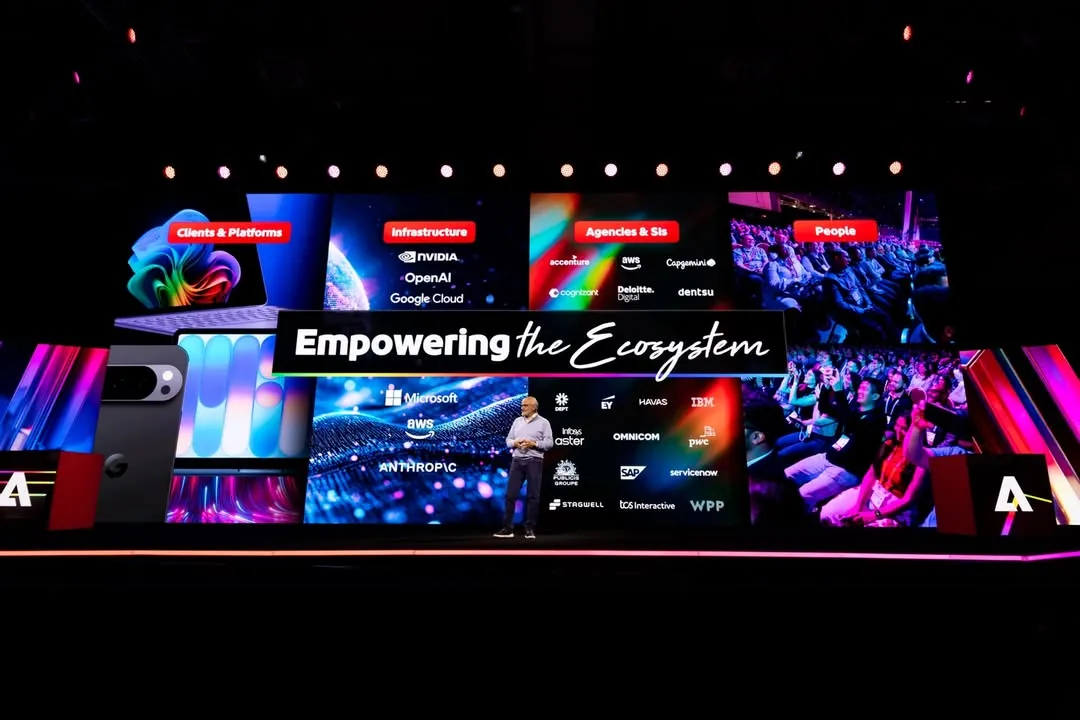
Five things worth paying attention to from the stage
Adobe CX Enterprise
Adobe’s umbrella announcement for an end-to-end, agentic approach to customer lifecycle orchestration.
(Learn more)
CX Enterprise Coworker
A layer intended to connect fragmented systems, data, and content into goal-based workflows.
(Learn more)
Brand Intelligence
The most interesting strategic move: evolving brand guidance from a static rulebook into a learning system shaped by real creative decisions.
(Learn more)
Brand visibility across AI discovery surfaces
A signal that Adobe is thinking beyond owned channels and into how companies appear in AI-mediated discovery.
(Learn more)
GenStudio
Adobe’s push toward a more connected content supply chain, from planning through activation and reporting.
(Learn more about DEPT’s new solution)
Left image courtesy of PIX PRODUCTIONS
Moving from vision to reality
Adobe’s direction is exciting, and it’s easy to understand why it’s moving this way. Executing against this direction will be the challenging part.
Most organizations aren’t starting from a clean slate. They’re working with layered systems, partial implementations, and workflows that evolved over time rather than being designed end-to-end.
Disparate teams create content in silos, with limited visibility into how it gets used or how it performs. Data exists, but isn’t structured or accessible in a way that supports real-time decisioning. Governance is inconsistent—strong in some areas, absent in others. And ownership is rarely clear, especially when work spans multiple teams, regions, and platforms.
Unfortunately, these set-ups are all too common. And while each issue is typically manageable individually, together, they slow everything down from handoffs to approvals to activation and measurement.
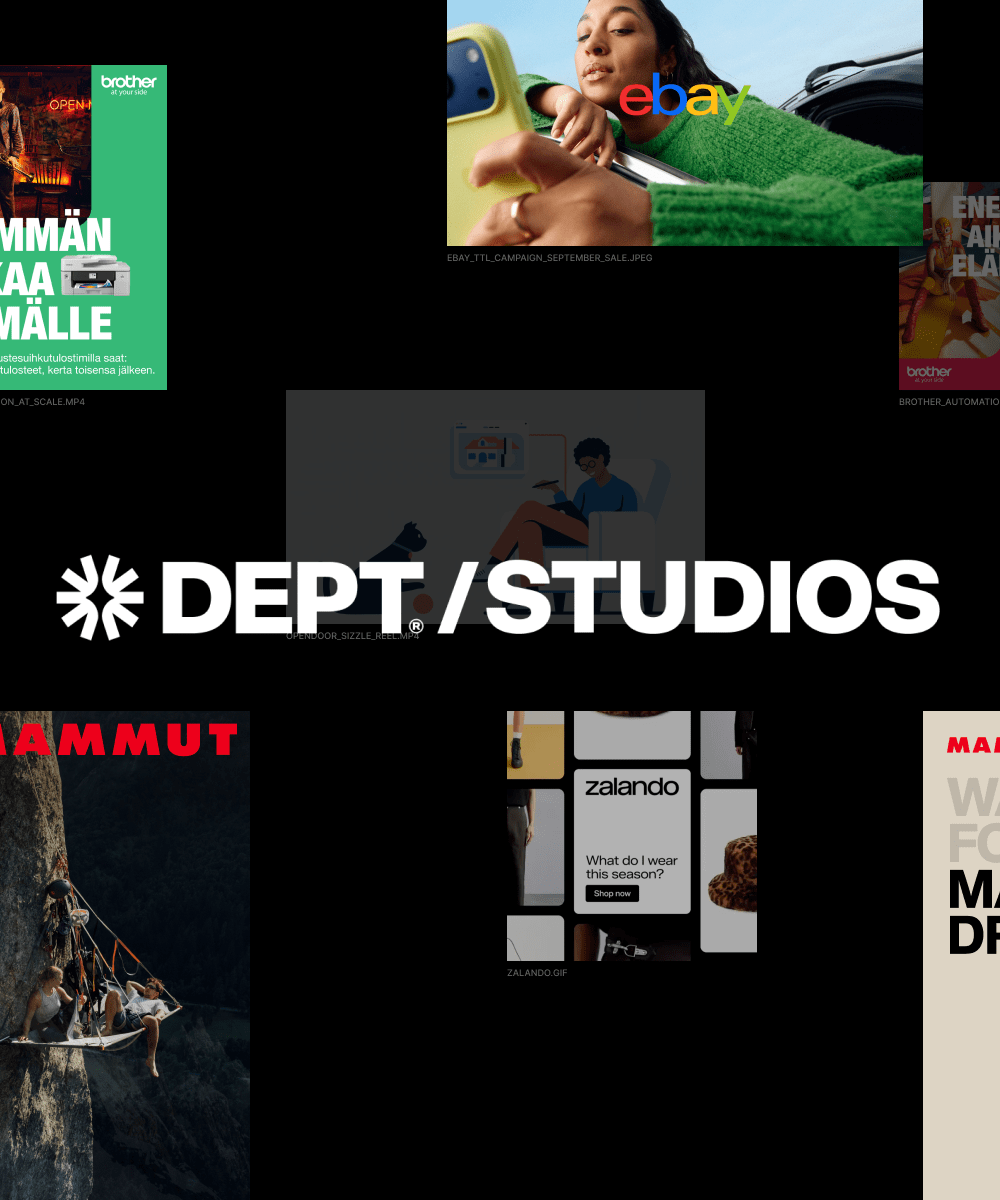
Overcoming this friction requires moving toward a more centralized, tech-enabled production model—an approach we’ve codified through DEPT® Studios to help brands sync their creative output with their Adobe technical stack.
That friction compounds at the system level. Orchestration becomes harder, not necessarily because the technology can’t support it, but because the underlying ways of working aren’t aligned. Until that changes, more advanced capabilities tend to layer on top of existing complexity rather than reduce it.
“Businesses are trying to extract more value from the systems they already own, while the rise of LLMs and personal AI agents is reshaping the customer journey in parallel.
”
The double-sided challenge: People & agents
This would be challenging even in a stable market, but instead, it’s happening at the same time the market itself is shifting.
Businesses are still trying to extract more value from the systems they already own, while the rise of LLMs and personal AI agents is reshaping the customer journey in parallel. Now, brands must design for both people moving through channels and for the systems that retrieve, summarize, compare, and influence decisions before a customer ever clicks.
This, of course, changes the stakes. Readiness is no longer contained within marketing or technology teams. It directly affects how your brand shows up online, how it’s interpreted, and whether it even makes it into the consideration set in the first place.
Many organizations are simultaneously working to stabilize their current stack—improving workflows, fixing adoption issues, and trying to get closer to the value they expected.
With these timelines overlapping, platform performance and future journey design are no longer separate efforts. The way your systems operate today directly shapes how well you can compete in an environment increasingly influenced by intelligent intermediaries.
Bottom line: Today’s platform work and tomorrow’s journey design are no longer separate conversations.
Three questions to ask after Adobe Summit 2026
The instinct after Summit is to look ahead, but most teams should look inward first.
Without a clear view of where value is being lost today, adding more AI capability just compounds the problem. Start by understanding where the current system is underdelivering and why.
- Where is Adobe value currently being unrealized? Which workflows, use cases, teams, or capabilities are underperforming relative to what the platform should deliver?
- Which foundational gaps are limiting readiness for what comes next? Where are content, data, governance, measurement, or operating-model weaknesses making it harder to adopt more advanced Adobe capabilities with confidence?
- What should be fixed first to improve ROI now and increase future readiness? Not everything matters equally. Which actions will unlock the clearest near-term value while also preparing the business for more connected, agentic ways of working?
Measure value realization before adding complexity with DAVRA
The DEPT® Adobe Value Realization Accelerator, or DAVRA, is designed for the point many businesses are at right now.
You have made meaningful Adobe investments, you can see where Adobe’s roadmap is going, but you do not yet have a clear, evidence-backed view of where value is being left on the table or what should be prioritized first.
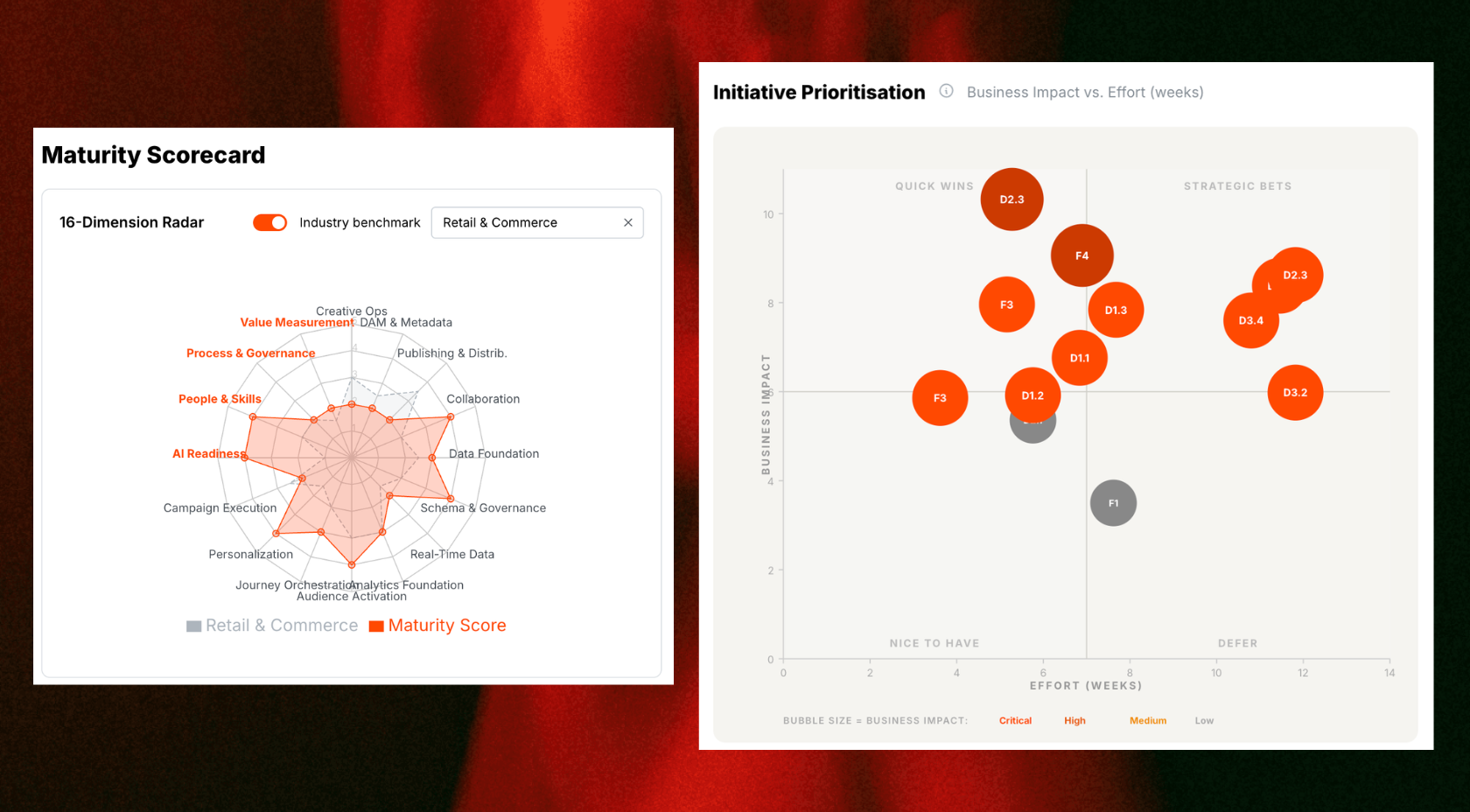
Rather than treating value realization as a vague post-implementation question, DAVRA gives it structure. It assesses Adobe Experience Cloud maturity across multiple dimensions, scores capabilities as strong or weak, identifies where business value is at risk, and translates these findings into clear recommendations, quick wins, and a prioritized roadmap.
The output is designed to answer one practical question: Where is your Adobe investment being unrealized, and what should be done about it first?
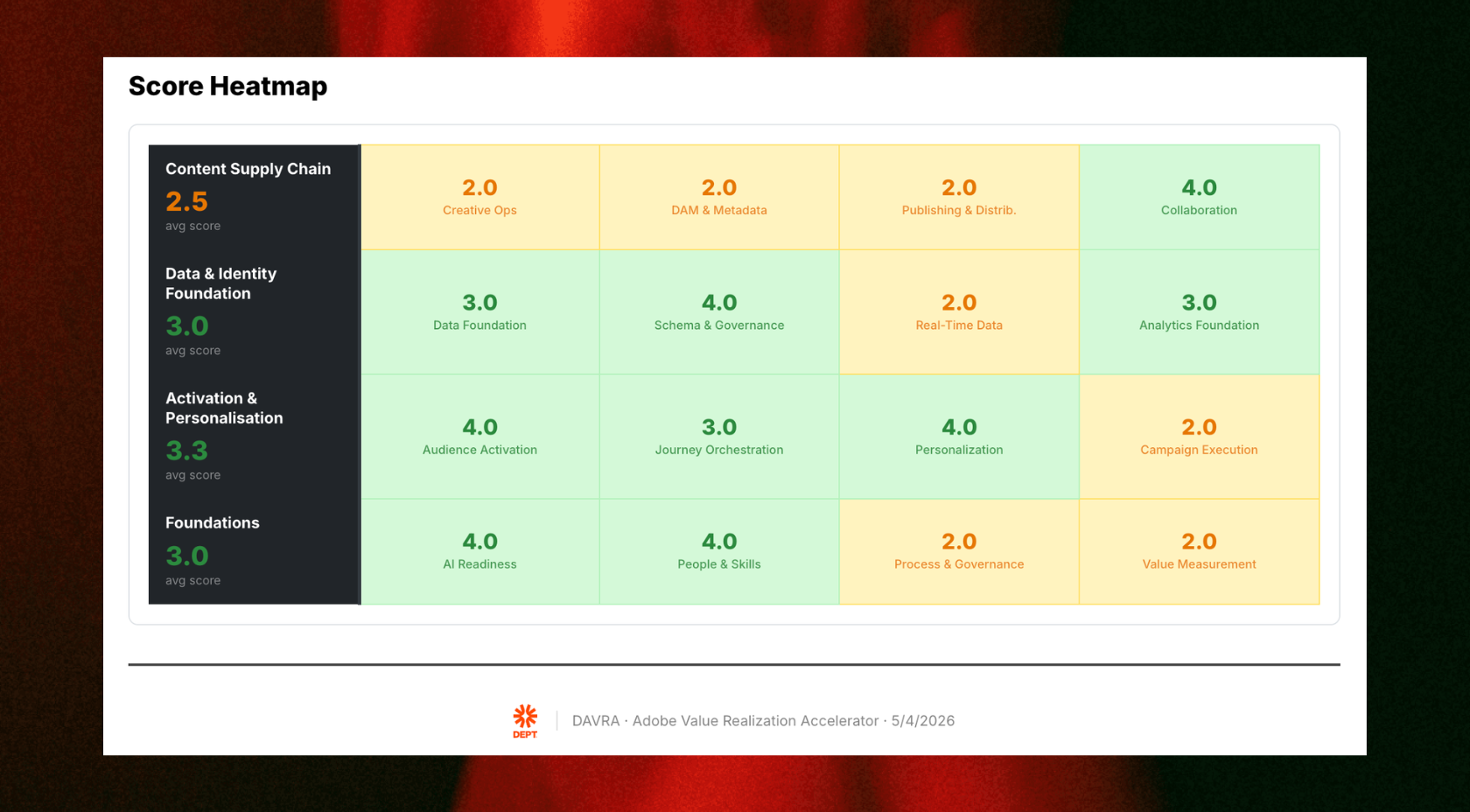
The output is designed to answer one practical question: Where is your Adobe investment being unrealized, and what should be done about it first?
DAVRA is designed to help you get specific. Specific about which gaps are operational, which are foundational, which are organizational, and which are genuinely strategic. Because the right next step is rarely to add more complexity everywhere. More often, it is to remove friction, strengthen foundations, improve adoption, and focus on the capabilities that will unlock both immediate return and future readiness.
Get a DAVRA Demo
Where is your Adobe investment being unrealized, and what should be done about it first?
The more useful takeaway from Adobe Summit 2026
Adobe Summit 2026 pointed to an agentic future—and it exposed how much work still needs to happen before most organizations can take advantage of it.
If journeys move slowly, ownership is unclear, approvals drag, or adoption is inconsistent, adding more intelligence just increases the strain on systems that already aren’t working as they should.
The priority is to treat today’s platform work as preparation, starting with a clear view of where things break down.
Which use cases are actually delivering value? Where does work stall? Who owns what? What still depends on manual workarounds or disconnected processes? Which capabilities look strong in theory but aren’t translating into operational gain?
It also requires expanding the brief. The job extends past creating experiences that resonate with people. Now it includes building the structures, signals, and ways of working that allow those experiences to perform in a journey increasingly shaped by intelligent intermediaries.
That is the most useful way to read Adobe Summit 2026. Adobe put a bold future on stage. The organizations that benefit from it will be the ones that have already done the work to make their current systems perform.