

Why banks have to re-earn customer trust with every interaction


As part of our industry series, the DEPT® research team has been looking at the most meaningful signals shaping banking over the past few months.
What we’ve seen is a shift in how consumer trust operates.
Trust remains foundational to banking. In fact, research finds that customers trust their main bank for quality products and advice twice as much as they trust tech companies. But this inherent confidence doesn’t extend uniformly across everything a bank offers, as customers increasingly evaluate products and services on their own terms rather than as part of a single, continuous relationship.
This is reflected in how people engage with banks today. Many maintain a primary banking relationship, while also using other providers for payments, investing, credit, or savings. These choices aren’t necessarily driven by dissatisfaction, but by the availability of alternatives that are easier to use, provide stronger personalization and rewards opportunities, or are better suited to an in-the-moment specific need.
As a result, the traditional idea of a single, durable banking relationship is giving way to something more segmented. Being a customer in one area doesn’t ensure adoption in another, and each product or interaction must establish its own credibility.
In short, when it comes to consumer banking, every interaction has to re-earn the customer.
AI is useful, but only inside clear trust boundaries
The gap between how quickly banks are adopting AI and how comfortable customers are with it is becoming harder to ignore.
Across Europe, more than 86% of banks now use AI, primarily for client profiling, customer support, and internal operations. Customers are increasingly comfortable with those applications, too. AI chatbots now resolve 87% of bank inquiries in under a minute, and there is broad acceptance of AI for routine tasks like information gathering, transaction support, recommendations, and customer service.
Where customers’ comfort ends is when AI moves from supporting a decision to making one autonomously.
Consumers remain reluctant to let AI handle loan applications, mortgage approvals, investment decisions, or larger financial transactions independently. Only 39% say they are willing to trust AI assistants with financial planning decisions, and just over a quarter would fully trust AI for financial guidance. More than half prefer a human over a bot in stressful financial situations.
While this isn’t an AI rejection, it does demonstrate a clear demand for boundaries around it.
Customers are comfortable when AI helps them move faster, surfaces useful information, or narrows a set of options. Understandably, they become far less comfortable when it acts without explanation, when there isn’t an obvious way to question the recommendation, or when responsibility becomes unclear if something goes wrong.
For consumer finance brands, the imperative is to leverage AI in ways that feel transparent, bounded, and easy to challenge. The strongest experiences will balance personalization with human guidance, using AI to handle the routine while ensuring customers can still turn to a person when the stakes are higher.
Re-winning customers through immediate, tangible value
Traditionally, banks benefited from inertia. Customers stayed with one institution because switching was difficult, and the convenience of managing all their financial needs with one bank outweighed the benefits of using multiple providers. That’s no longer the case.
The idea of a single main bank is becoming less relevant, particularly for younger customers.
Forty percent of consumers now hold a digital-only bank account. However, GWI’s research found that while 70% of digital bank account owners also bank with a traditional bank, only 32% of people with a traditional account also use a digital bank. At the same time, consumers hold an average of 6.3 financial products across multiple providers, mixing traditional banks, neobanks, credit card issuers, payment platforms, and investing apps, depending on what each one does best.
Trust in traditional institutions hasn’t disappeared, as customers still tend to see established banks as more credible and secure. But that trust is no longer enough to carry a relationship across every category. A customer may trust a legacy institution to hold their savings, while choosing a handful of digital providers for payments, rewards, investing, or short-term borrowing.
For younger consumers in particular, loyalty is driven less by the institution’s history and more by the usefulness of the experience. They are more willing to switch between providers, more comfortable managing multiple financial relationships, and more likely to choose the brand that delivers the clearest value at a given moment.
Because of this, having a smooth mobile app or fast onboarding no longer meaningfully differentiates a bank. Those are now baseline expectations. The top banking apps consistently score above 4.5 stars, making functional digital experience the price of entry rather than a reason to stay.
What does matter is whether a provider can make a customer feel understood and rewarded right now with relevant offers, personalization, and rewards. Cashback, member pricing, proactive recommendations, and spend-linked benefits all create reasons to return—not because customers feel attached to the institution, but because they see clear value in the interaction. In fact, 86% of consumers say financial rewards are the most important part of a loyalty program, and 42% say loyalty programs make them very loyal to a financial or retail brand.
In this environment, loyalty is no longer something a bank inherits from the strength of its brand or the length of a relationship. It is something that has to be re-earned, product by product, moment by moment.
Brand spotlight: WERO shows what it takes to carry trust forward
For millions of Dutch consumers, iDEAL is the default way to pay online: familiar, reliable, and so embedded in daily life that most people no longer think about it. That familiarity created a challenge when the European Payments Initiative (EPI) began transitioning iDEAL into WERO, a broader pan-European payment network. The ambition was bigger, but the risk was obvious: If customers felt they were being asked to adopt something entirely new, the confidence built over decades could quickly erode.
Rather than treating trust as something static, WERO approached it as something that had to be actively maintained and earned.
DEPT® built the transition around a dual iDEAL | WERO identity, allowing consumers to continue seeing the brand they already knew while becoming familiar with the one replacing it. The new name appeared alongside the old one across merchant sites, banking apps, and communications, reducing the sense of disruption and making the change feel gradual rather than abrupt.
Just as importantly, the campaign focused less on explaining the technical details of the new payment rails and more on preserving the feeling customers already associated with iDEAL: ease, reliability, and certainty. DEPT® and WERO designed the campaign around the Dutch word “Sowieso,” a shorthand for unquestioned confidence. Can I trust it? Sowieso. Is it safe? Sowieso. Will it still work the same way? Sowieso.

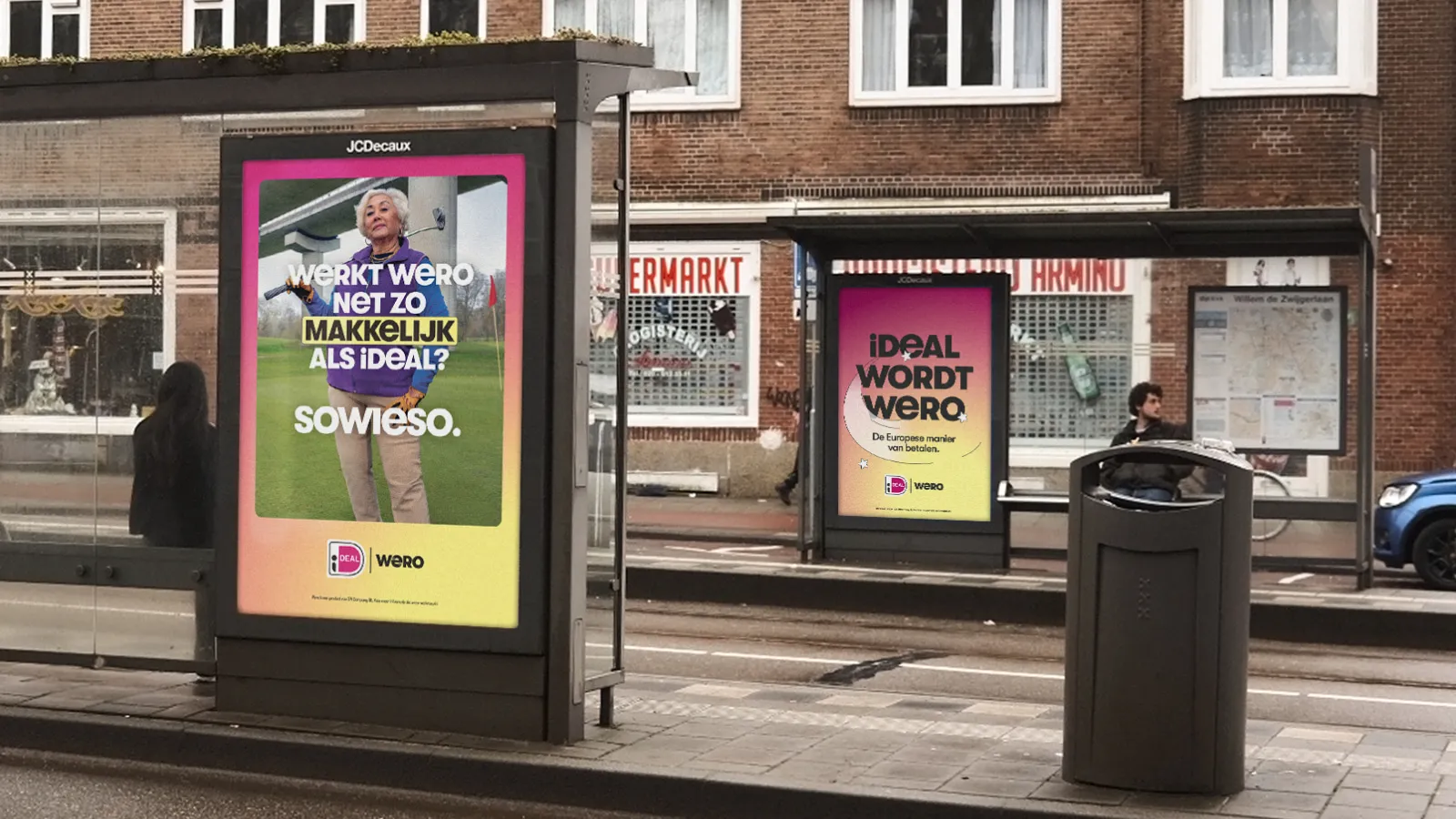
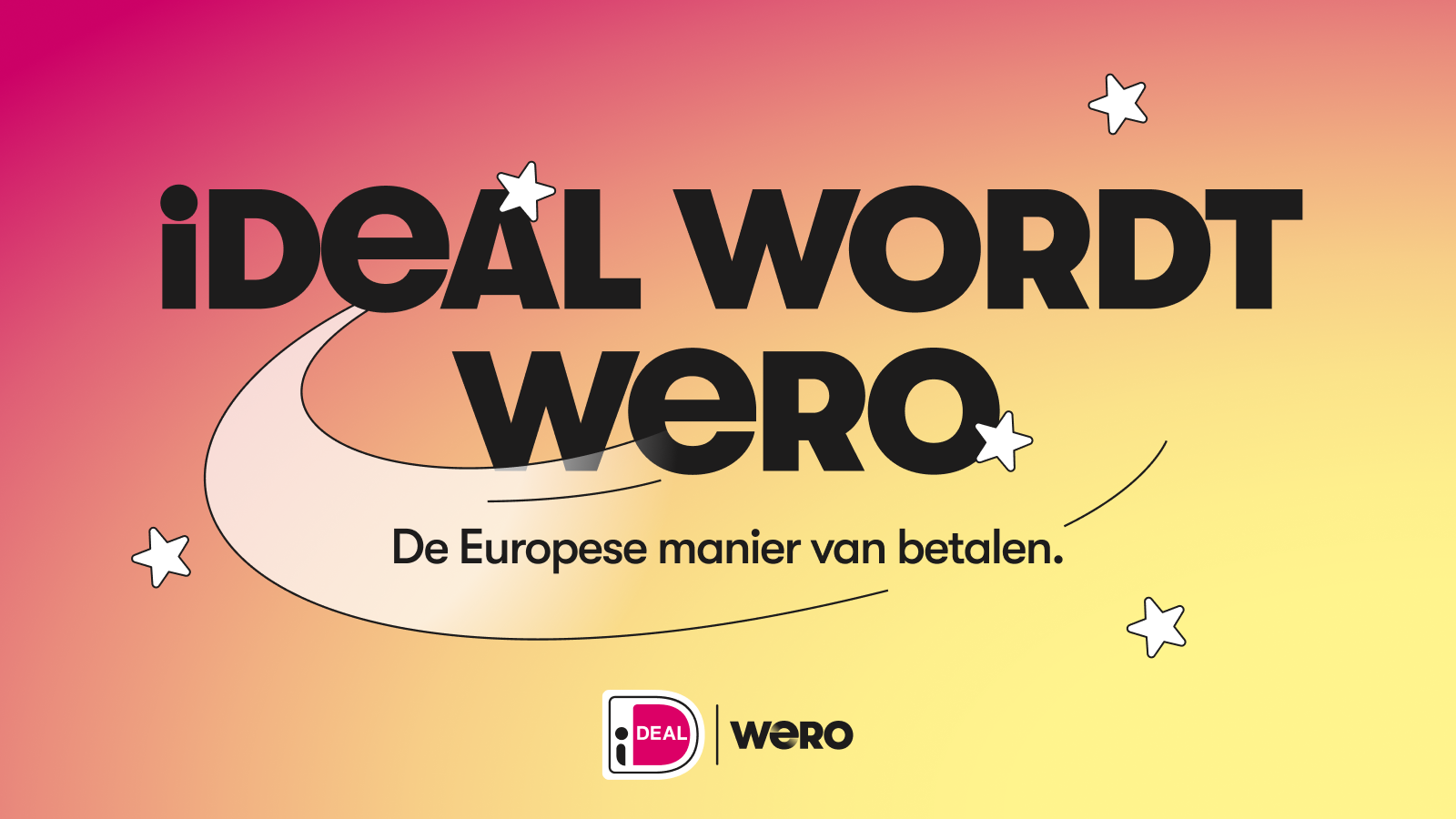
That strategy reflects a broader truth about financial services. Customers rarely adopt new products because they are new. They adopt them when the experience feels familiar enough, useful enough, and trustworthy enough to justify the change.
As banking relationships become more fragmented and product-specific, the institutions that sustain growth are the ones that design a bridge between what customers already know and what they are being asked to trust next.
Driving growth through earned confidence
Ultimately, the shift underway in banking is not about whether consumers trust banking institutions less. It is about how that trust is earned.
Customers still want guidance, security, and reliability. But they are no longer extending those qualities automatically across every product or interaction. AI, loyalty, and new payment experiences are each being judged on their own merits. For consumer banking brands, that raises the bar. Growth no longer comes from being the institution customers chose once. It comes from consistently giving them reasons to choose you again.