

How to build a Black Friday & Cyber Monday strategy for AI-assisted shopping


Black Friday and Cyber Monday sit at the center of e-commerce’s most commercially important quarter.
In the US, UK, and Germany, Q4 accounts for roughly 30% of annual online retail sales.
And while shoppers still like Black Friday and Cyber Monday, they are approaching it more deliberately. In 2025, 82% of U.S. consumers planned to shop during the promotional week, even as average planned spending fell 4%.
The journey behind that spending is also changing. Customers still notice ads, watch creators, and read reviews. However, AI assistants and shopping tools are helping them research categories, narrow their options, compare prices and product attributes, and complete parts of the transaction.
That makes peak season more than a four-week media push. To prepare for Black Friday and Cyber Monday in an agent-influenced shopping journey, e-commerce brands need to do two things at once: create preference among people and provide accurate, structured information to the systems helping them shop. That means coordinating product data, media, content, channels, fulfillment, measurement, and retention before peak-season demand accelerates.
What product data do customers and AI shopping agents need?
Before increasing media spend, make sure customers and AI shopping agents can find, evaluate, and purchase the products being promoted. At a minimum, they need accurate product identifiers, attributes, pricing, availability, delivery information, and return policies.
Feed errors, missing product attributes, outdated inventory, and inconsistent pricing can limit visibility across Google, Meta, marketplaces, and retail media platforms. They can also create a poor experience when customers click an ad only to find that a product is unavailable or cannot be delivered in time.
Audit:
- Product titles, categories, GTINs, and SKUs
- Pricing and promotional information
- Inventory and availability updates
- Size, color, material, and compatibility attributes
- Shipping times and regional restrictions
- Product-page information across websites and marketplaces
This work may feel operational, but it directly affects whether a product gets considered. A campaign can’t compensate for an item being incorrectly categorized, unavailable, or poorly described.
Product pages also need to answer the questions people and agents use to evaluate an option: who the product is for, how it differs from alternatives, what it includes, whether it meets a specific need, when it will arrive, and how returns work.
The objective isn’t to add more copy, but to create an accurate, consistent product record that can travel across ads, marketplaces, retailer tools, assistants, and owned channels without losing important context.
How to measure demand across an AI-influenced customer journey
Agents don’t eliminate the need to create human preference. People are still more likely to notice and select brands they recognize and trust. But the later stages of the journey can now move through search engines, marketplaces, retailer tools, comparison services, and assistants before a purchase occurs, making it even harder to connect early influence to the final transaction.
September and October provide an opportunity to build familiarity while media competition is lower. You can introduce priority products, test creative, grow qualified audiences, and learn which messages are generating interest before the most commercially important period begins.
The challenge is measuring the contribution of that activity
When AI assistants influence product research and comparison, brands should measure both demand creation and final conversion. That means combining attributed sales with indicators such as branded search, new-to-brand traffic, assisted conversions, direct visits, incrementality, and qualified audience growth rather than assigning full value to the final click.
Last-click attribution often gives full credit to the final search ad, affiliate link, or retargeting impression. Earlier activity can appear ineffective even when it prompted the customer to search for the brand or return to the website later.
Peak-season measurement should therefore look beyond immediate conversions. Useful indicators may include:
- Changes in branded search demand
- Growth in new-to-brand traffic
- View-through and assisted conversions
- Direct traffic increases
- Incremental sales
- The size and quality of retargeting audiences

Connecting awareness & performance
DEPT® recently helped a furniture retailer determine whether visual campaigns were driving valuable demand rather than merely generating engagement.
We launched Google Demand Gen campaigns across YouTube, Discover, and Gmail ahead of a key commercial period, using attributed branded searches to measure how many exposed customers searched for the brand within seven days of seeing a campaign.
The strategy produced a 7.5% daily increase in branded search demand and a 15.3% increase in conversion volume. Modeling showed that the broader commercial effect was significantly greater than the value visible through last-click reporting.
The lesson isn’t simply to spend earlier. It is to establish how demand will be recognized and captured as customers move between human-led discovery and automated evaluation.
Plan for decisions made beyond your website
Peak-season purchases don’t happen exclusively on brand websites, and neither do the decisions leading to them.
A customer might discover a product through a creator, ask an assistant to identify comparable options, validate the recommendation through reviews, and purchase through a marketplace. In some journeys, the brand website will be one stop among several. In others, the customer may complete the purchase without visiting it at all.
Not every brand needs to launch on every channel. But product information, pricing, availability, reviews, and policies need to remain accurate wherever customers or their agents evaluate the offer.
Before expanding into social commerce or additional marketplaces, consider:
- Whether inventory is synchronized accurately
- Whether pricing is consistent across channels
- How orders, cancellations, and returns will be managed
- Whether fulfillment can withstand a rapid increase in volume
- Whether content is designed for the channel
- Whether the commercial model protects margin
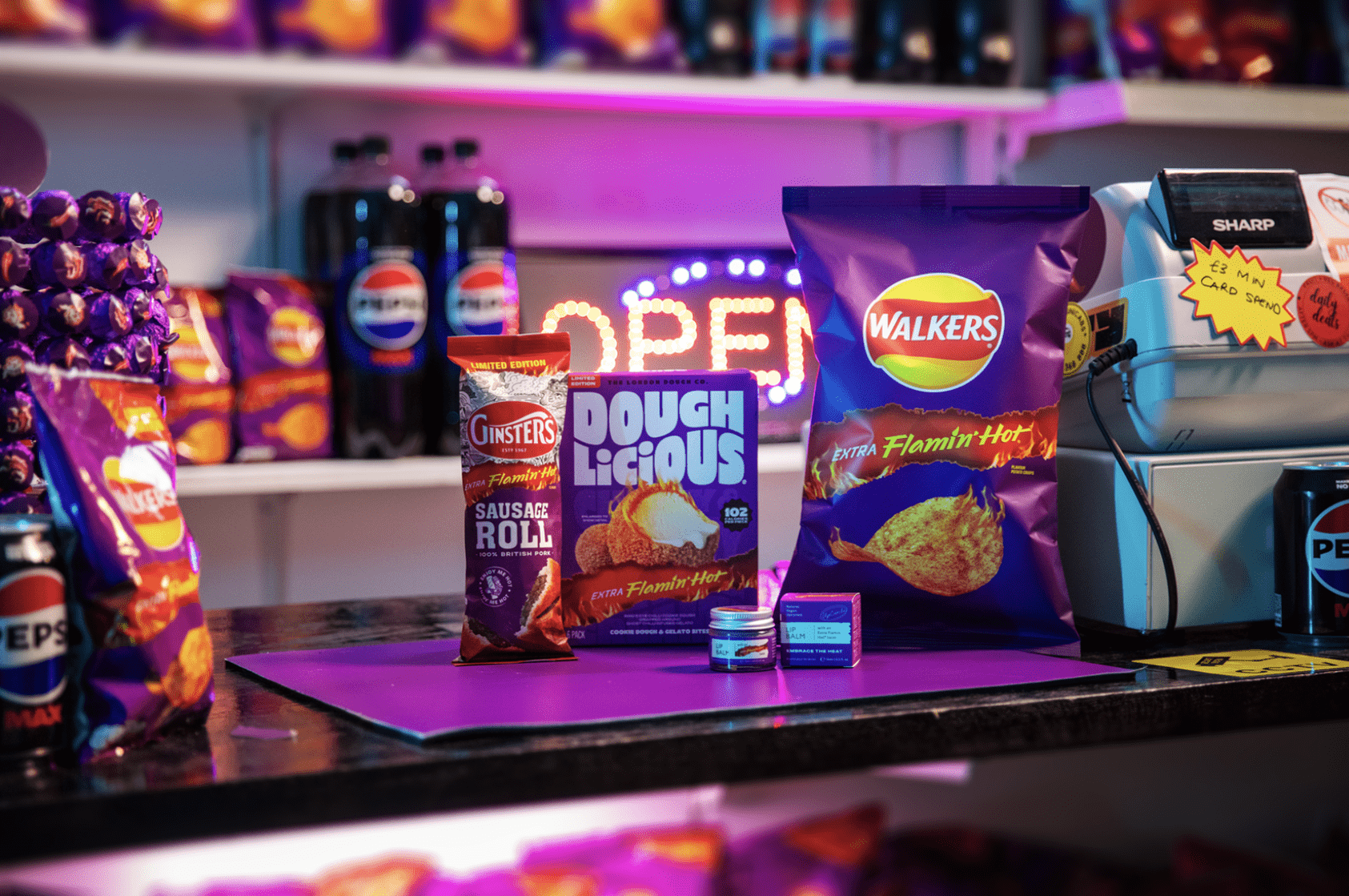
Turning TikTok content into commerce for Walkers
Walkers launched a limited-edition crisp collection on TikTok Shop, supported by a live-shopping broadcast featuring comedian Asim Chaudhry in a real-life corner shop setting. The collection sold out within three hours.
The activation also shows why human attention and participation still matter. AI assistants can help narrow down choices or complete transactions, but brands still need ideas that give people a reason to care.
Design the second purchase before the first one happens
To turn Black Friday customers into repeat buyers, brands should segment them immediately and trigger post-purchase journeys based on the product purchased, expected use, replenishment cycle, and likelihood of gifting or returning the item.
Peak season can be highly effective at attracting new customers without necessarily creating long-term growth. While new buyers accounted for 64% of Black Friday purchases across 146 retail brands in 2024, only 4% of customers acquired during Black Friday that year made another purchase within the following 12 months.
Customers acquired through heavy discounting may know little about the wider product range or why they should return without another promotion. Sending the same post-Cyber Week campaign to every buyer is unlikely to change that.
That is why you should plan post-purchase journeys before peak-season orders begin. These might include:
- Product education and setup guidance
- Replenishment reminders
- Recommendations based on the first purchase
- Loyalty or membership enrollment
- Review requests timed around product use
- Gift-recipient communications
- Returns and exchange support
- Early access to relevant products
Returns should be treated as part of the customer experience rather than only as an operational cost. A confusing or slow return process can ensure the first purchase is also the last. A clear exchange or refund journey can preserve trust and create another opportunity to serve the customer well.

Building a scalable email system for eBay
eBay manages customer communications across 13 markets and nine languages. DEPT® built a dynamic Global Email Template system that reduced template build time by 90%, shortened delivery turnaround by 50%, and maintained a 0% defect rate across more than 2,000 annual sends.
Those results demonstrate operational efficiency rather than retention on their own. But modular infrastructure supports timely, localized, and product-specific communications across markets, an important capability as post-purchase journeys become more fragmented and automated.
Build offers that work beyond the headline discount
Discounting is appropriate for several reasons, but it can be less effective when it attracts customers unlikely to return, encourages existing customers to wait for promotions, or incurs fulfillment and service costs that undermine the original margin.
Shopping assistants also make it easier to compare offers across more dimensions. A product may be evaluated on:
- Total price
- Delivery date
- Availability
- Loyalty benefits
- Returns policies
- Product compatibility
- Included services or accessories
The percentage discount displayed in an ad is only one part of that evaluation.
You have more choices than offering a blanket percentage reduction or opting out of Black Friday completely.
The right approach will vary by category and commercial objective. The important point is that the offer should remain compelling when evaluated as a complete proposition, not only when presented as a promotional headline.
What should a peak-season ecommerce strategy include?
A peak-season ecommerce strategy should cover more than media budgets and discount levels. It should include product data quality, early demand generation, cross-channel inventory and pricing, attribution, fulfillment capacity, returns, post-purchase communications, and a plan to convert seasonal customers into repeat buyers.
The following timeline turns those priorities into a practical plan.
How to prepare for Black Friday, Cyber Monday, & the months that follow
August and September: Fix the foundation
- Resolve product-feed and marketplace errors
- Validate pricing, product attributes, and inventory updates
- Improve product pages around common purchase questions
- Confirm tracking and attribution plans
- Test checkout, fulfillment, and returns processes
- Build post-purchase and replenishment journeys
September and October: Create measurable demand
- Launch upper- and mid-funnel activity around priority products
- Establish baseline levels for branded search and direct traffic
- Grow qualified first-party and retargeting audiences
- Test creative before media competition reaches its peak
- Capture preferences through sign-ups, wish lists, quizzes, or early access
October and November: Prepare every point of purchase
- Confirm inventory alignment across websites and marketplaces
- Review listings for accuracy and completeness
- Test promotional codes, delivery promises, and checkout journeys
- Prepare creator briefs and channel-specific content
- Model margin and fulfillment implications across promotional scenarios
November through March: Convert and retain
- Monitor incrementality and attributed conversions
- Adjust spend based on inventory, margin, and fulfillment capacity
- Segment seasonal buyers immediately after purchase
- Trigger product-specific onboarding and recommendation journeys
- Review which customer cohorts returned, exchanged, unsubscribed, or didn’t engage again
Peak-season performance is shaped well before Cyber Week. The difference now is that brands are preparing for a journey shared by customers and the systems that help them make decisions.
People still need reasons to notice, trust, and want a product. Agents and commerce platforms need accurate information to compare it, recommend it, and complete the next step. Neglect either side and demand can break down before the transaction.
The practical priority is coordination. Commerce, media, CRM, content, technology, and operations need to agree on:
- Which products to prioritize
- How demand will be created and measured
- What information customers and agents will use to evaluate products
- How much operational and fulfillment capacity is available
- What happens after the first purchase




FAQs
How should ecommerce brands prepare for AI-assisted Cyber Week shopping?
Brands should create preference among shoppers while ensuring AI assistants and commerce platforms can accurately evaluate their products. This requires complete product data, synchronized pricing and inventory, measurable demand generation, reliable fulfillment, and post-purchase journeys designed before Cyber Week begins.
What product data do AI shopping agents need?
AI shopping agents need accurate product titles, identifiers, categories, attributes, prices, promotional terms, inventory, delivery estimates, compatibility details, regional restrictions, and return policies. This information should remain consistent across brand websites, marketplaces, advertising feeds, and retailer platforms.
How should brands measure AI-influenced shopping journeys?
Brands should combine conversion reporting with demand-creation metrics, including branded search, new-to-brand traffic, assisted conversions, direct traffic, incrementality, and qualified audience growth. This provides a fuller view than last-click attribution when discovery, evaluation, and purchase occur across different platforms.
How can brands retain customers acquired during Black Friday?
Brands should segment customers by their first purchase and provide relevant onboarding, education, replenishment reminders, recommendations, loyalty invitations, review requests, and returns support. These journeys should be ready before peak-season acquisition begins.