
Rethinking authenticity in the age of AI influence


Authenticity isn’t disappearing in the age of AI influencers. But it is being clarified.
Because for AI influencers, authenticity is often framed as something that can be simulated but never truly achieved.
And, in a world that prizes authenticity above all else, it’s no wonder that this notion has become one of the most scathing critiques of artificial influence.
But the debate about AI influencers isn’t really about influencers at all. It’s about branding and the assumption that, to be authentic, a brand must be vulnerable in the same way a person is. Capable of failure. Of contradiction. Of genuine emotional risk.
Yet brands have never operated under those conditions. And still, for decades, some have managed to feel unmistakably authentic. If authenticity truly depends on being human, then none of this should work. And yet, for some brands, it clearly does.
So, what separates these brands from the rest of the pack?
(For clarity, when we say “AI influencer” here, we mean virtual personas, AKA, CGI or AI-generated characters, published as recurring social identities.)
Artificial authenticity vs. authentic artificiality
Some AI influencers have been embraced. Some haven’t. And the determining factor all comes down to how these influencers handle authenticity.
On the one hand, we have AI influencers that attempt to meticulously render an illusion of human experience. In the same way that Madame Tussaud’s would attempt to create a 1:1 likeness of a celebrity, these influencers attempt to create a 1:1 performance of authenticity.
The problem with this artificial version of authenticity is that, no matter how convincing the performance may be, the illusion cracks when consumers get a closer look.
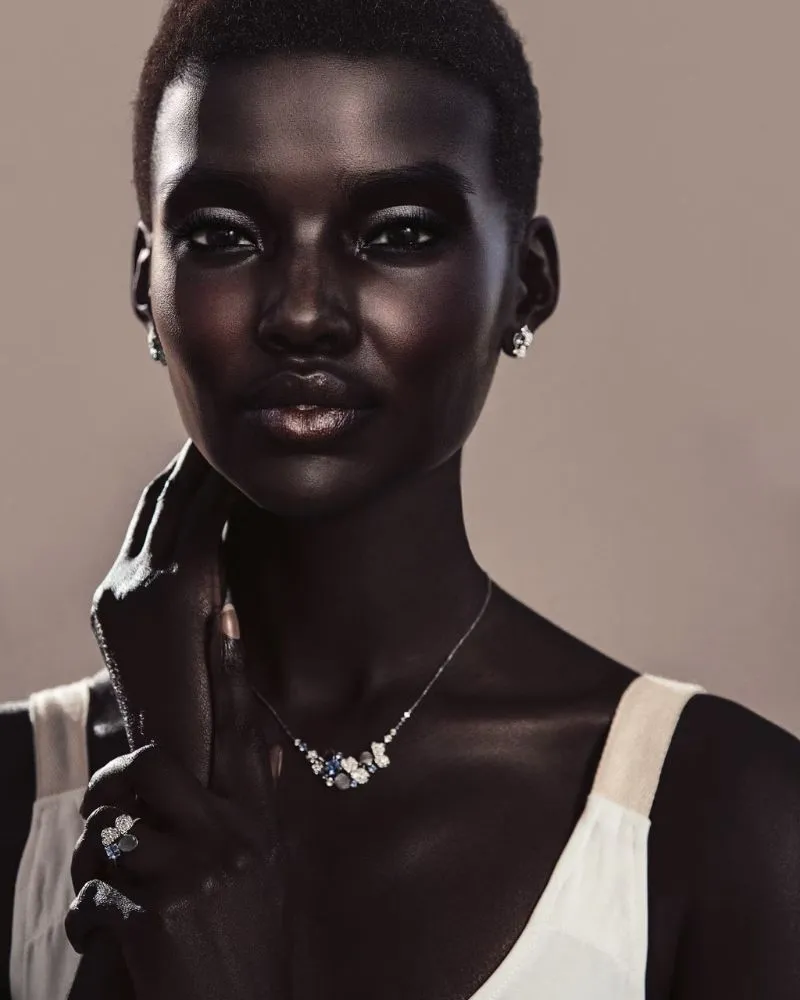
Take Shudu Gram. Although she appeared on the social scene as a self-described digital fashion model, her posts looked so real that they were celebrated with hashtags like #blackisbeautiful and shared widely across pages devoted to celebrating women of color.
When it was discovered that Shudu was actually created by a white man (British photographer Cameron-James Wilson) critics began describing Shudu as an ethically fraught projection.
In other words, the problem wasn’t that Shudu was artificial. It was that her artificiality was obscured beneath such a believable veneer of realism.
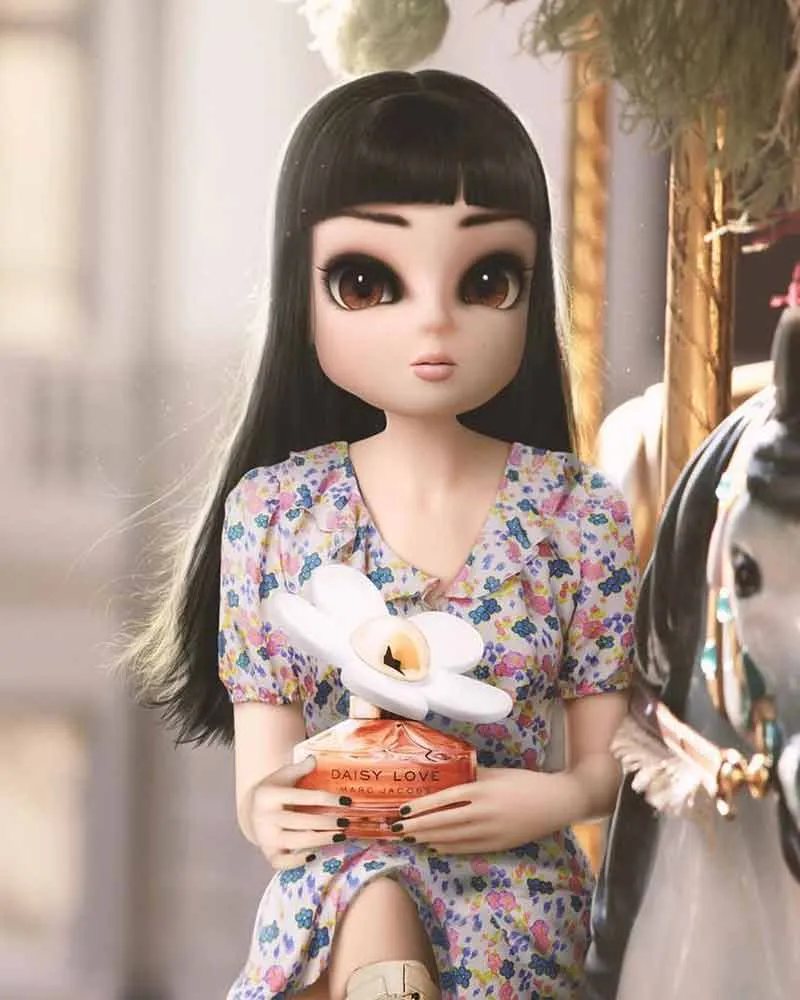
At the opposite end of the spectrum, there are the AI influencers who embrace their artificiality as part of their trademark. Instead of trying to create a perfect recreation of the human experience, the performance these influencers are attempting is much closer to a parody.
In this camp, we have AI influencers like Noonoouri, a virtual pop star with cartoonishly large eyes and anime-inspired features created by German graphic designer Joerg Zuber.
“I live at the intersection of imagination and innovation, where the best of all worlds becomes one,” Noonoouri writes on her website bio. “Step in, stay curious, and let’s explore the beauty of what’s possible — together.”
Unlike Shudu, Noonoouri isn’t trying to recreate human authenticity. She’s defining it for herself, and her artificiality is a key part of the equation.
The debate around AI influencers, then, isn’t simply about whether or not they’re capable of authenticity. It’s about whether or not humanity is a necessary ingredient for authenticity at all.
Authenticity is what you build
Because we tend to think of influencers as human, we also tend to view authenticity as anchored in lived experience. We associate being “real” with the ability to fail publicly, change our minds, contradict ourselves, or disappoint an audience.
AI influencers, by contrast, exist outside of real-world stakes. Their struggles aren’t felt; they’re written. Their vulnerability isn’t discovered; it’s designed. And for many critics, that makes true authenticity impossible for artificial influencers to achieve.
But that critique depends on a narrow definition of both “influencer” and “authenticity.”
After all, some of the most successful influencers online aren’t human at all. Mickey Mouse has more than three million followers on Instagram. Mr. Peanut racks up millions of TikTok likes. Entire economies of pet influencers thrive online, with no one pretending these creators are consciously curating their brands.
What these examples reveal is something marketers have always known, even if we haven’t named it explicitly: Authenticity isn’t a biological trait. It’s a trust outcome.
And for brands, that trust has never worked the same way human authenticity does. Brands don’t earn it by being vulnerable in the human sense. They earn it by being coherent, intentional, and recognizable over time. By behaving in ways that feel true to who they’ve shown themselves to be.
In this way, authenticity isn’t something you are. It’s something you build, and once you do, it’s something you need to protect.
Character is authenticity’s secret sauce
Character-based influence on social media isn’t new. And it never seems to lose its power.
The jewelry brand Alexis Bittar offers a masterclass with the “Bittarverse,” a serialized social drama following fictional NYC socialite Margaux Goldrich and her long-suffering assistant Jules. Margaux is exaggerated, vain, unapologetically out of touch… and audiences can’t get enough of her.
The Bittarverse characters have a clear POV, defined boundaries, and a worldview that guides every post. The result is something far more authentic than a brand trying to sound “relatable.”
The same pattern shows up among today’s most successful AI influencers.
Granny Spills, for instance, has amassed millions of followers across Instagram and TikTok with her biting social commentary and glamorous disdain. She isn’t trying to pass as human. She’s leaning fully into character.
And that’s precisely why she works.
Granny Spills’ success illustrates a crucial lesson: Strong personality and clear POV are just as much creative choices as they are strategic ones. A well-defined character makes content more entertaining, more scalable, and easier to govern. It creates clarity about what the brand will say, how it will say it, and where the line is.
By contrast, AI influencers that aim for subtlety often end up in dangerous territory. When artificial personas try too hard to mimic human authenticity, they risk feeling hollow or uncanny. Worse, they become difficult to manage—because without a strong character, there are no guardrails. And without guardrails, consistency collapses.
And even beyond consistency, character helps establish accountability cues. A clear persona makes it easier for an audience to understand what’s “in bounds,” what’s performative, and what the brand actually stands for beneath the bit.
Looking ahead
The question isn’t whether AI can ever be authentic in a human sense. It’s whether brands are disciplined enough to build characters strong enough to be authentic in a brand sense. Characters with lore, point of view, and limits. Characters designed not to imitate humanity, but to express something true.
Before you invest in a virtual persona, pressure test your strategy with three questions:
- Are we building a character, or trying to pass as a person? If the goal is realism, you’re also signing up for higher expectations around disclosure, representation, and audience trust. If the goal is character, you can establish clearer boundaries—and avoid the uncanny valley of “almost human.”
- What’s the POV, and what are the limits? What does this persona reliably believe, critique, or celebrate? What do they not touch? If you can’t define the boundaries, the persona will eventually drift, contradict itself, or become a liability.
- Who owns accountability? When something lands poorly (and eventually, something will), who is responsible for the response? Who signs off? What’s the escalation path? “It’s AI” is not a crisis plan.
Brands need not build AI influencers that chase realism. But they need to understand how to treat authenticity as what it has always been.