
Milan Cortina 2026: Infinite moments, finite ads

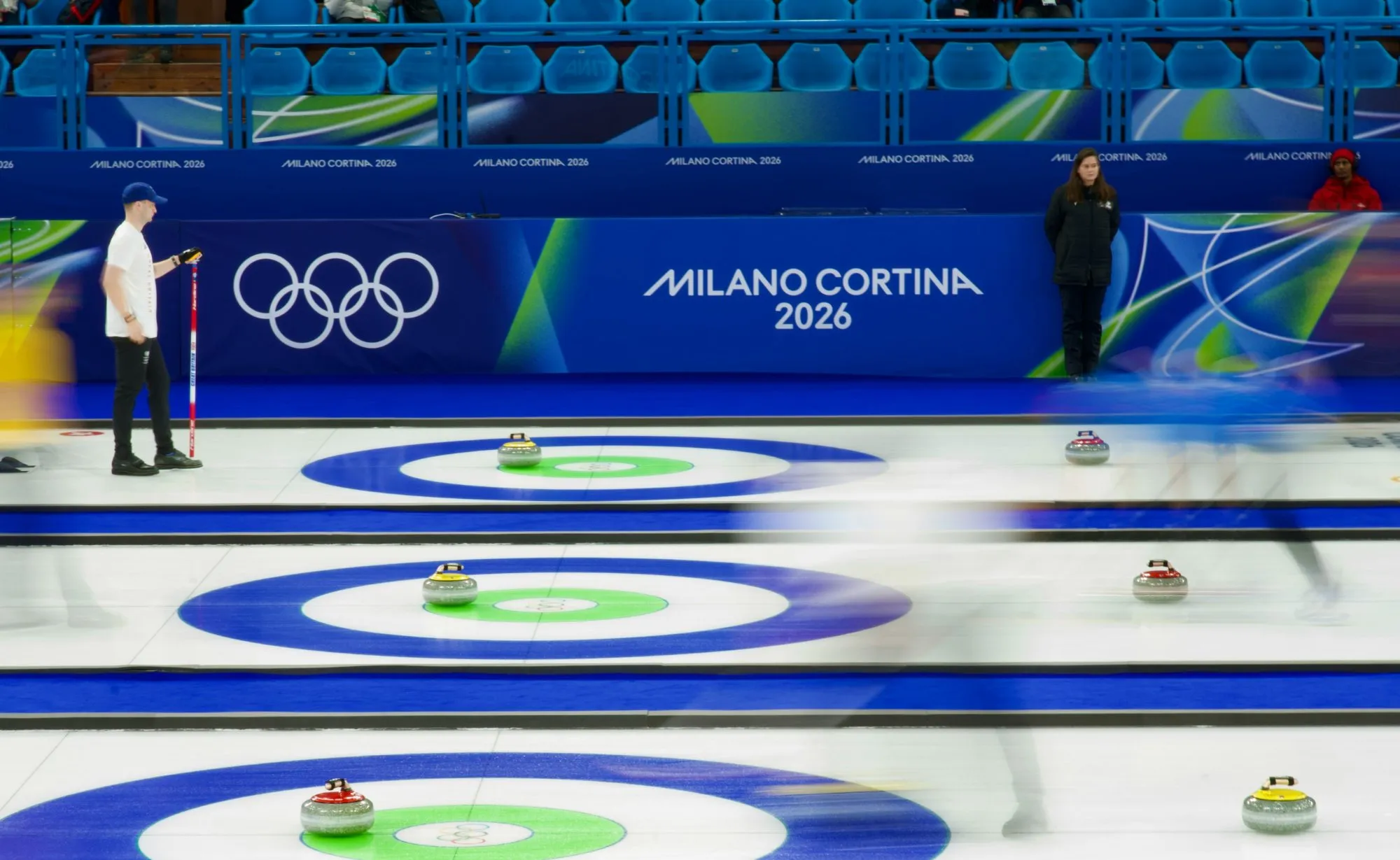
At the Winter Games, you expect spectacle.
And Milan Cortina is giving, with its absurdly gorgeous Dolomites, framing the sport with snow, altitude, speed, and risk. The Olympics and Paralympics still do what nothing else can: turn live competition into a postcard.
And you notice something else, pretty quickly:
The Olympics now produce infinite moments, but sponsor marketing still behaves like it’s built for finite ads.
The Olympics aren’t one broadcast with neat breaks anymore. It’s a moment factory with endless angles and clips. Training footage, athlete POVs, behind-the-scenes access, creator commentary, full-fledged recaps. All in unlimited supply.
But sponsor presence is the same small handful of spots, repeated, polished, and sealed off from the thing fans are actually watching.
Familiar faces still do the heavy lifting
Some continuity is comforting. Snoop Dogg is still out there acting like a universal translator for mainstream America, turning niche winter sports into something you can enjoy without needing to know the rules.
You watch him rink-side, fully committed, and you feel the difference between personality that belongs in the moment and messaging that waits for permission.
Broadcast keeps evolving
If you want innovation, you find it in coverage. Peacock’s behind-the-scenes and training content is genuinely sticky. The drone footage on downhill runs is insane. It puts viewers inside the sport. Beyond merely watching, we’re feeling speed in our stomach.
It’s technology that collapses the distance between the athlete and the audience. We are obsessed. However, it makes the advertising feel old.
Ads in an era that doesn’t respect ad breaks
The Olympics have shifted from an advertising environment into an attention ecosystem. Viewing isn’t linear. Attention isn’t obedient. Consumers move between feeds, formats, and fragments, and the Games meet them wherever they are.
And yet a lot of sponsor work still shows up in polite rectangles.
It’s not that the ads are bad. On the contrary, the craft is high. The editing is clean. The music swells on schedule. The problem is its shape. Much of it still feels designed as a self-contained commercial dropped into an infinite stream that doesn’t naturally accommodate it.
And it underlines the contrast: the event is building a world you can step into, while much of the sponsor messaging still feels like it’s speaking from outside the ropes.
Where are the event-defining commercials?
For an event this massive, why does it feel like so few sponsors are actually showing up with work that feels made for this particular cultural window? The kind of work you’ll remember as part of the Games.
Maybe it’s timing. Maybe budgets are being pulled into always-on performance. Maybe approvals and rights turn everything into a slow-motion compromise. Maybe the risk calculus has tightened. A global live event is a high-wire act in a world that punishes mistakes.
But the outcome still looks the same: Infinite moments on screen with finite marketing ambition around them.
Guerrilla keeps winning because it understands the moment economy
And then, almost on cue, the unofficial stuff feels most alive.
Nike’s All Conditions Express train from Milan to the Alps is the coolest brand moment you’ve seen so far because it doesn’t behave like an ad. It’s experiential, tightly linked to digital behavior, and already showing up in the places people actually share proof of life (Strava included). The product looks like it’s moving fast. The whole thing feels like culture, not placement, which is the point.
In the modern Olympics, the marketing that sticks rarely arrives as a neat message. It arrives as something that catches: a scene, a stunt, a human detail, a piece of motion that becomes contagious because it’s worth passing on.
Shaun White casually backflipping in Central Park still hangs over the whole thing for a reason. Because it looked like a real moment that’s instantly legible, socially transmissible, and impossible to recreate by committee.