Pepsico
Turning snack dust into street cred for Cheetos UK
( Services )
- Brand & Media
- Commerce
In the US, Cheetos has woven itself into the cultural fabric as a brand synonymous with playful rebellion, fashion collabs, and Gen Z’s irreverent spirit.
However, this bold cultural cache that the $3 billion brand has cultivated among young consumers hasn’t quite translated to the UK.
To address this gap, PepsiCo created a strategy that was as bold as it was ambitious. Within three years, their goal is to grow the Cheetos brand to £100M by making it a cult Gen Z brand tied to fashion, culture, and playful mischief.
As PepsiCo’s Creative & Influencer partner, our challenge was to help fundamentally reimagine the Cheetos brand in the UK and to do so in a way that felt earned, organic, and impossible to ignore for a famously hard-to-reach generation.
This wasn’t about incremental growth. It was about fundamentally repositioning a snack brand as a cultural force.

Learning what makes Gen Z tick
The real challenge wasn’t just about awareness; it was about authenticity. We couldn’t just tell Gen Z that Cheetos were part of UK culture. We had to make it true. We had to embed the brand into their world in a way that felt organic, earned, and impossible to ignore.
Two key insights informed our strategy:
- Gen Z spends 12.4 hours per week on TikTok, more than triple the amount of time they spend on Instagram or Snapchat. In this way, TikTok is truly where everything happens for this generation. It’s where subcultures are born, trends explode overnight, and communities form around the most unexpected things.
- 92% of Gen Z value being “authentic and true to oneself” as important. This passion for authenticity and identity transcends all aspects of their lives, especially in Gen Z’s fashion choices.
Following a creative sprint we held with TikTok and PepsiCo marketing, we settled on a strategy that was radical in its simplicity: Create an authentic fashion moment that felt real (not manufactured), then let it ripple through TikTok’s interconnected communities.
To break through to Gen Z, we needed to break through on TikTok. And, to break through on TikTok, we needed to make our mark on fashion. Literally.
We decided to lean into “Cheetle.” The deliciously cheesy, bright orange dust that not only gets on your fingers when you eat Cheetos… it also gets on your clothes.
The genius of cheese-dusted streetwear
Our benchmarks were to reach 60% of 18-24 year-olds and shift perceptions around Cheetos and fashion. This would be Cheetos’ first-ever UK campaign and PepsiCo’s largest influencer initiative to date.
To accomplish this, we went all-in on TikTok. No multi-platform spray and pray. This was about showing up where Gen Z actually lives and speaking their language with content that felt native to the platform.
At the heart of our campaign were Navinder Nangla, the British-Punjabi graffiti artist & designer, and fashion icon Aly Meghani, who boasts 1.3 million TikTok followers. Unlike many creator partnerships, however, the pair didn’t act just as faces for the campaign. Navinder and Aly had already established a creative relationship via their social media presences and, from the start, we worked together to incorporate their “mischievous genius” into the creative DNA of the campaign.
The campaign’s story unfolded in a series of social moments designed to feel spontaneous and real, a feeling that the real-life friendship between Navinder and Aly enhanced even further.
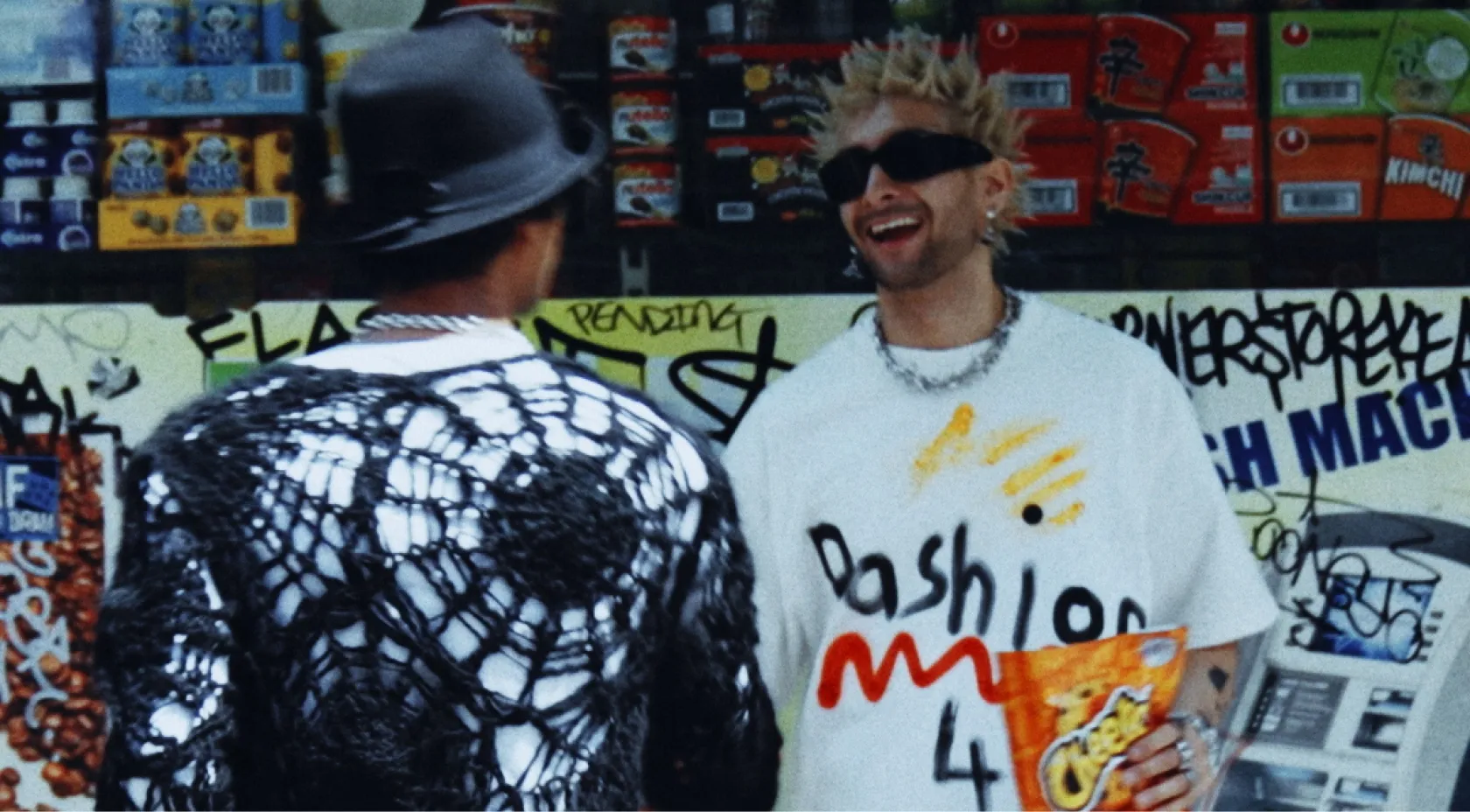
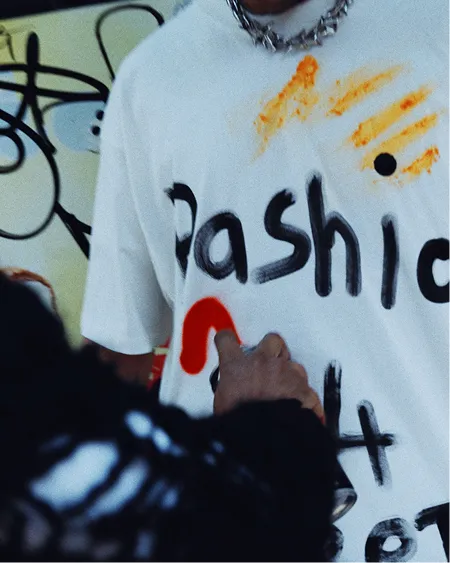
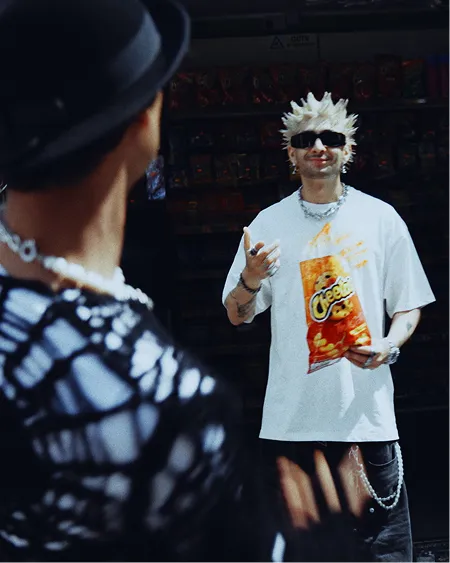
In the heart of London’s creative scene in Soho, Aly casually wipes Cheetle dust on his t-shirt; a relatable, messy moment we’ve all experienced. Navinder spots it and has a spark of artistic inspiration. In a “caught on camera” style video, the street artist creates a bespoke piece of wearable art directly onto Aly’s shirt, transforming the accidental Cheetle stain into intentional fashion.
To increase reach, both creators share the moment from their perspectives. Aly shows it to his 1.3 million followers. Navinder documents the creative process. The series culminates in Navinder’s “Pashion 4 Cheetoz” tee drop, a limited collection that blends creativity with humor and relevance in all the right ways.
Turning corner shop runs into cultural currency
In a nod to Gen Z’s seamless blend of physical and digital living, we took the online buzz into the real world by tapping into drop-style hype culture.
Navinder announced the limited tee drop on Instagram, then released it via an exclusive pin drop at a corner shop location in Brick Lane… for one hour only.
To amplify the corner shop hype even further, we turned to the people who could genuinely make this moment resonate: 31 fashion-forward Gen Z TikTok creators who were already part of the same cultural ecosystem as Navinder and Aly.
These creators weren’t picked at random. Each was handpicked, deliberately chosen for their prominence in the fashion scene on TikTok and the genuine connection they had with their audiences. Collectively, they all shared the same authentic passion for fashion, excitement about art and culture, and the kind of creative confidence that thrives on out-of-the-box ideas.
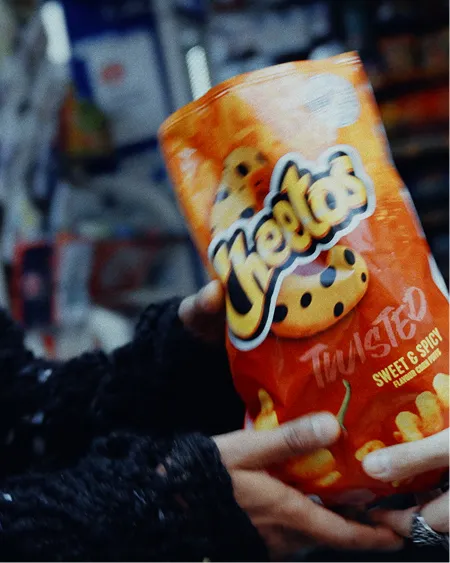
Next, we invited the creators to flex their creative juices with a refreshingly simple brief: Style Navinder’s tee your way, head to a corner shop of your choosing, grab a bag of Cheetos, and— yes—wipe that trademark Cheetle dust on yourself to drive home the message.
From there, we got out of their way.
This trust proved essential. While the client was understandably nervous about handing over creative control like this, we reassured them that this approach was exactly what would make the campaign work. And it did.
Rather than forcing these creators into a rigid template, we gave them the freedom to express their individual styles. The result? Over 35 pieces of content that felt genuine, diverse, and true to both the creators as well as Cheeto’s trademark sense of mischief. The comments reflected this too, with audiences celebrating the range of styles on display and the authenticity each creator brought to the table.
-
22%
Add recall
-
11.3M
Reach
-
+3.3%
Uplift in fashion keyword association
A snack culture that’s ready to keep growing
Our work helped drive a 50% year-to-date sales uplift for Cheetos, a remarkable start toward that £100M ambition, especially considering we were working with a relatively low marketing budget.
We also achieved:
- 22% ad recall vs. 8% benchmark, which we achieved without using any standard toolkit assets.
- 11.3M reach with 80% landing in the 18-34 demographic. Most campaigns are 18+, multi-platform. We went hyper-targeted to 18-34 on TikTok only and drove incredibly strong reach with the audience that actually matters
- 3.35 second average playtime view, nearly double the snacks average of 1.82 seconds.
- +3.3% uplift in fashion keyword association, indicative of how we literally changed how Gen Z perceives the brand.
Most importantly, the campaign perfectly encapsulates a burgeoning new approach to social media marketing. Not just for Cheetos, but for how any major brand can authentically enter youth culture.
Our strategy was all about creating cultural currency. Making Cheetos something Gen Z wanted to wear, talk about, and be part of. In this way, we made Gen Z not just consumers of Cheetos, but participants in a brand-new Cheetos culture that will continue to grow and evolve with the brand.

Translating hardware into human terms
( Services )
- Commerce
- Customer Experience
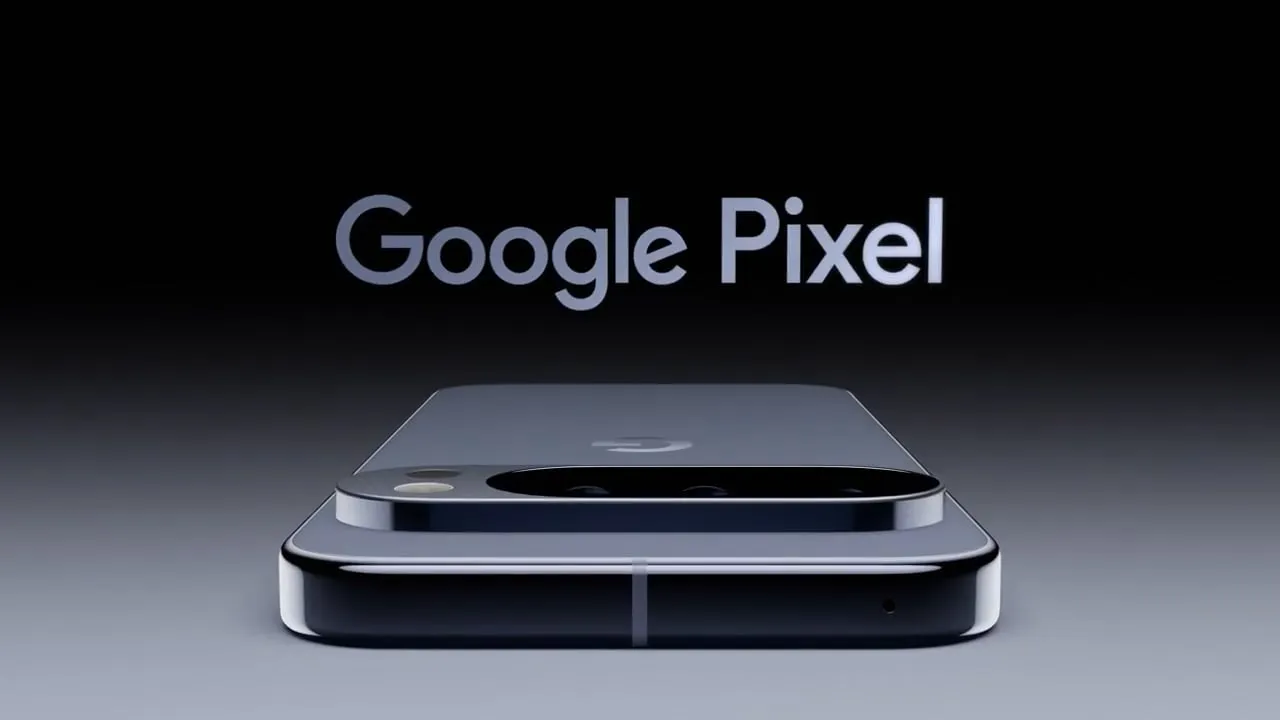
From smartphones to smart watches, Google Pixel represents some of the most technically sophisticated hardware in the world.
However, for the everyday consumer, that technological complexity can be overwhelming.

To help make their cutting-edge technology feel approachable, aspirational, and genuinely useful, Google created “Ask more of your phone.” A brand platform for Pixel designed to bridge the gap between complexity and human connection.
We’ve partnered to bring Google Hardware to life since 2017. While “Ask more” was launched in 2025, our collaboration has embodied the ethos behind the platform from day one. By drawing on language, visuals, and motion, we’ve strived to bring the capability of Pixel products to life within the human everyday.
As a result of our combined efforts, we’ve successfully launched dozens of new products and helped turn store.google.com into a world-class brand and e-commerce destination.
Bringing “Ask more” to life
We partnered with Google to reimagine the Google Store as more than a commerce destination. Over the course of the year, we designed and delivered 60+ pages, including flagship launches for Pixel 10, Pixel 10 Pro, Pixel 10 Pro Fold, Pixel Watch 4, and Pixel Buds 2a.
Our team became the connective tissue across Google’s Brand, UX, Marketing, and Engineering teams. Working across all of these teams, we helped translate technical innovation into unified, emotionally resonant stories that actually drive conversion.

From strategic concepting to visual design to final delivery, we built a design system for telling better stories at scale. This system, Infinity, represents a visual language responsible for bringing “Ask more of your phone” to life across the entire product ecosystem.
And we haven’t stopped there. Since its inception, we’ve continued to help evolve Infinity. Creating new modules. Conceiving new motions. Publishing new components to the library. All to push the Infinity system further, along the pace of culture and the brand stories we bring to life.
Building a system designed for learning by doing
The work required balancing two opposing forces: consistency and expressiveness. Every product needed to feel part of a cohesive whole while maintaining its own distinct identity.
The solution was a modular, scalable design system that flexes without breaking.
We introduced new visual patterns, immersive reveals, and adaptive storytelling moments that showcase signature innovations (such as on-device AI, advanced camera systems, and the power of Tensor G5) in ways that feel intuitive rather than overwhelming.

The trick was showing, not telling. Using interaction design to reward curiosity. Using motion to inform without exhausting.
Our creative, strategy, and UX teams collaborated deeply with Google’s brand leadership to translate the “Ask more” ethos into digital behaviors.
As part of this process, we asked ourselves questions like:
- What does it mean for a website to embody curiosity?
- How do you design an interaction that makes someone feel smarter?
- How do you turn technical specs into something relatable and desirable?
The answers to all of these involved meticulous craft: best-in-class responsiveness, editorial motion design, thoughtful pacing, and visual metaphors that do the heavy lifting. Every scroll, every hover, every reveal was designed to bridge aspiration with utility.
The power of storytelling
We elevated the Google Store into a global benchmark for digital retail, an e-commerce experience that merges craft with clarity and challenges people to expect more from the hardware they use every day.
By harmonizing Google’s design language with progressive web capabilities, we created pages that load fast, scale globally, and delight users on every device. The experience doesn’t just convert, it engages. It educates. It invites people to ask more.
This year’s launch represents a new bar for hardware storytelling on the open web: proof that brand expression, conversion-focused UX, and technical excellence can coexist seamlessly. Not as compromises, but as multipliers.
Makina
Challenging the norms of health tracking with a rebellious new identity
( Services )
- Brand & Media
Makina, previously known as Pulse, is a health-tracking platform.
While Pulse’s technology was advanced, it lacked a clear, ownable identity. Despite this, the brand had cultivated a small yet committed community of early adopters drawn to its challenger mindset, privacy-first approach, and belief that users should own their data. The platform encrypted personal health information and rewarded users simply for wearing the device.
As the team prepared to launch their first physical product, they faced a critical inflection point. To scale beyond a niche Web3 audience and enter the highly competitive wearables market, Pulse needed more than a visual refresh. It needed a brand transformation that remained true to its community while resonating with a much broader, culturally fluent audience.
We saw an opportunity to break away from the conventions of the wearables category and define an entirely new space. Makina didn’t need to compete on louder metrics or sharper claims. It needed to reframe the role of data itself and reposition technology as a partner in personal growth, not a judge of performance.
Standing out in a performance-obsessed category
The wearables market is crowded with established players and familiar messaging. Most brands speak in the same terms: efficiency, optimization, targets, and gains. While effective, this mindset leaves little room for individuality, curiosity, or emotional connection.
Pulse’s challenges were twofold. First, it needed to evolve from an early-stage, tech-led product into a cohesive and desirable brand built for growth, partnerships, and long-term relevance. Second, it needed to differentiate meaningfully from traditional fitness trackers without losing the credibility and sophistication of the underlying technology.
To move beyond being “another wearable,” the former Pulse brand needed to carve out a new position that resonated with people who see wellness not as a rigid system, but as something to explore and evolve over time.


Reframing wellness as a lived experience
From strategy to verbal and visual expression, Pulse’s new identity as Makina reframes personal wellness away from rigid goal-setting and toward dynamic exploration.
Developed in collaboration with Reed Words, the new name Makina signals a playful, rebellious, machine-augmented future. It hints at the invisible systems shaping our bodies and behaviors, while remaining approachable, curious, and human.
Makina’s communication maintains technical credibility while speaking in a language that feels supportive and personally relevant. It educates without lecturing, guides without controlling, and motivates without overwhelming.
Rather than treating data as something to optimise against, Makina invites people to engage with it as a prompt for reflection and experimentation. The brand encourages users to notice patterns, test behaviors, and evolve at their own pace—shifting the role of technology from performance tracker to trusted companion.
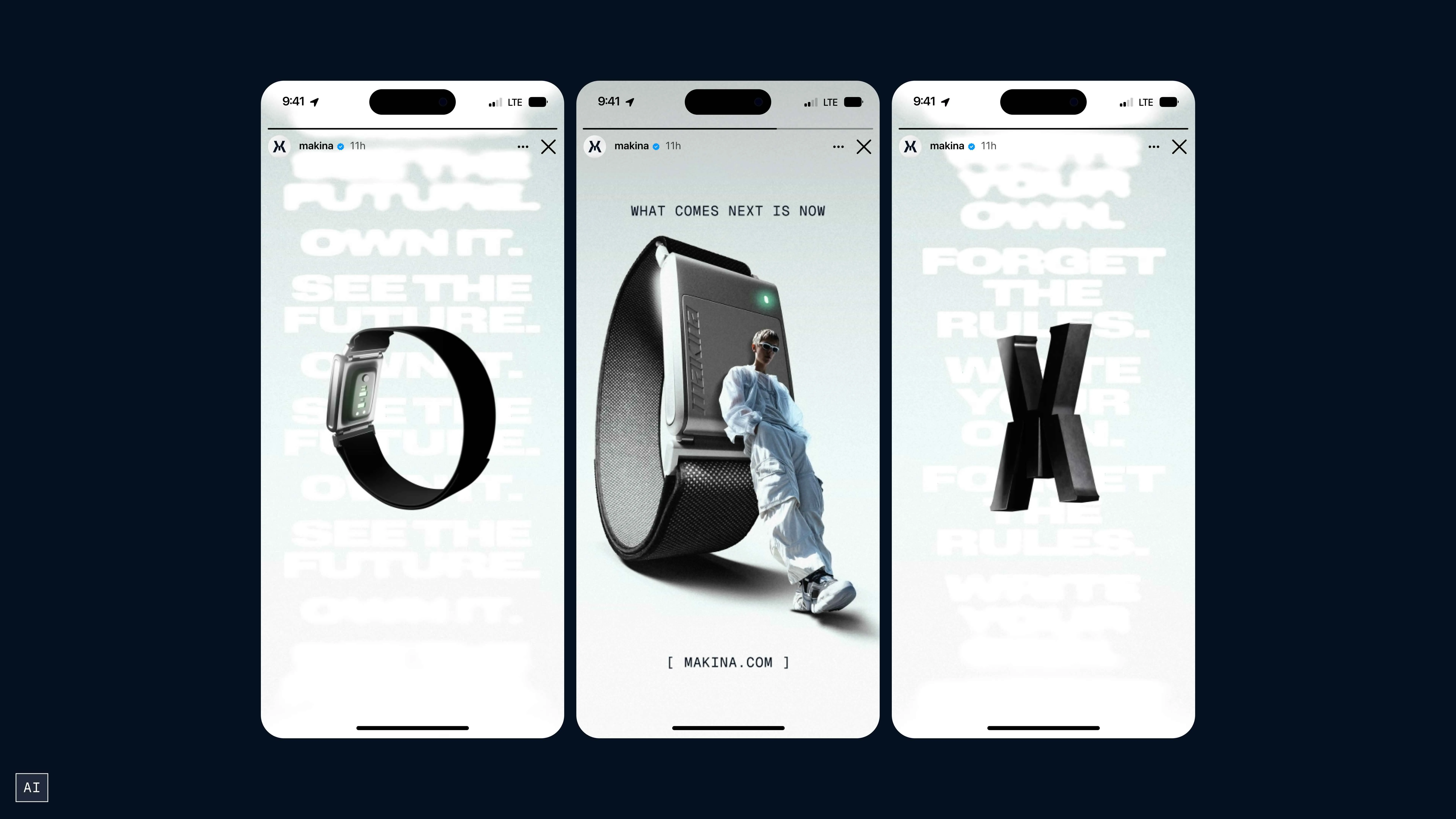
Play. Discover. Grow. — brought to life
The refreshed identity captures the pivotal moment when someone chooses growth over inertia and feels compelled to share that breakthrough with others. Makina is repositioned as a personal experimentation platform, expressed through the ethos Play. Discover. Grow.
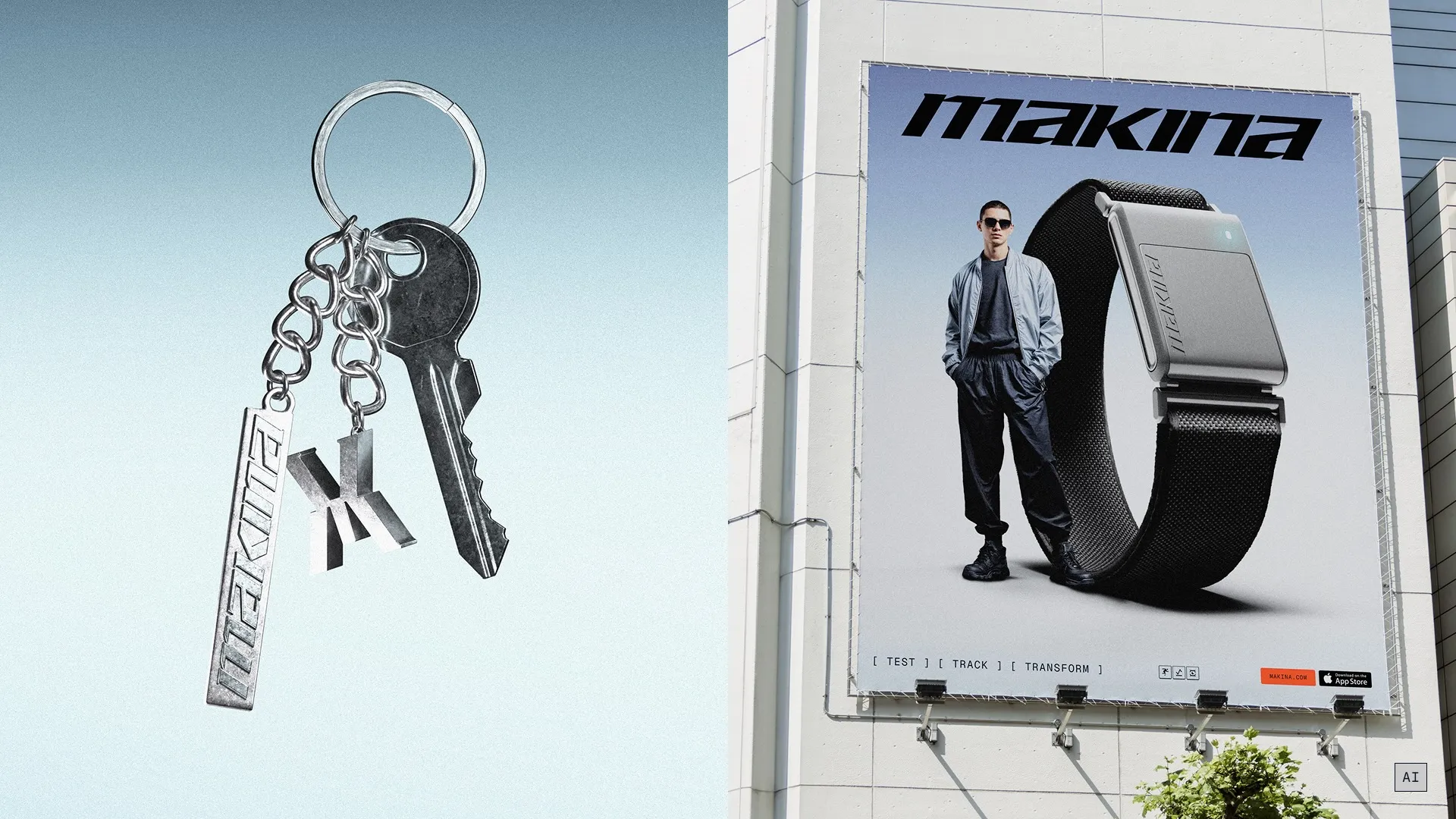
Drawing on retro-futuristic cyberpunk aesthetics and anime influences rooted in the audience’s counter-cultural reference points, we created a visual language that challenges category norms. The identity is bold, expressive, and deliberately playful to stand apart from the clinical, performance-led look of traditional wearables.
The logomark is inspired by Japanese anime lettering and east-meets-west cultural influences, with subtle references to electrical symbols that suggest unseen forces at work. The custom, hand-drawn wordmark continues this energy with bold, characterful lettering charged with a cyberpunk attitude.
Typography is confident and poster-like, reinforcing Makina’s fearless tone. The brand uses color sparingly, drawing on a noughties retro-futuristic palette of chrome and metallic textures, while expressive gradients add drama and depth. Motion design takes cues from retro video games, blending nostalgia with a playful sci-fi edge.
DEPT® and Makina’s art direction fully embodies Play. Discover. Grow. Models interact with supersized product forms to express the power and playfulness unlocked through Makina’s technology. We used AI and 3D techniques to build a fantastical, futuristic world audiences can step into and feel part of—grounded in culture, attitude, and a strong sense of community.
Together, these elements create a rich, confident, and inviting brand world that brings Makina to life as a movement defined by curiosity, experimentation, and growt


A challenger brand built to scale
Makina now occupies a distinct position within the wellness wearables space as a confident challenger brand with a clear POV and cultural edge.
Comprehensive brand guidelines support rollout across product, digital, marketing, and experiential touchpoints, ensuring consistency while allowing for expression and evolution over time. The new identity equips Makina with the clarity, flexibility, and confidence needed to launch and expand into a broader ecosystem of products and experiences.
After just three months since rebranding from Pulse to Makina, the brand has already seen significant early indicators that the new positioning is resonating with and fueling engagement from key audiences.
This post-launch traction has helped Makina establish a compelling presence in a highly competitive category, setting a strong foundation for future growth and commercial potential.
-
3x
Conversion rate increase post-rebrand
-
4x
More content visibility in 50% less time
-
340%
Increase in followers
“We’ve been working extensively with DEPT® for the past year. What I love is they’ve taken the time to truly understand our market and audience, and have then used that insight to translate it beautifully into a new brand identity. From day one, they’ve been collaborative, adapting their ways of working to fit our small team. They go above and beyond, and we’re excited to continue our partnership.
”River Tamoor Baig, Co-Founder, Makina
Where strategy, culture, and technology converge
This project brought together brand strategy, naming, visual identity, verbal expression, and emerging technology within a single, collaborative team. From strategy to execution, every element was designed to work as part of a cohesive system.
Custom logomarks, AI-assisted art direction, and 3D modelling enabled a brand expression that is both imaginative and precisely crafted. Led by DEPT®’s Brand Experience team in London, the work demonstrates our ability to fuse creativity, technology, and cultural insight—building brands that are not only distinctive, but designed for what comes next.
INTER
Using AI to scale CGI avatars for a fan loyalty platform
( Services )
- AI Transformation
- Tech & Data
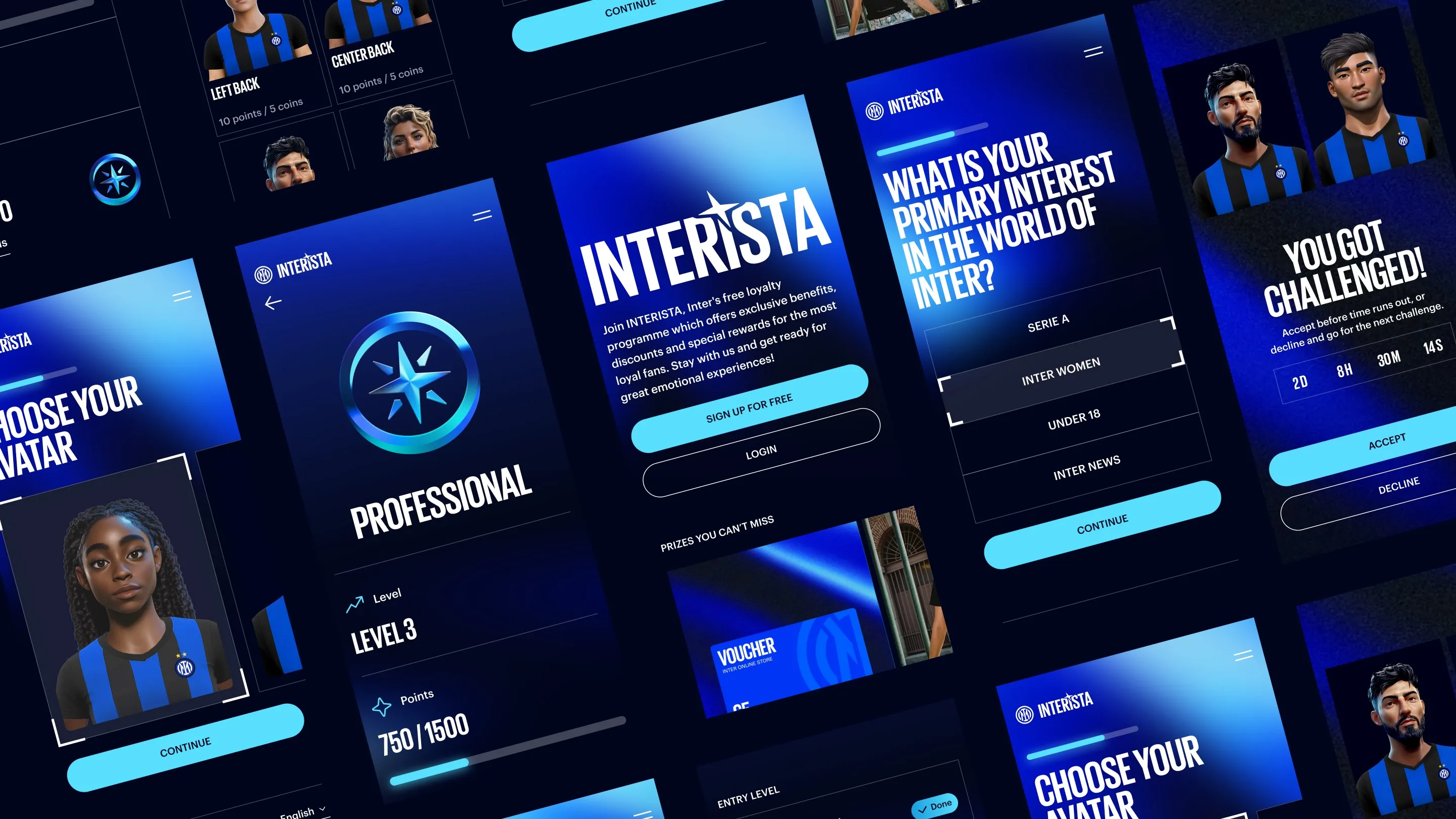
As we were helping design INTERISTA, a new fan loyalty platform with football club Inter, it became clear that custom avatars would bring the experience to life.
The idea was ambitious, and the timeframe was tight: a full cast of avatars, designed and animated, in two weeks.
Meeting that timeline meant rethinking the standard production process. By combining visual AI with hands-on craft, we built a workflow that moved fast without losing creative control. What followed was an intense, highly iterative sprint that reshaped our approach to avatar production.
Meeting the brief at full sprint
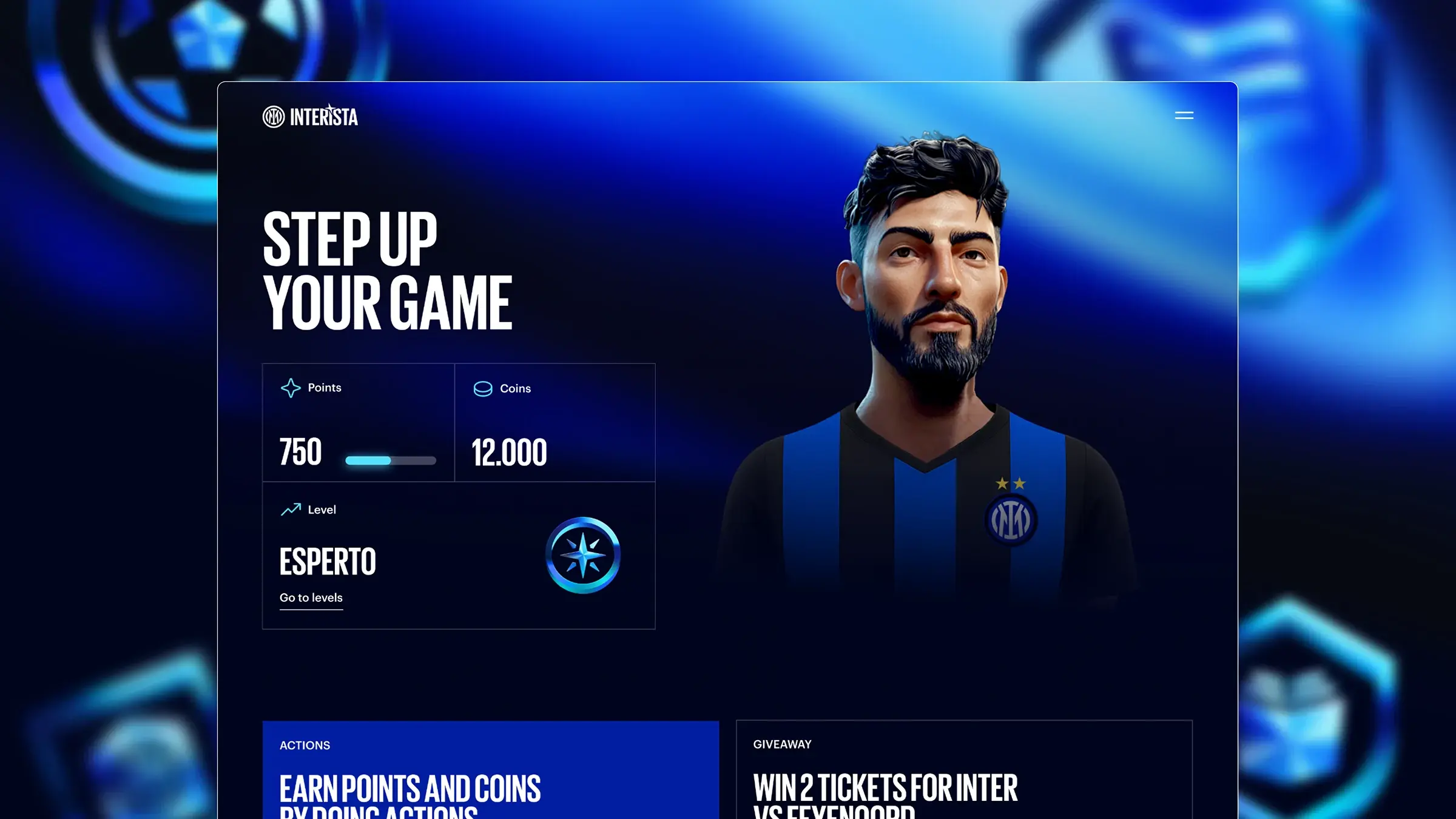
The loyalty platform concept relied on bringing supporters into a dynamic, character-driven world. To make this possible, we needed nine avatars, each reflecting a different background and personality, while remaining consistent with Inter’s iconic brand.
The non-negotiable constraint was time. With only 80 hours available for both creation and animation, a full manual CGI workflow would not work. We needed an approach that enabled rapid iteration, quick client alignment, and precise control over the final look.
Leveraging AI, but maintaining creative control
We put visual AI at the center of the process as a way to explore options quickly and reduce the time between creative decisions.
Our workflow focused on three key areas:
RAPID EXPLORATION
AI allowed us to generate a wide range of avatar ideas in a short period of time. This made it possible to test multiple directions early, gather feedback quickly, and identify a shared visual language with the client.
CRAFTED FINAL OUTPUT
Once strong starting points emerged, our team refined them through detailed compositing and retouching. Many avatars were built by combining the strongest elements from different AI outputs, adjusting expressions, poses, clothing details, and proportions to create a cohesive universe.
FREQUENT ALIGNMENT
To keep momentum high, we set up quick but regular check-ins with Inter. This drastically reduced approval bottlenecks. Once the visual style and individual avatars were locked, we used AI-assisted tools to generate gesture loops and final stills.
Character development 13.5X faster
The hybrid model allowed us to deliver high-quality assets at a pace that wouldn’t have been possible with traditional production. Our final nine avatars featured 540 stills and 34 gesture loops.
-
~13.5x
Faster production than manual CGI
-
~92%
Lower costs than comparable CGI workflows
-
9
Fully developed characters
This project confirms that visual AI can play a meaningful role in final production, helping teams work faster without giving up creative control. It also laid the groundwork for future character-driven experiences across the loyalty platform and beyond.
bol
Building an AI-powered gift-giving assistant
( Services )
- AI Transformation
- Commerce
Every holiday season, millions of people face the same dilemma: what do you get for that one person who “doesn’t need anything?”
That challenge is multiplied for bol, one of Europe’s largest online retailers (often called the Amazon of the Netherlands), whose massive assortment makes it both a treasure trove and a maze for shoppers.
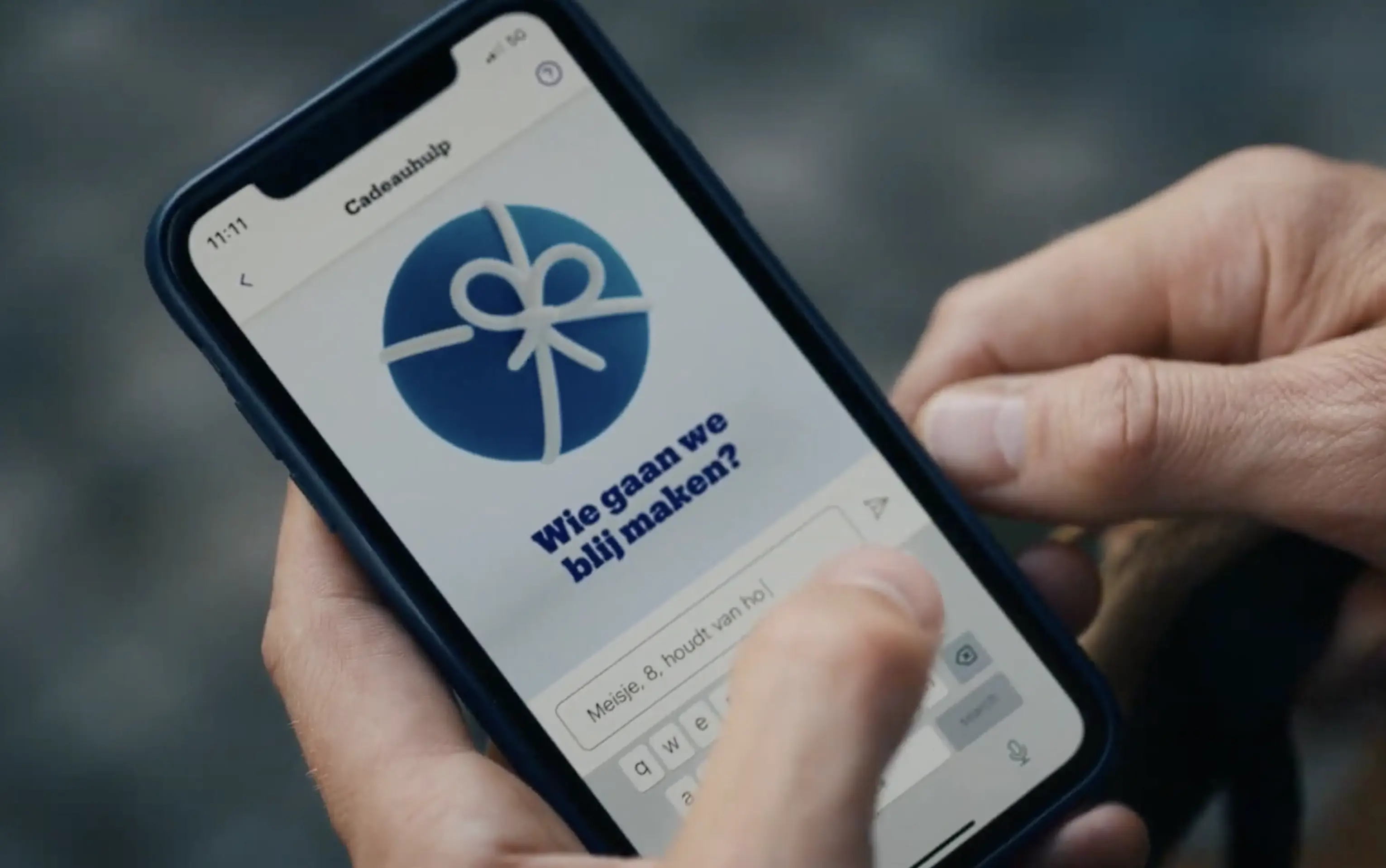
This year, bol wanted to make the gift-giving season smarter, funnier, and a little more human. The result? An AI-powered assistant that helps users find the perfect gift for everyone on their list. Whether you’re shopping for a niece obsessed with slime or a coworker who collects indoor plants, this AI knows how to help.
Turning endless choice into meaningful gifts
With thousands of options just a click away, even the best shopping experience can feel overwhelming. So our team asked a simple question:
How can we make finding a gift feel as thoughtful as the act of giving itself?
Our answer: give bol’s entire catalogue a human touch by leveraging AI to act like that one friend who always knows what to get someone.
Built with heart
At its core, bol’s AI Gift Giver is powered by Google’s Agent Development Kit (ADK), making it one of the first large-scale generative AI deployments in European e-commerce.
Here’s what’s under the hood:
- Gemini, Gemini Flash, and Flash Lite models, hosted on bol’s secure Google Cloud Platform (GCP) environment.
- A custom-built conversational interface that connects directly to bol’s Search API, enhanced with semantic search. In other words, it understands “something for a 6-year-old who loves dinosaurs,” not just exact product names.
- A stateless, horizontally scalable backend, ensuring it runs smoothly for millions of shoppers at once.
But the real magic comes from how tech and empathy meet: maintaining bol’s trademark humor while making every interaction feel personal, safe, and on-brand.
Designed to feel human
Technology alone doesn’t make a good shopping experience — tone, timing, and emotion do.
Our UX and creative teams worked closely with bol to design a flow that felt intuitive, friendly, and distinctly bol. The process unfolded in three stages:
- Discovery: We mapped the emotional highs and lows of gift shopping, including excitement and indecision, through a high-level Figma prototype.
- User Testing: Real shoppers tested the prototype, sharing thoughts as they explored. Every hesitation, laugh, and “that’s clever” moment helped us improve.
- Design Sprint: Together with bol’s design stakeholders, we refined the conversational tone and visuals to balance warmth and wit.
Then came the proof: an internal prototype tested by bol employees. They threw all kinds of gift requests at it (“something for my brother who only likes snacks and sleeping”), helping us fine-tune pacing, humor, and flow. After several iterations, the assistant rolled out gradually, from 0.5% of users to 6%, before going live for everyone.
bol’s AI Gift Giver transforms shopping from a transaction into an act of connection, bridging the gap between endless options and that “oh wow, that’s perfect” moment.
It also marks a shift in how major retailers think about e-commerce: blending generative AI, brand personality, and customer empathy into one cohesive commerce experience.
Getting it right matters
Shoppers everywhere are curious about AI, especially when it promises to make their lives easier (and their gifts better). But curiosity only turns into trust when the experience actually delivers.
That’s why getting it right from the start is essential. bol’s AI Gift Giver was built with careful brand considerations, fine-tuning, and extensive testing to make sure every interaction felt seamless and safe.
R.O.A.D.
Reclaiming the narrative and forging the future of Barbados
( Services )
- Brand & Media
- Customer Experience
In 2025, Barbados marks 400 years since the first British Ship arrived on its shores—a sobering anniversary that calls for remembrance, reflection, and reckoning. Over the centuries, local culture and heritage have faced numerous obstacles.
In response, the Government of Barbados launched the R.O.A.D. (Reclaiming Our Atlantic Destiny) Programme. More than a heritage initiative, it’s a national movement to preserve the past and project a new future—one rooted in truth, dignity, and self-determination.
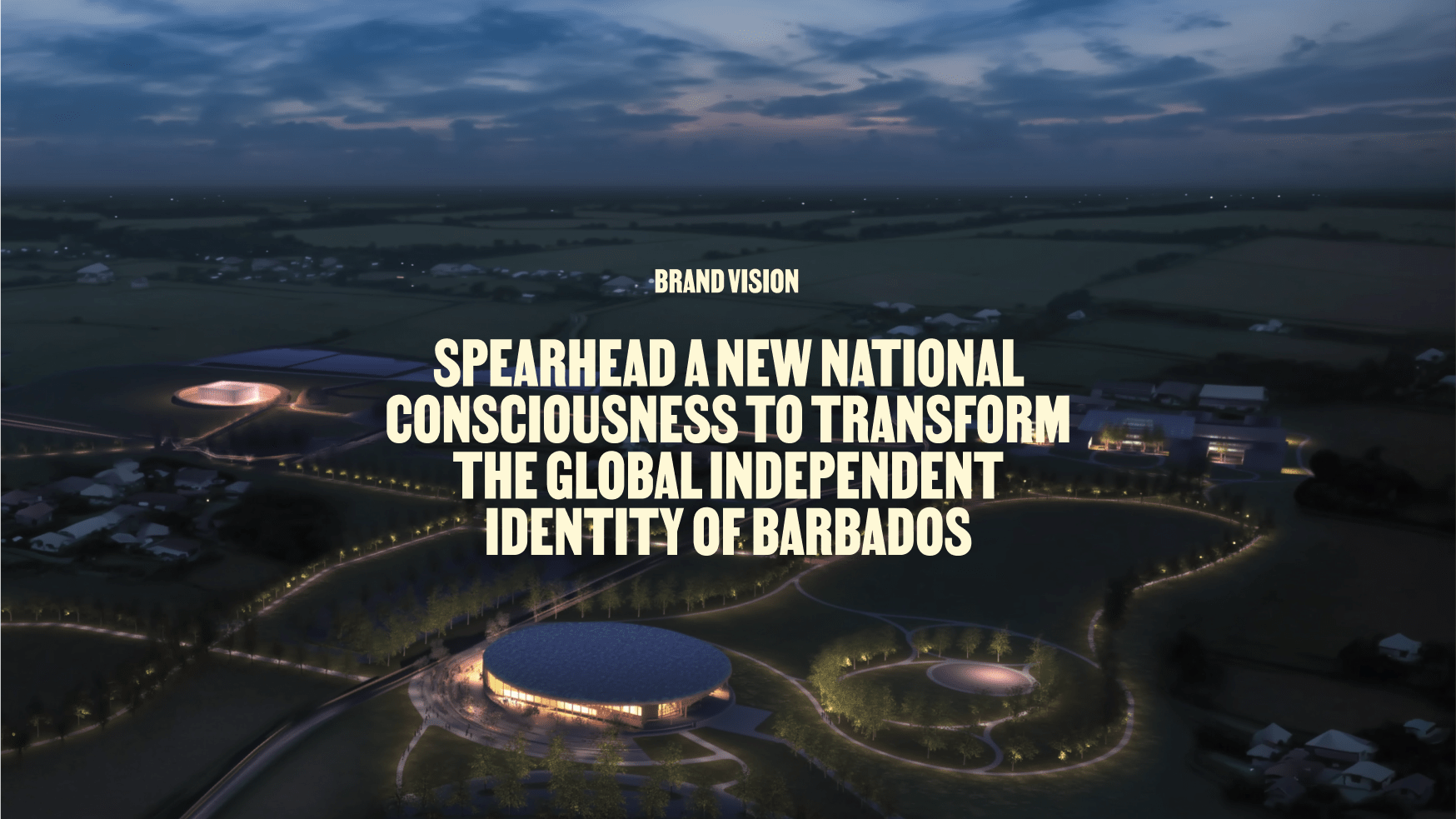
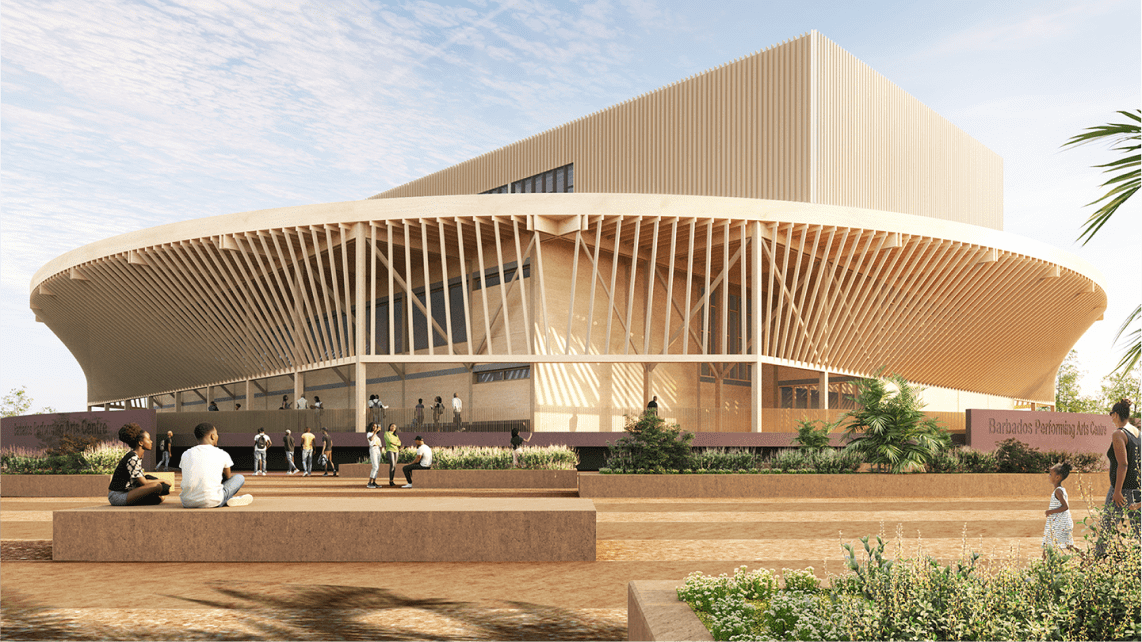
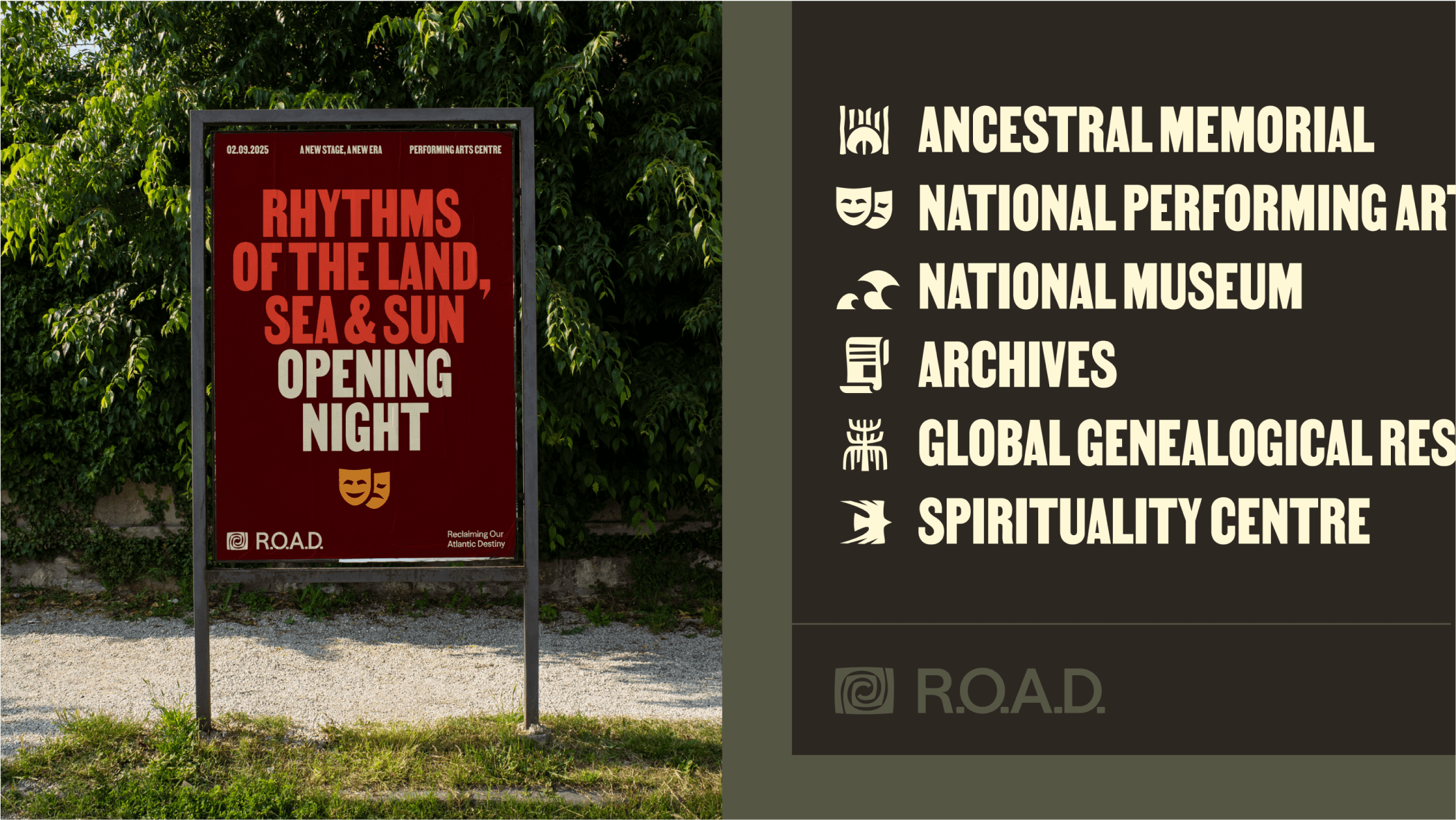
R.O.A.D. is designed to digitize and safeguard one of the world’s largest archives of records from the transatlantic slave trade, many of which have never been publicly accessible. Alongside this monumental archival effort, the program will establish the Barbados Heritage District, which will encompass an Ancestral Memorial to the Enslaved, a National Performing Arts Centre, a global Genealogical Research Institute, and a National Museum dedicated to accurately recounting the historic and contemporary impact of slavery and forced migration on Barbados. Together, it will create space for education, cultural celebration, and global conversation.
We were brought in to help build a brand strategy, visual identity, and digital experience that could carry the weight of history while inviting participation in the future.
Since establishing a regional hub in Barbados in 2023, our agency has been committed to creating economic opportunities and fostering local talent in the Caribbean. And as a certified B Corporation, the chance to co-create a platform that honors past generations past and empowers those to come is the kind of impact-driven work that sits at the heart of our mission.
Visit the R.O.A.D. website here
A moment of truth for a nation and the world
Our teams faced a unique challenge: How do you balance reverence with ambition, solemnity with strength? How do you design for something that isn’t a product or a campaign, but a cultural legacy?
R.O.A.D. has set out to do something immensely impactful by reclaiming authorship over its own history, sharing it with the world, and catalyzing a “heritage economy” rooted in truth-telling and cultural expression. Crafting a brand around such a profound subject matter isn’t straightforward. The identity had to be bold enough to spark a movement, but sensitive enough to earn the trust of those it represented. It had to feel distinctly Barbadian, while inviting global audiences to engage, learn, and contribute.
For us, this meant moving past aesthetics and into meaning-making. Every element had to carry weight. Each design decision needed to reflect lived experience. Most importantly, the approach had to be deeply collaborative, with Barbadians at the center of the narrative.
Our process was intentionally global and inclusive. Team members from Barbados, the UK, Australia, and the Netherlands traveled to the island to engross themselves in the culture, engage with stakeholders, and better understand the nuances of the subject matter. This immersive, shared learning experience was critical to shape not just the outcome, but the mindset of the work.
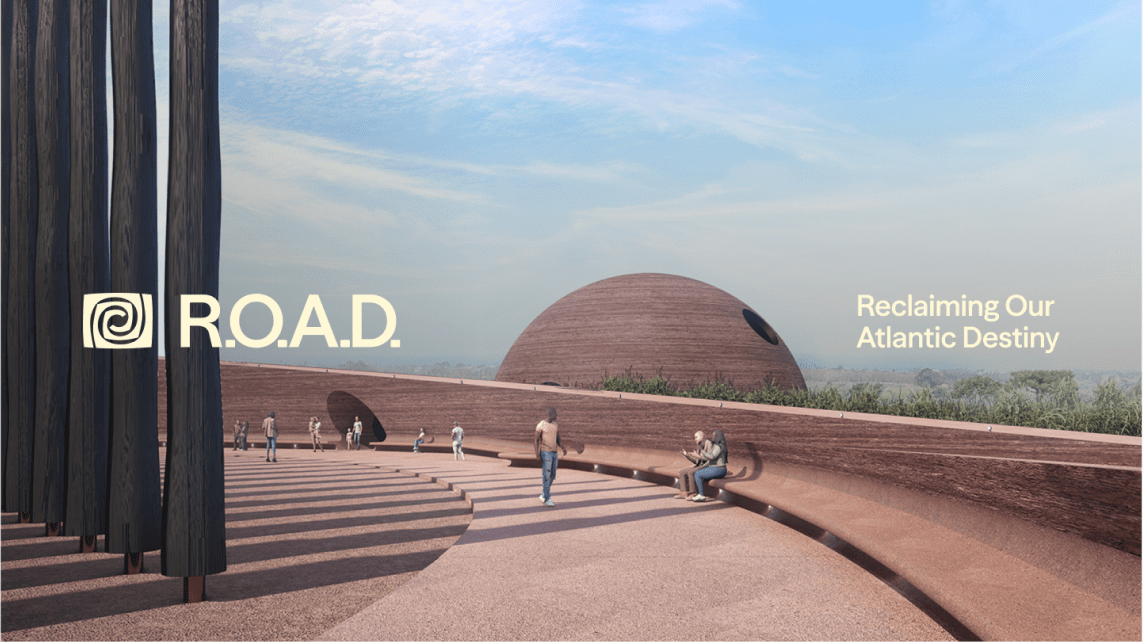
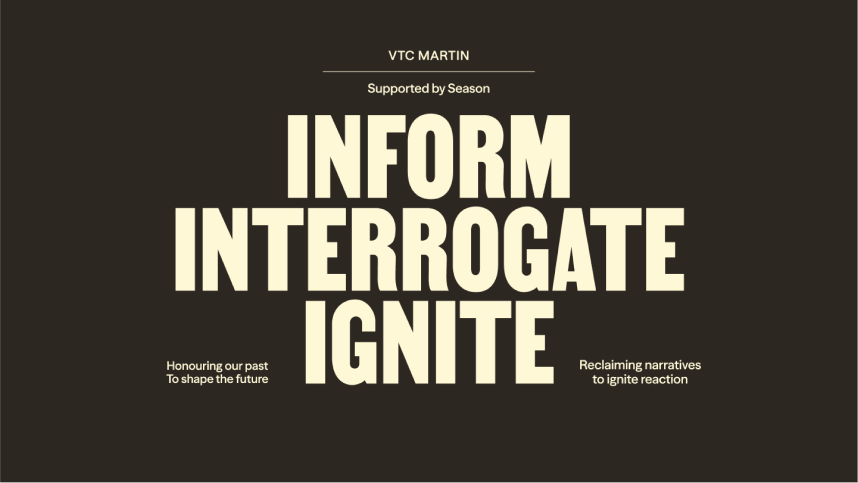
Interrogate, inform, ignite
To build a brand strategy and visual identity that lived up to the R.O.A.D. Programme’s ambition, we had to start at the intersection of history and possibility.
At its core, R.O.A.D. is about uncovering, preserving, and sharing truths with the world. But it’s also about agency, empowering Barbadians to reclaim their story and radiate it outward as a source of cultural pride and economic momentum. With these factors in mind, we formed a strategy around a simple but powerful framework:
- Interrogate the past with honesty, transparency, and respect.
- Inform the present through education, design, and storytelling.
- Ignite the future by turning heritage into a catalyst for creativity, opportunity, and change.
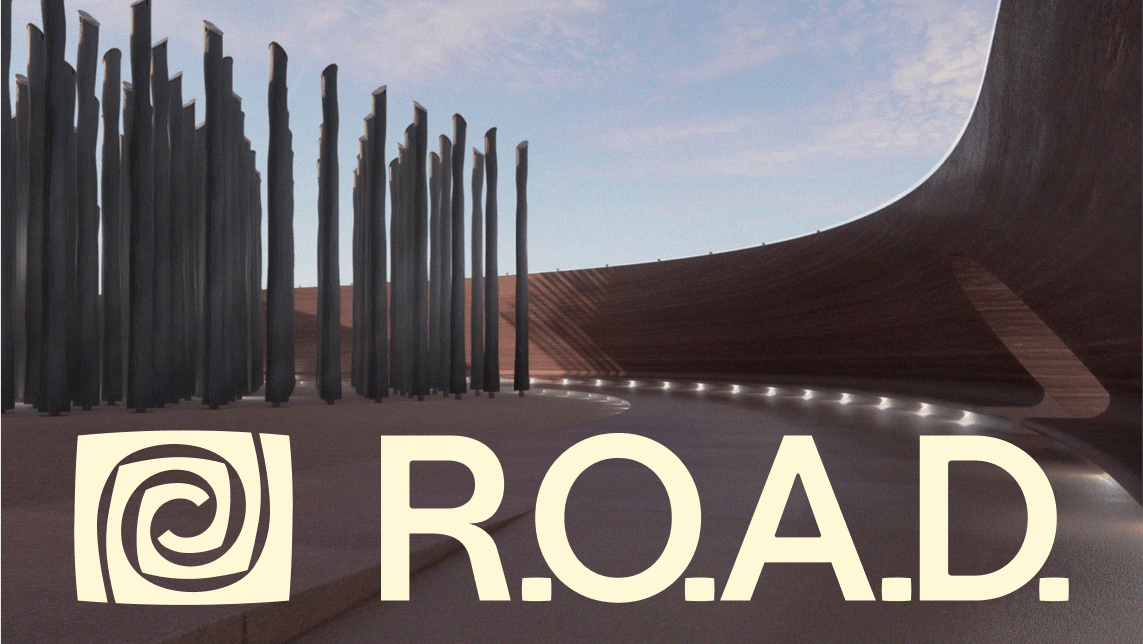
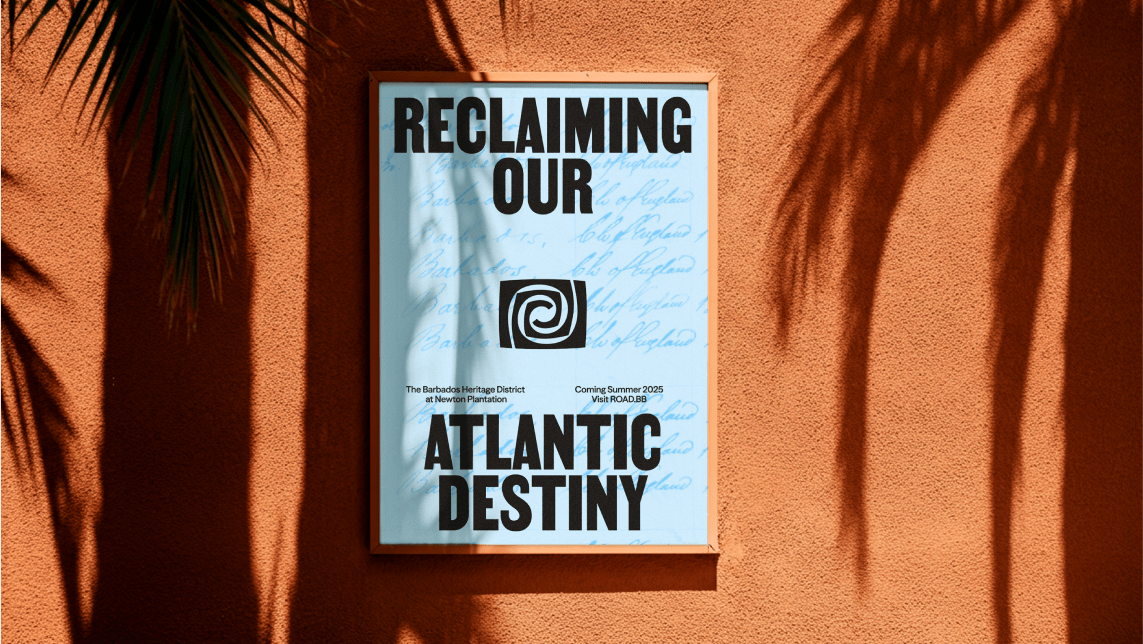
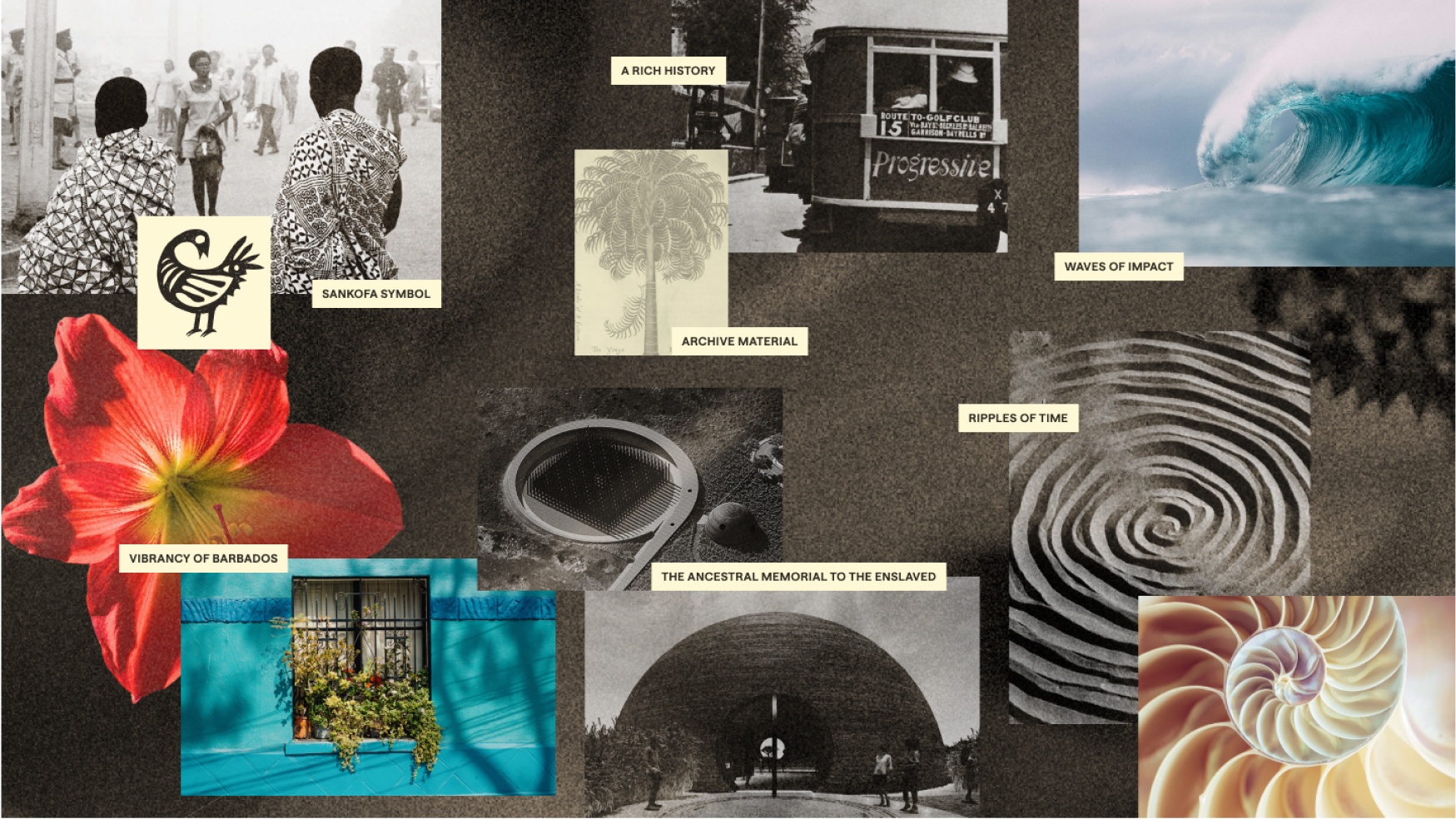
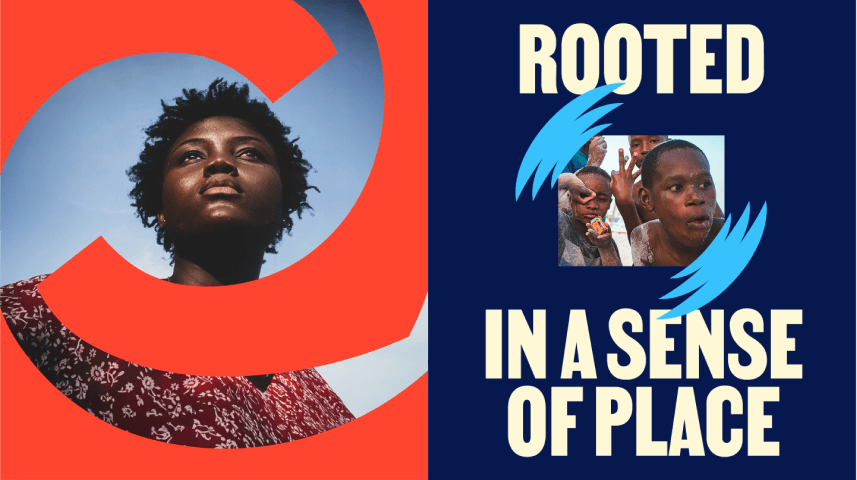
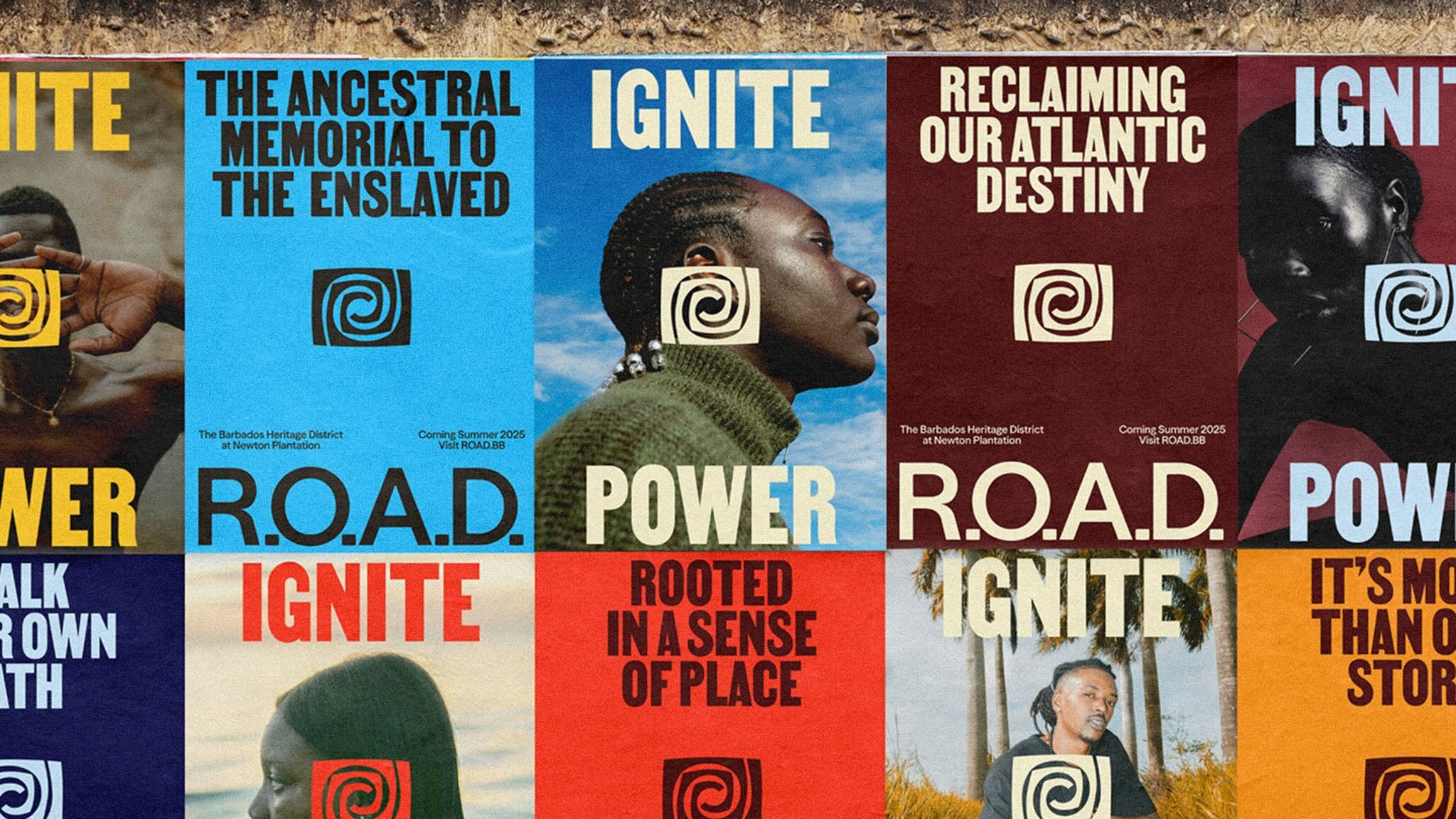
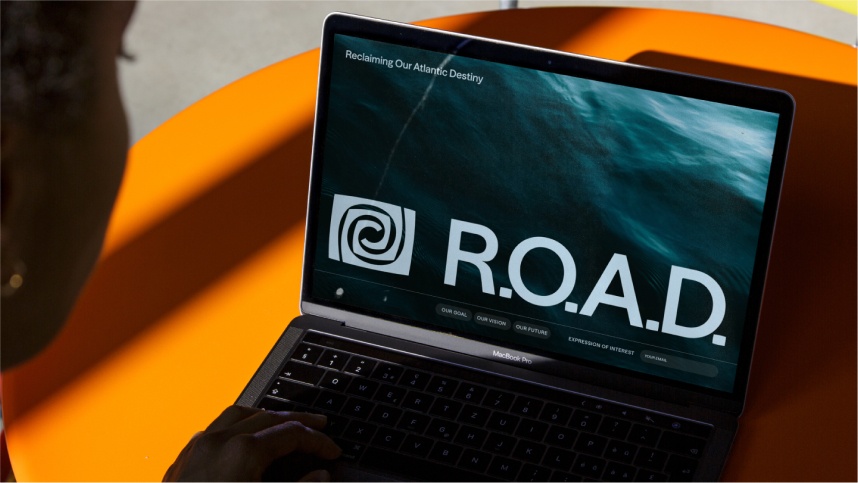
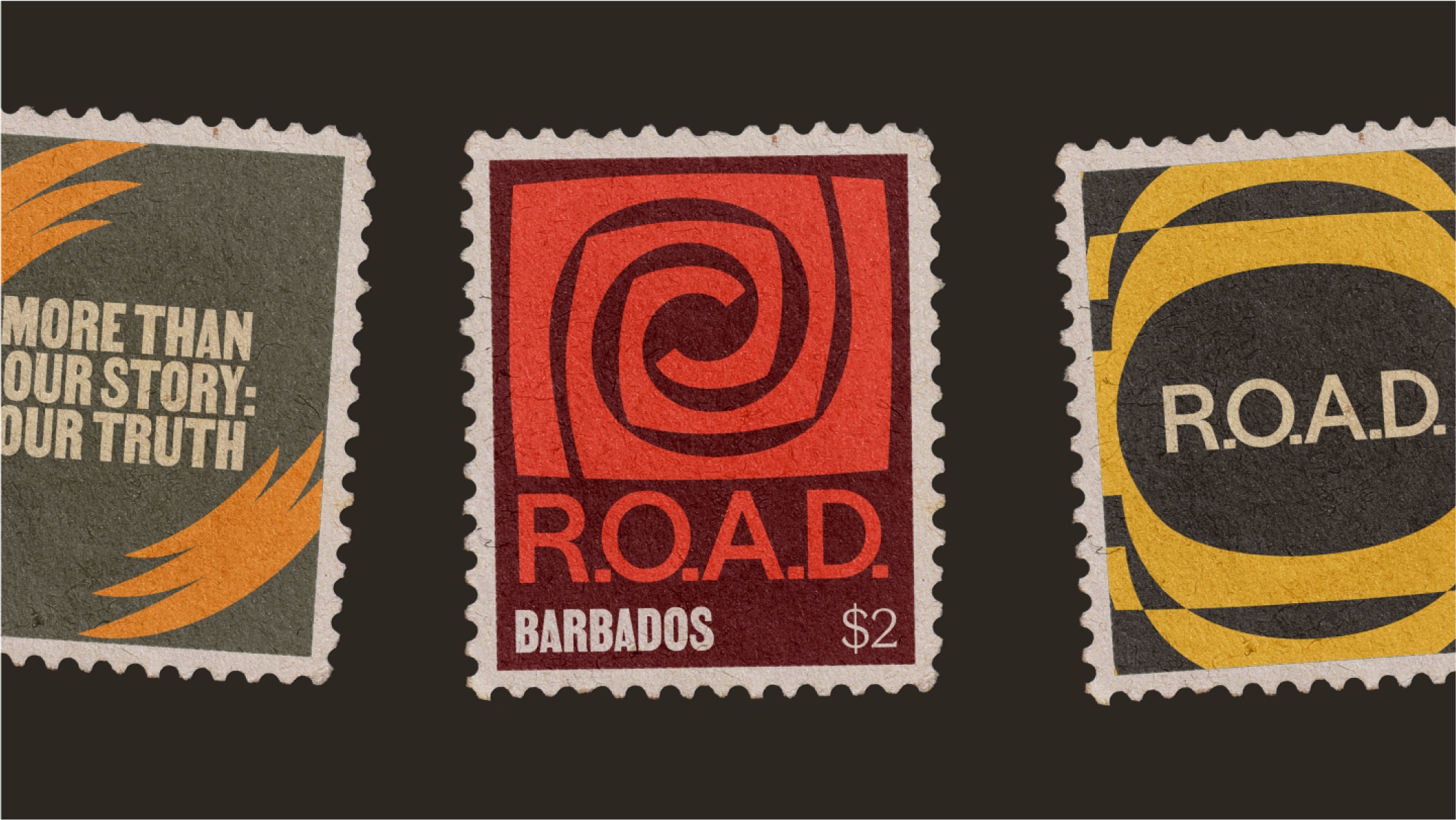
At the heart of the identity is the African Sankofa symbol, which represents the concept of looking back and learning from the past in order to move forward and create a better future. We reimagined the symbol through a Caribbean lens, using the spiral as our guiding shape.
It symbolizes the past feeding into the present, and the present unlocking the future. Its circular form also reflects Barbados itself, positioned at the center of the Atlantic, sending ripples of history, resilience, and hope across the globe.
From there, we built a full design system that embraces contrast and duality. It’s traditional and modern, serious and uplifting, local and global.
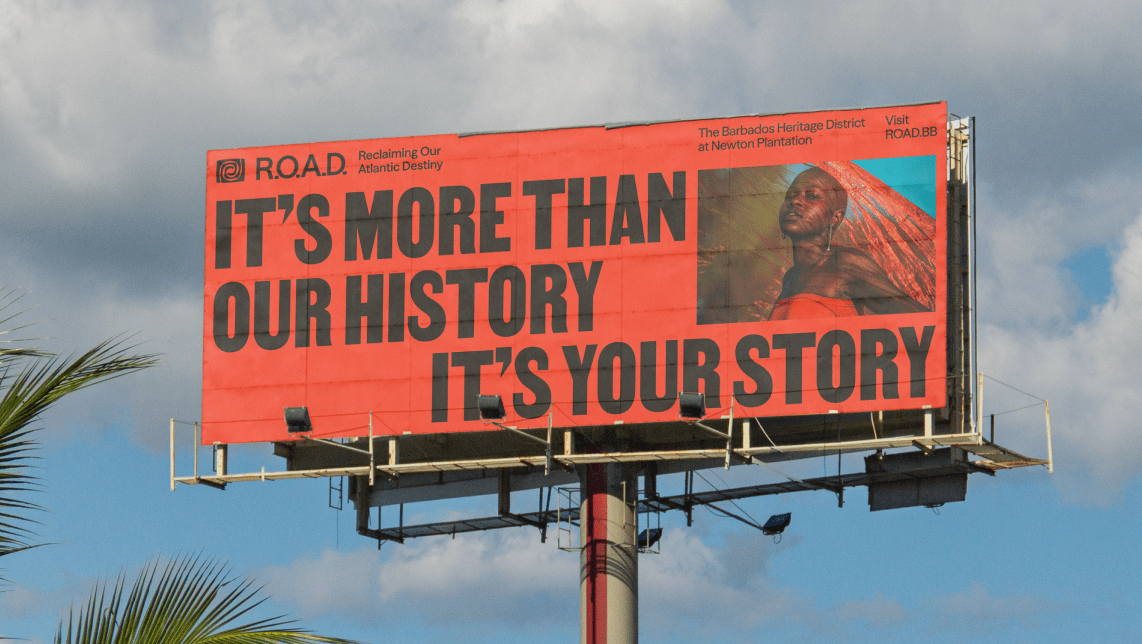
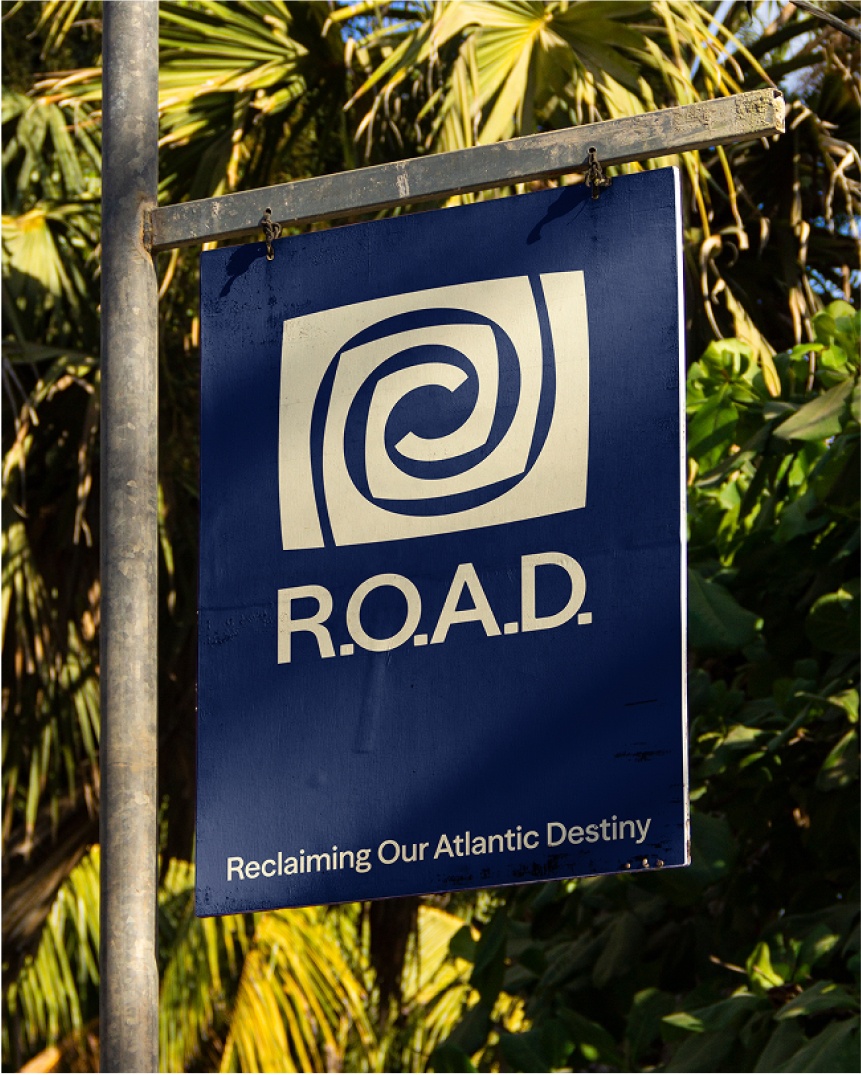
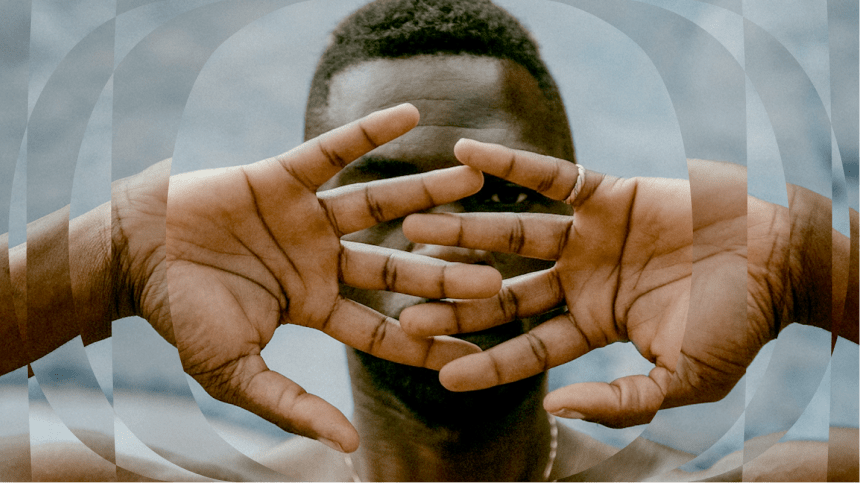
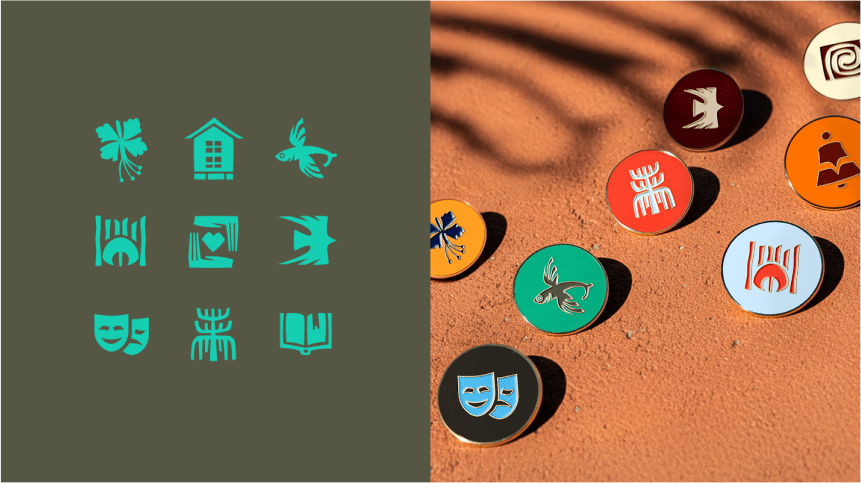
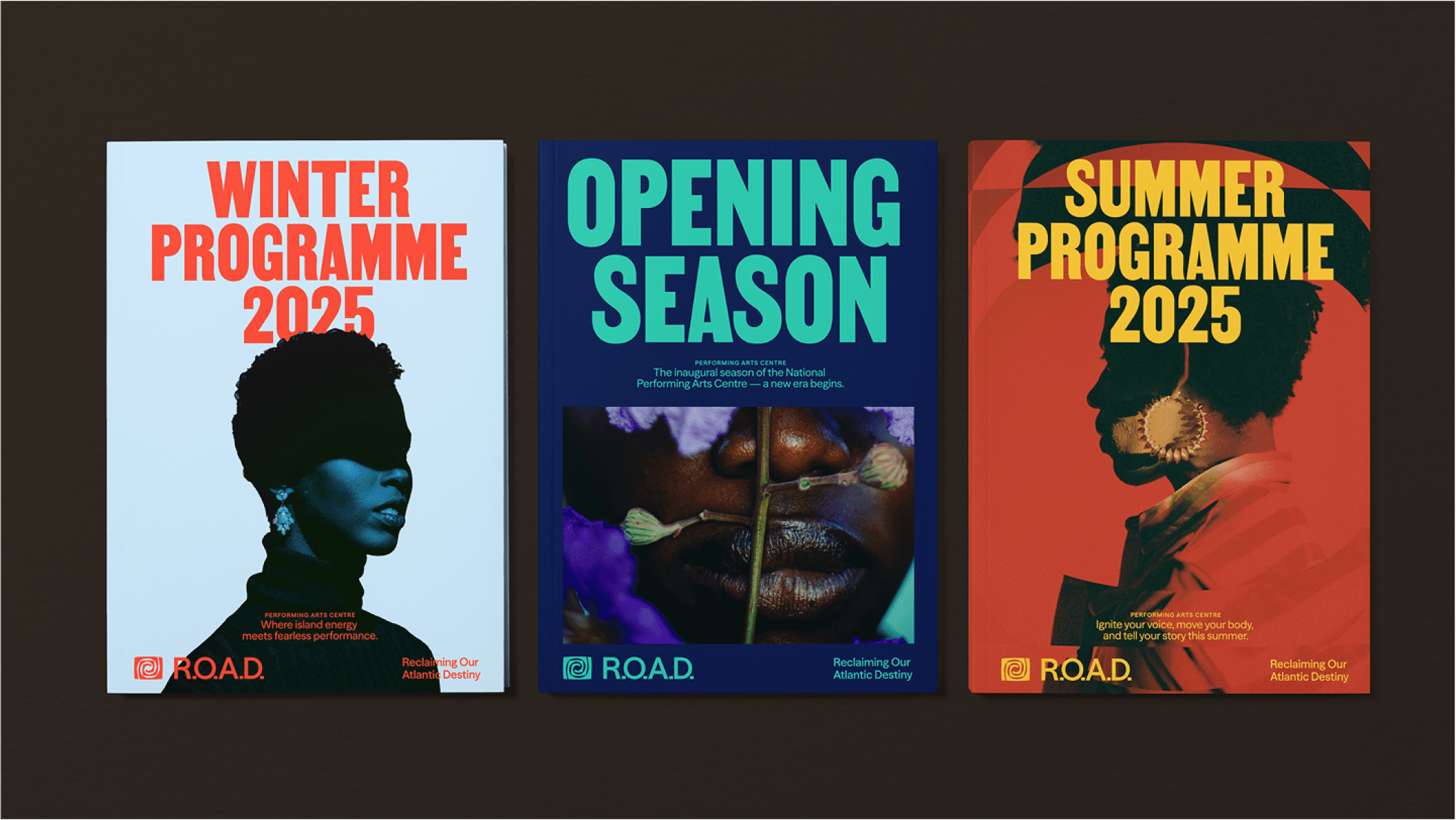
Custom wordmarks, a rich typographic palette, and framing devices inspired by the spiral all support storytelling across touchpoints, from memorial installations to digital platforms.
Getting color right was also essential, so our teams worked closely with local stakeholders to develop a palette that felt true to the island’s energy. Every visual choice was shaped through dialogue and collaborative input to ensure the work reflected shared ownership.
The result is a visual identity built for today’s program, the future of the R.O.A.D. project, and the movement it hopes to inspire.
Bringing the brand to life online: The R.O.A.D. MVP website
To complement the visual identity, we designed and developed the R.O.A.D. MVP website: the central platform introducing the initiative to the world. Built to inspire and inform, the site balances reverence and optimism, bringing R.O.A.D.’s purpose to life through clear storytelling and an emotionally resonant user experience.
The site applies the full brand system and is designed to scale with the program. It lays the technical and narrative scaffolding for future digital experiences, such as Digital Reflections, where users can share and explore stories tied to the site, and a kids’ experience that’s designed to educate and engage younger audiences through interactive cultural exploration.
More than a launchpad, the MVP website is designed to be a platform for empowerment. It’s a digital space that can be taken on and evolved by the people of Barbados. It creates the foundation for a locally-driven creative and digital ecosystem, where new ideas, stories, and innovations can flourish. Built with flexibility, accessibility, and future expansion in mind, the site ensures R.O.A.D. is maintained in memory and propelled forward through local ownership, participation, and innovation.
ARtefact Adventures: Barbados
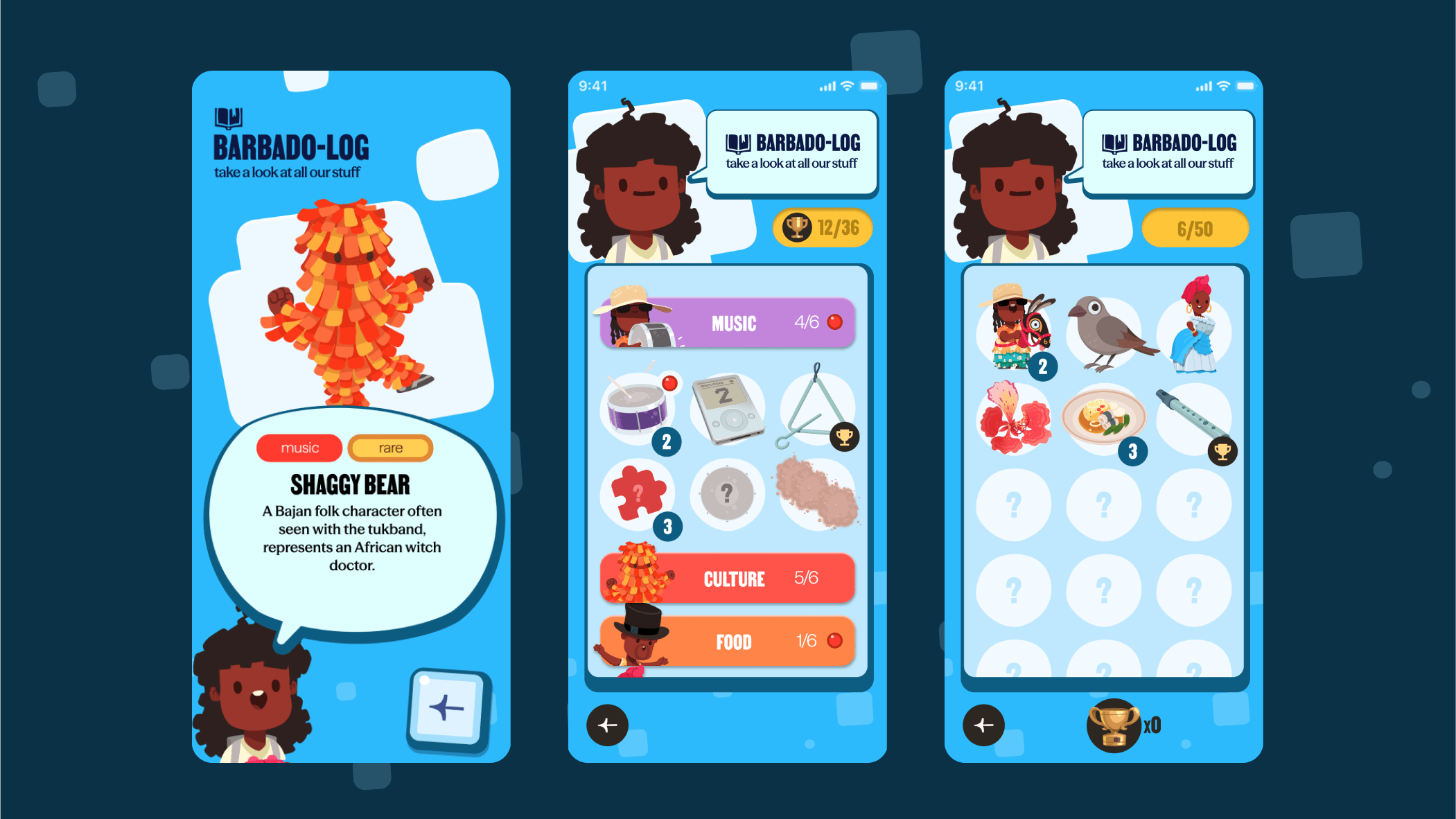
ARtefact Adventures: Barbados is a pivotal component of the R.O.A.D program that seeks to create an enriching experience specifically targeted to children. The mobile game invites kids to explore the unique culture, natural habitat, and history of Barbados through augmented reality, puzzles, and character interactions.
Through the adventures of Keisha and Justin, two passionate young Barbadians, players embark on a quest to discover artefacts that represent the essence of Barbados. By focusing on the island’s rich heritage, the game aims to instill a sense of pride and identity in Barbadian children, while also teaching children worldwide about the island’s cultural legacy.
The game integrates educational content with interactive gameplay to foster a deep connection between young Barbadians and their heritage, ensuring the stories and traditions of their ancestors are preserved and celebrated. At the same time, it empowers the next generation to carry forward these narratives, encouraging them to envision a future where their cultural identity plays a central role in global conversations.
ARtefact Adventures: Barbados extends its educational reach, giving kids and families around the world the opportunity to explore the island’s history. Through global engagement, the game helps promote culture exchange and understanding, allowing players to appreciate the uniqueness of Barbadian traditions while recognizing universal themes of resilience, creativity, and community.
Through the R.O.A.D Programme, ARtefact Adventures: Barbados serves as a digital bridge, connecting the past with the present and inspiring children to contribute to a culturally rich future.
A new symbol for truth, memory, and momentum
The launch of the R.O.A.D. Programme marks the beginning of something far bigger than a single brand or campaign. It’s an invitation to Barbadians and the global community to engage with our shared, and oftentimes difficult, history in a more honest, accessible, and transformative way.
By preserving and digitizing one of the most significant archival collections of the transatlantic slave trade, R.O.A.D. is creating a permanent legacy rooted in truth, remembrance, and healing. Anchoring that legacy in a bold new identity system gives voice to the untold stories of the past while creating space for the future to be imagined differently.
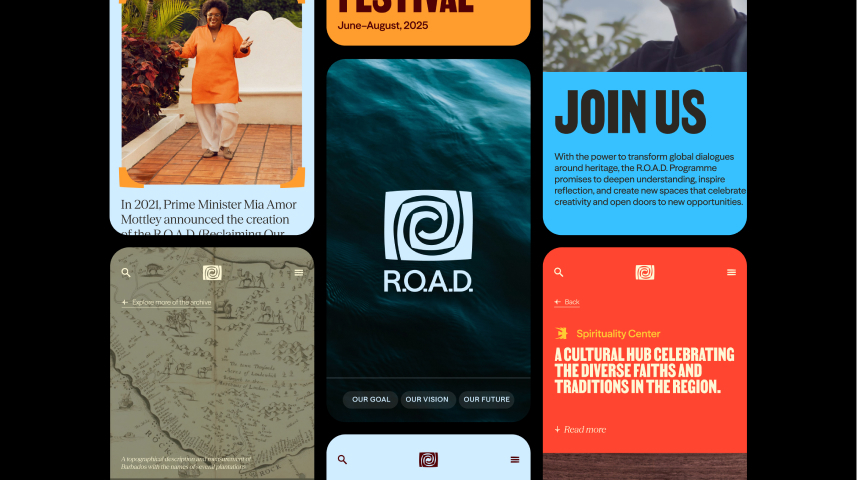
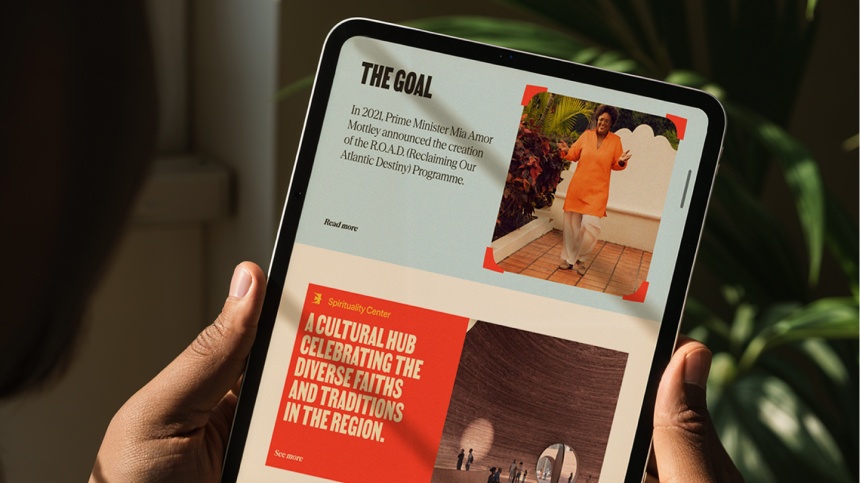
This isn’t just a government initiative, but a national consciousness in motion. The visual identity and digital platform we helped to create were both designed to evolve alongside it, adaptable enough to live across memorials, educational spaces, performances, policy platforms, and community conversations for years to come.
The ARTefact Adventures: Barbados game is set to launch in early 2026.
ABN AMRO
Designing BUUT, the next generation’s bank
( Services )
- Customer Experience
- Tech & Data
Today’s teenagers grow up with Apple Pay, Venmo, and cryptocurrency as normal parts of life.
In this increasingly cashless world, a person’s savings are indicated by a number on a screen rather than the weight of their piggy banks. Yet financial literacy programs still talk about balancing checkbooks and counting change.
ABN AMRO recognized the uncomfortable truth: Money has gone digital, but financial education hasn’t caught up. As a result, banking’s traditional approach is both technologically and culturally incompatible with how young people think about money.
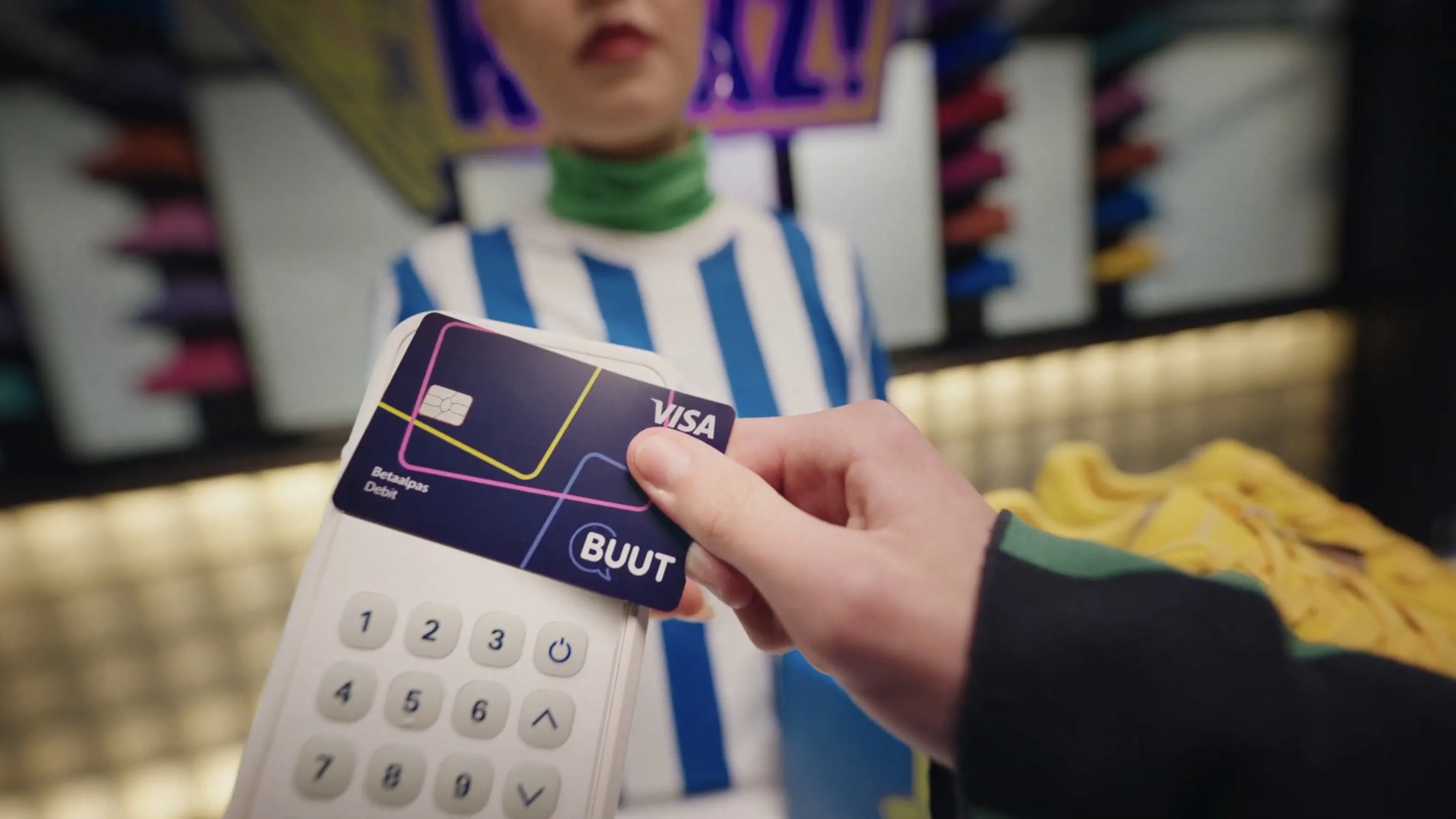
To create a banking experience that satisfies the needs of both digital-native teenagers and their parents, ABN AMRO partnered with Tikkie and DEPT® to build BUUT, a first-of-its-kind mobile financial platform.
Solving the banking puzzle
Today, most banking innovation typically builds off of existing systems, either making legacy platforms slightly more user-friendly or adding modern features to legacy architecture.
However, the problem with these existing platforms is that they are technical, text-heavy, and assume a level of financial sophistication that most adults don’t even possess. For a generation raised on Instagram and TikTok, these interfaces feel like using a calculator to edit photos.
Rather than building on top of existing banking infrastructure, BUUT needed to create something new: An experience built from the ground up to meet the actual needs of today’s families.
As we quickly learned, every family handles money differently, and those differences become magnified in the digital realm.
Conversations with real-life Dutch families informed every step of our design process. It was thanks to the input of these teens and parents that we uncovered the following key realizations, each of which challenged many assumptions about how money works in modern households.
- Teenagers aren’t financially irresponsible. They’re financially invisible. Most teens we interviewed were trying to be thoughtful about spending, but they lacked tools to make that financial thinking clear to themselves or their parents. As a result, even if a teenager had a loose idea for a savings plan, most parents remained skeptical of their child’s sense of financial responsibility.
- Parents want to help, but they don’t know how. Many parents felt completely out of their depth when it came to digital money management. They remembered learning about money through physical handling—counting coins, seeing bills disappear, and feeling the weight of their wallet. They wanted to pass on financial wisdom but didn’t know how to translate analog lessons to digital reality.
- Visual thinking trumps numerical analysis. When we asked teenagers to describe their ideal money management tool, they didn’t talk about spreadsheets or transaction logs. They drew pictures. They wanted to see their money, not just track it
These insights helped us finalize our vision for BUUT as not just a banking app, but a financial education platform that happens to include banking features.
Building for the next generation
Where traditional approaches to financial education rely on a “learning by reading” approach, we designed BUUT’s user experience to focus on “learning by doing.“
Instead of relying on articles or long-form videos (which teenagers largely ignore), we sought to create a financial planning experience for teenagers and their parents that emphasized visual money management and collaborative oversight. Every financial concept, from budgeting to saving goals, needed to be immediately understandable through visual design rather than text explanation.
We helped create a visual language within a flexible and modular design system full of dynamic content, energetic motion, and interactive elements. The app and website are designed with the same principles and goals in mind, which results in a consistent digital presence.
Additionally, our mobile-only development approach ensured that every one of the following key features worked perfectly on the devices teenagers actually use, as opposed to, for instance, a desktop interface.
1. Potjes: Making digital money visible
The heart of BUUT is the “potjes” system, virtual pots that make budgeting visual and intuitive. Teenagers can create “spaarpotjes” (savings pots) for goals they’re working towards and “betaalpotjes” (spending pots) for regular expenses.
But this isn’t just digital envelope budgeting. Each pot is visually distinct, with custom colors and names that reflect the teenager’s personality and goals. Want to save for concert tickets? Create a music-themed pot and watch it grow. Need to budget for lunch money? Set up a weekly spending pot with automatic refills.
The genius of the system: It makes abstract financial concepts concrete without requiring advanced math or planning skills.
2. Agreements: Digitizing family financial conversations
One of our biggest insights was that most family financial conflicts stem from unclear expectations rather than irresponsible spending. Parents and teenagers often have completely different assumptions about what money can be spent on and when.
BUUT’s Agreements feature transforms these nebulous expectations into clear, mutual understandings. Using Agreements, teenagers and their parents can work together to make arrangements for how much pocket money or clothing allowance they’ll get and when. If the teen feels as though they have a valid reason for the Agreement to be adjusted, they can raise the issue with a parent in person and ask them to modify it in the app.
The emphasis on collaboration demonstrates how Agreements function as learning frameworks, not punitive controls.
3. For parents: Oversight without invasiveness
Parents get enough visibility into their teenager’s financial activity to feel at ease without feeling like they’re invading their privacy.
BUUT provides them with an overview of their child’s pots and how much money is in them. Should they feel the need, they can look inside a pot to see how their child is spending the allocated money. Additionally, if they want, parents can choose to be informed of important milestones—like creating new pots or reaching savings goals—via notifications or messages.
In short, BUUT is designed to make parents feel comfortable enough to let their child “learn by doing.” While parents can set up what they consider a safe environment for their child (i.e. by setting transaction limits or restricting certain payment methods), the app also gives them the tools and tips they need to decide what fits well within their parenting style and relationship with their child.
4. Contextual Learning: Financial education that doesn’t feel like homework
BUUT comes with built-in advice and benchmarks for parents, to help ensure that they’re setting their children up for success with appropriate allowances and limitations.
For teens, BUUT provides helpful financial insights and age-relevant tips in the feed on their dashboard.
Looking ahead, the goal is to embed more personalized guidance for teenage users based on their actual spending patterns and savings goals, as opposed to generic financial literacy content.
The future of money management
While our main focus on this project was on designing the entire digital experience of the app, we were also proud to play a role in helping introduce BUUT to the world by creating a modular, playful website packed with articles, videos, and interactive elements—carrying the eclectic BUUT style across every touchpoint.
Within 24 hours of release, BUUT reached #3 in the App Store’s Finance category, beating established competitors and landing just behind Revolut and Tikkie. Pretty exciting for a completely new product targeting a specific age demographic.
BUUT’s launch exceeded every expectation, but the real measure of success came from user feedback and behavioral data showing that teenagers were actually engaging with financial planning tools. Something that traditional financial education has never quite managed to achieve.
Raleigh
A rebranding that celebrates heritage
( Services )
- Commerce
- Customer Experience
- Tech & Data
At 138 years old, Raleigh (part of the Accell Group) is among the world’s oldest and best-known bike brands, a fixture of city streets before and after the automobile revolution.
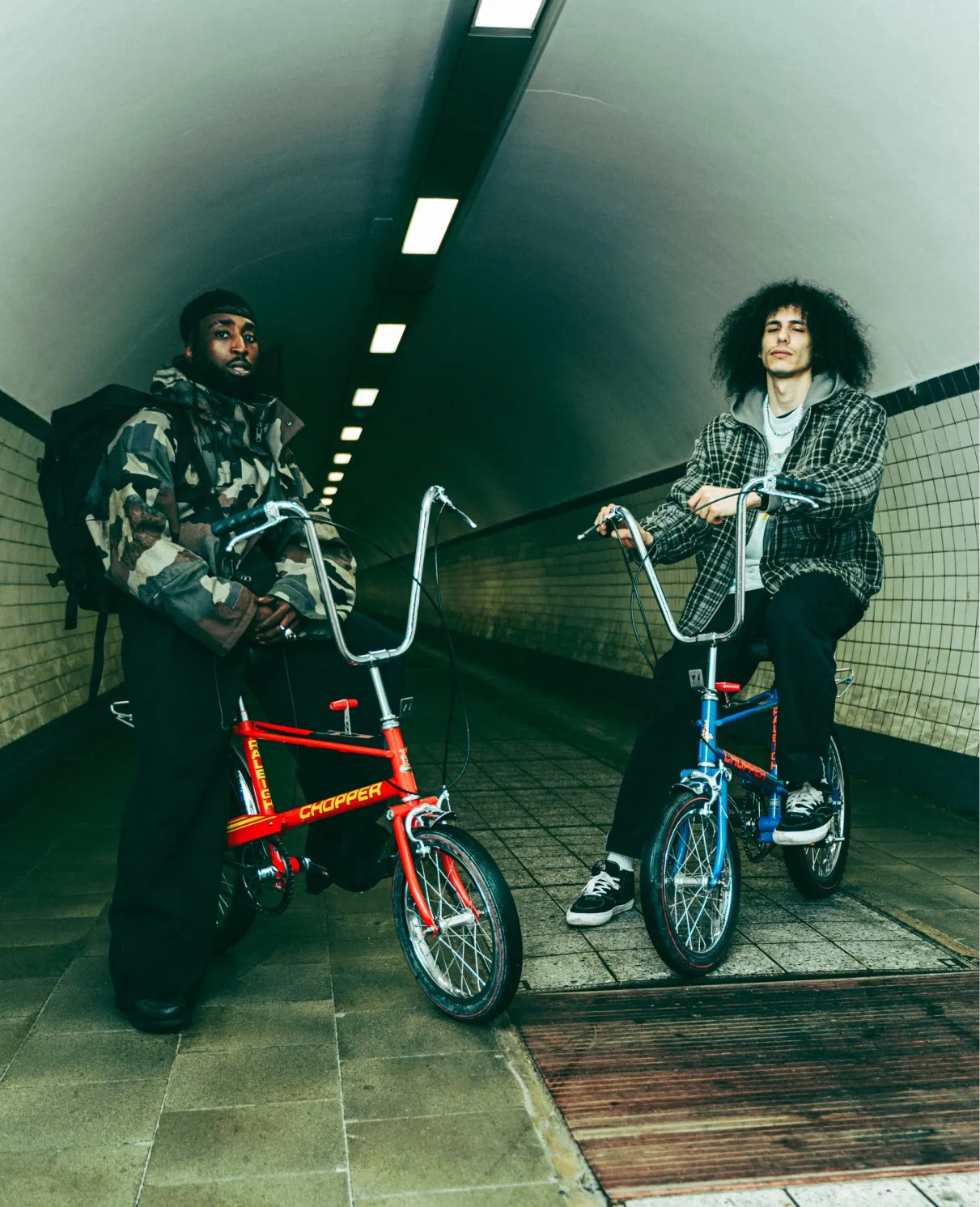
From the Burner to the iconic Chopper, Raleigh’s bicycle designs have inspired a dedicated following among millions of cyclists. Even today, riders still gather to cruise on their favorite models, a fact that undoubtedly helped the Chopper earn a place on the list of British Design Icons alongside the Mini Cooper and the London phone booth.
Nevertheless, as a heritage brand, Raleigh found itself pigeonholed by the past.
To help Raleigh embrace their legacy while positioning itself firmly in the present, we partnered together to introduce an entirely new brand system, complete with a fresh strategic positioning and a European campaign centered on the electric Raleigh ONE.
Choosing “now” over “next”
The contemporary cycling market is loud, crowded, and increasingly homogeneous. Everyone’s chasing the same aesthetic, the same language, the same vision of a pedal-driven future.
Raleigh had a choice between chasing the same trends as everyone else and rebranding itself into something completely unrecognizable, or, conversely, doubling down on its heritage and risk looking as though its eye was more on the past than the future.
However, we refused to accept the idea that Raleigh’s heritage and its present were mutually exclusive. For us, the question wasn’t about the decision to pursue one or the other, but rather about how to make that history relevant right now.
Working in close collaboration with Raleigh, we sought to uncover an identity that would move their brand forward while staying true to the DNA that had propelled them.

Uncovering Raleigh’s modern heritage
As a heritage cycling brand, Raleigh isn’t about the past or the future. It’s about the experience of moving through a city on two wheels; the feeling of living authentically in the present.
In this way, we realized that Raleigh is a brand that chooses its own path.
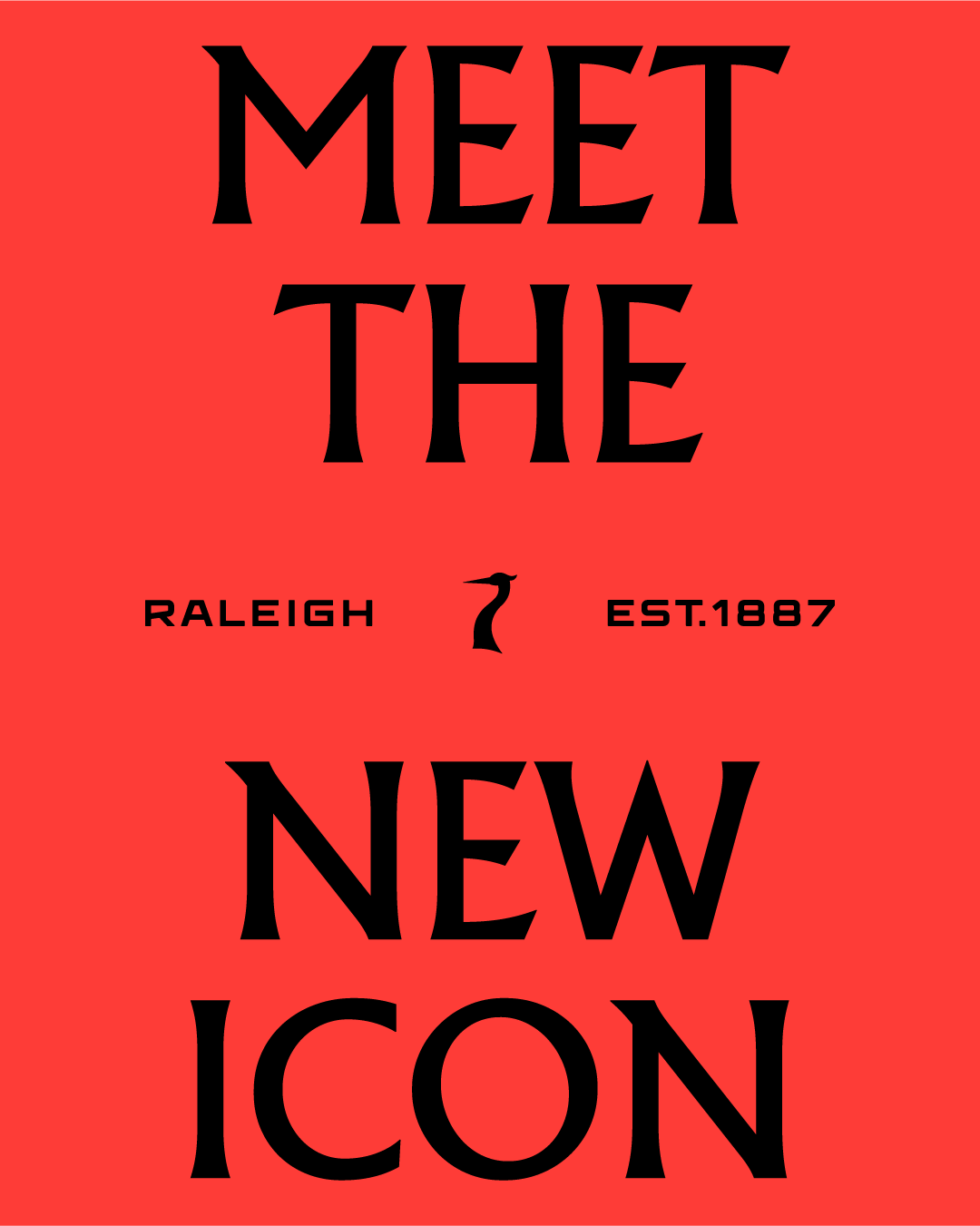
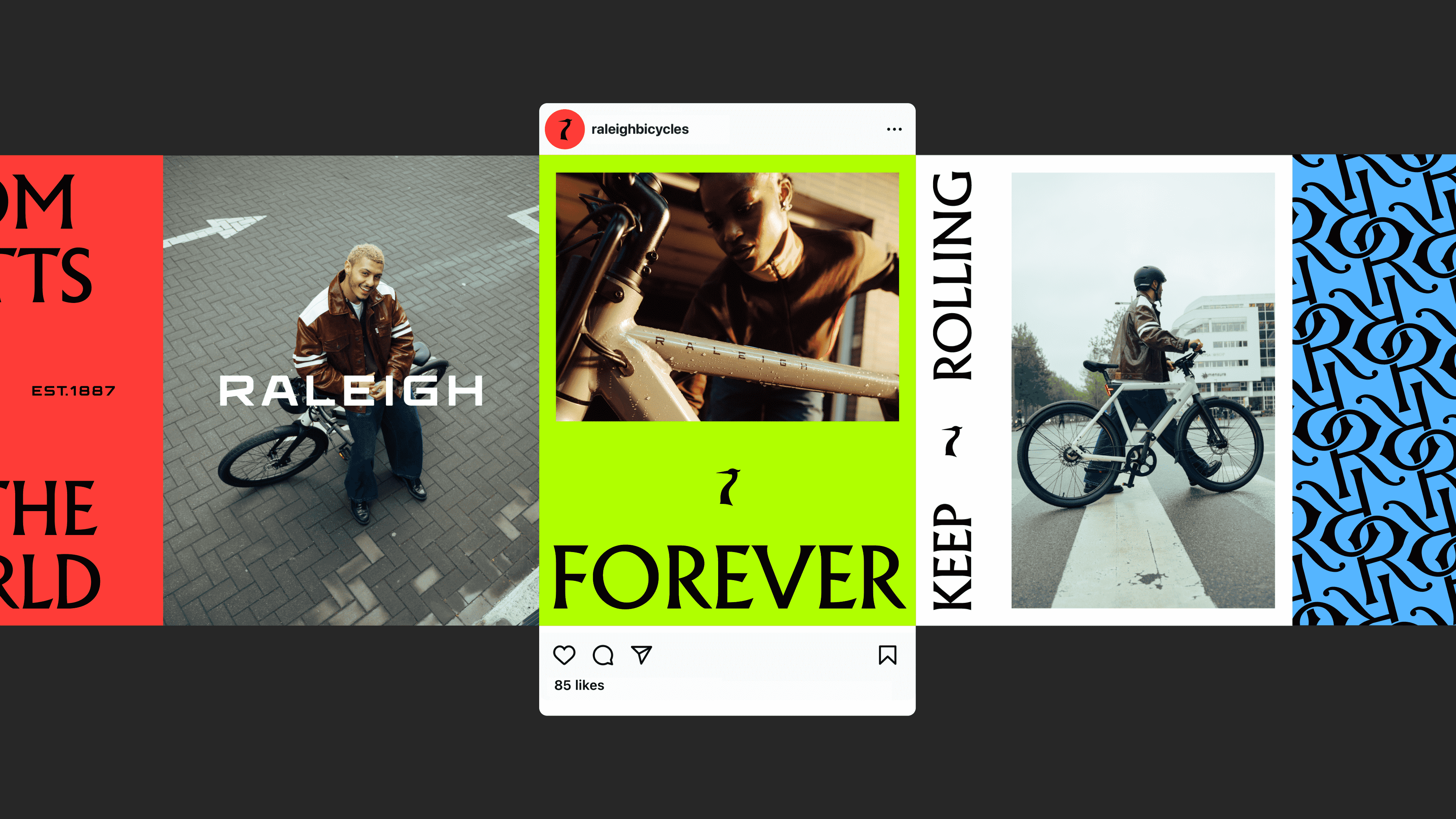
That philosophy informed every aspect of Raleigh’s transformation. The visual identity we created blends the old and the new seamlessly, with a style we called “modern heritage.”
We modernized the logo, bringing the iconic heron (a detail many brands would have quietly retired) back to prominence. The color palette nods to history but pops on screen. Typography and visual language convey personality and boldness without abandoning recognizability.
The final result feels familiar, but not dusty. It’s fresh, but it doesn’t feel like it’s trying too hard.
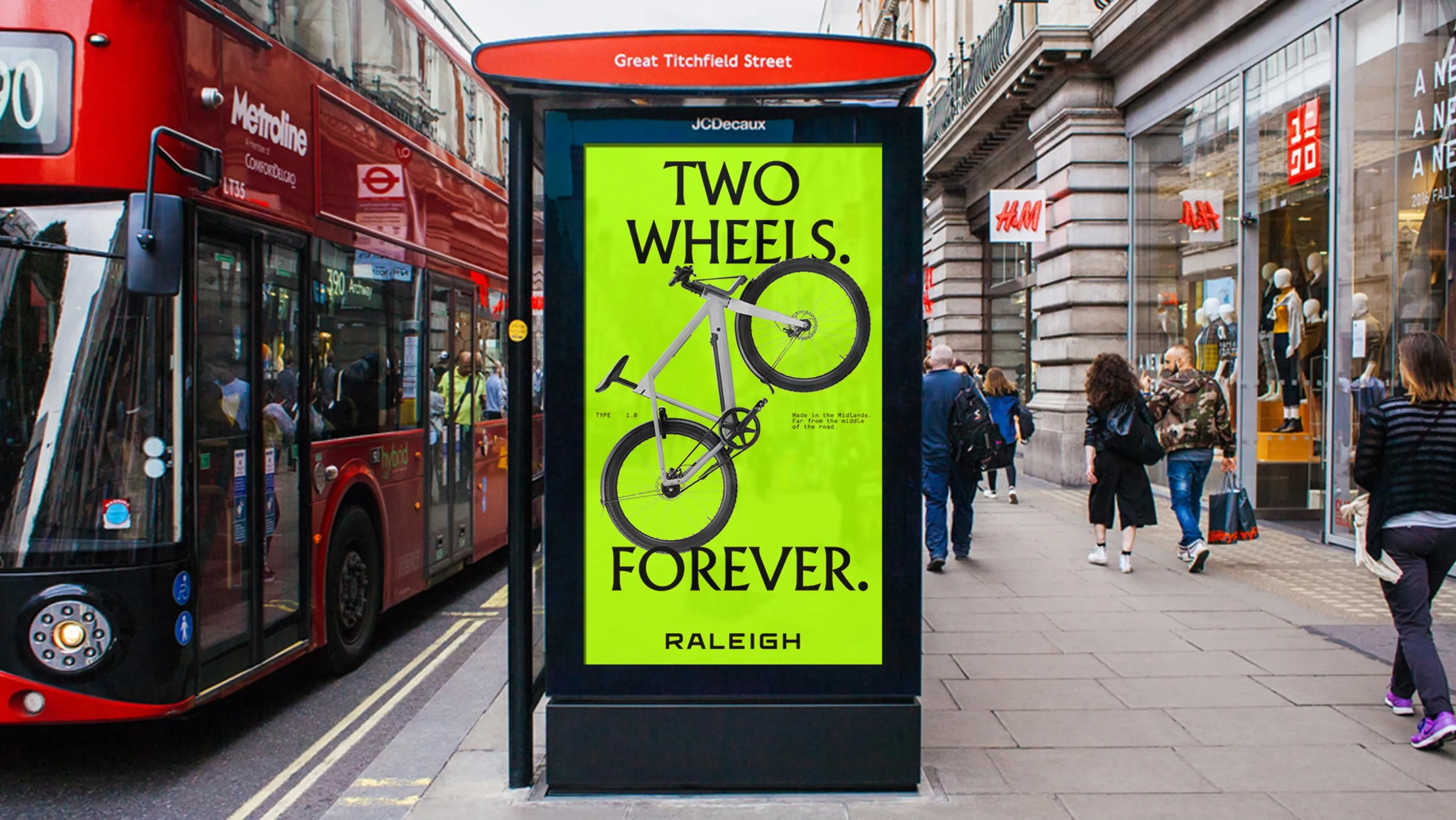
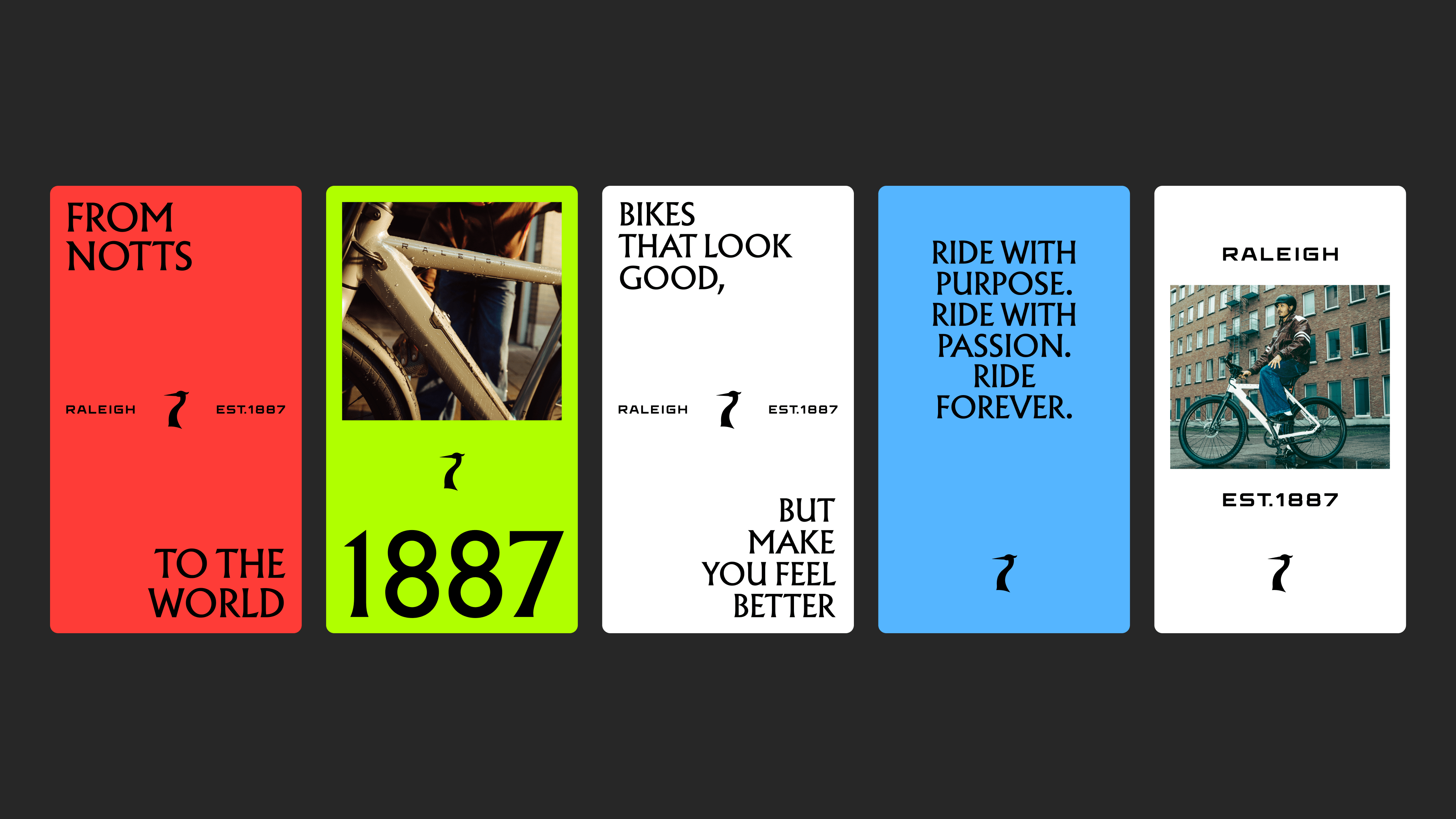
Bringing to life a dynamic campaign
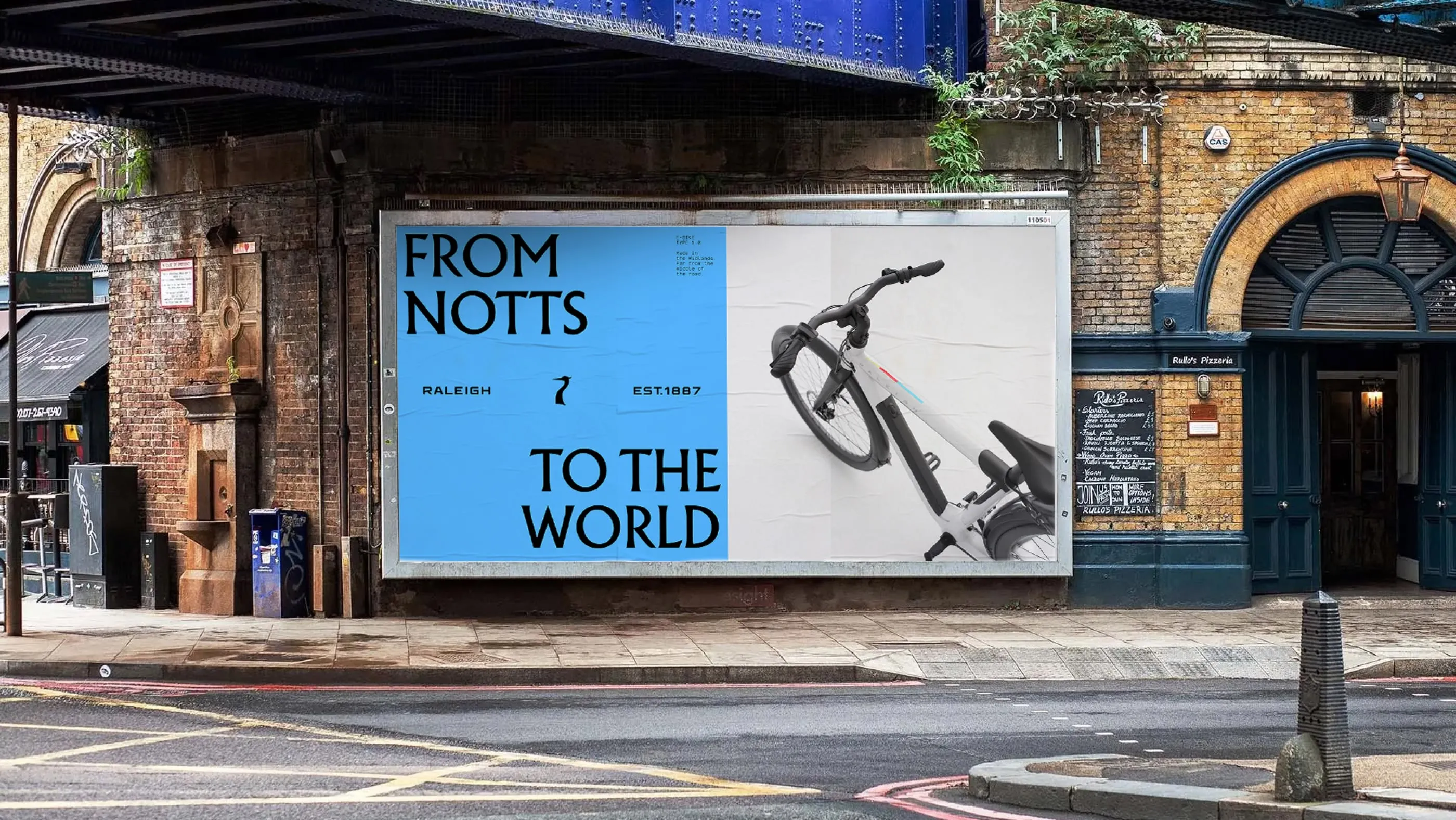
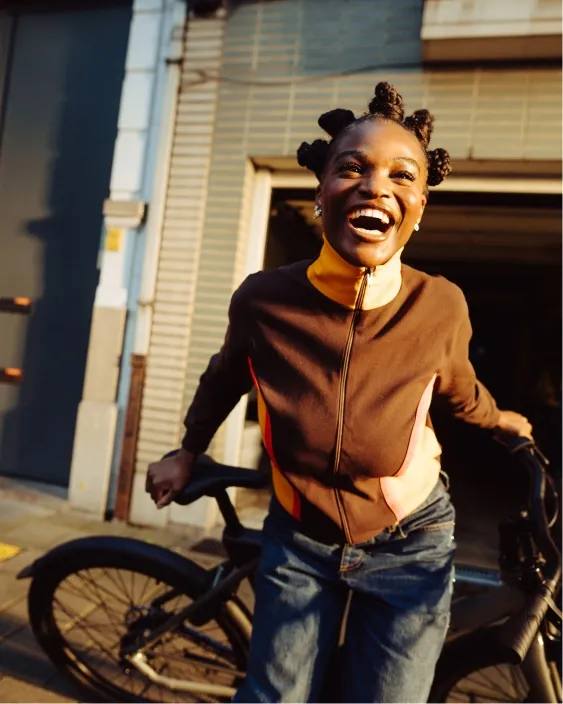
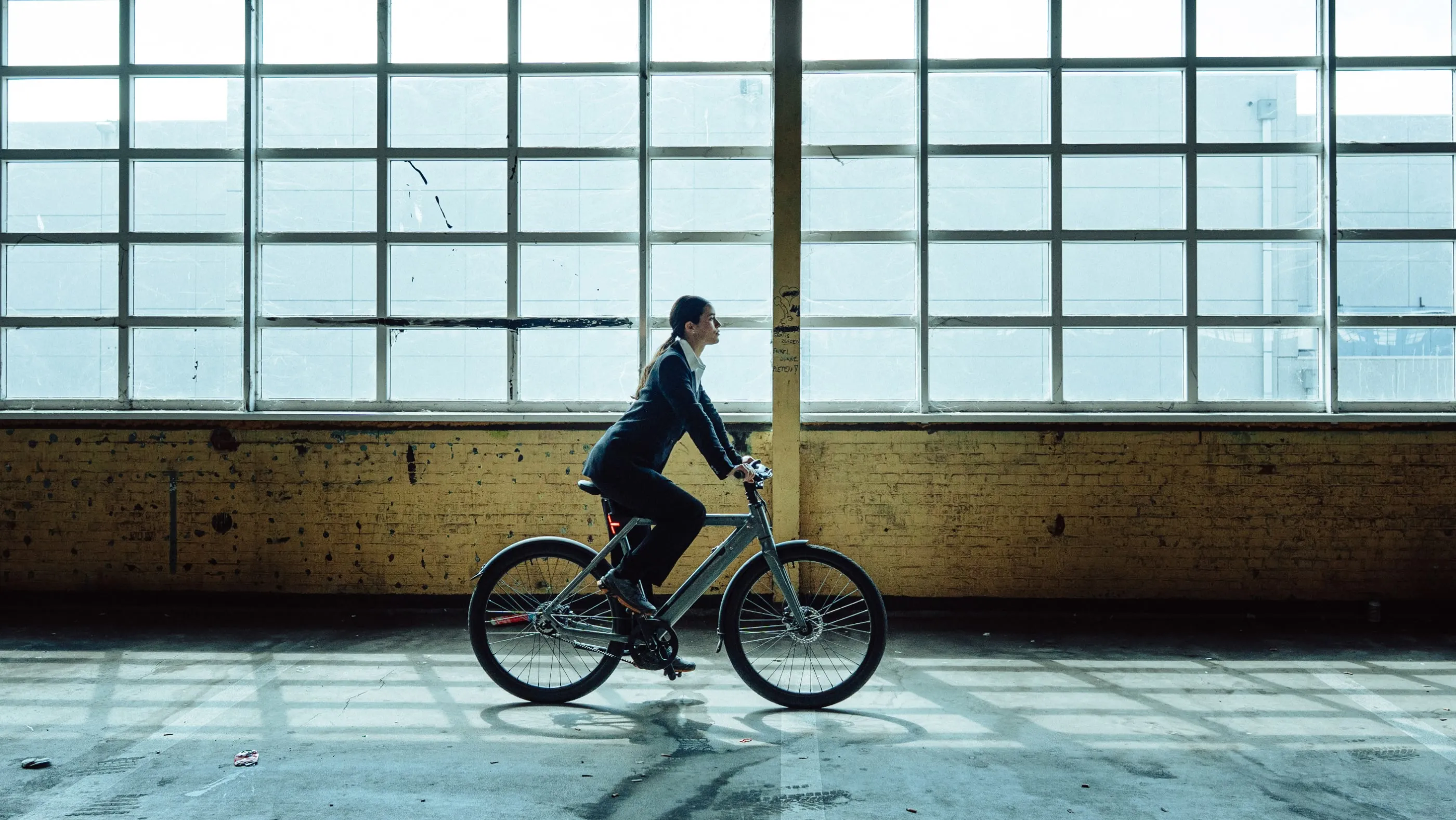
The centerpiece of the campaign that would debut Raleigh’s refreshed identity was the Raleigh ONE e-bike. This new product perfectly encapsulated a brand inspired by legacy and deeply connected to the present.
For the launch of the Raleigh ONE, we worked with a talented team of external folks that we chose based on their ability to embrace the “now” through their understanding of the current culture.
- Our photographer, Cas Kerssens, shot the campaign by drawing his unique style, which combines motion techniques, dynamic framing, and strong narratives to create work that feels both cinematic and grounded.
- Our director, Kelvin Jones, applied his raw, emotional visual style to create a film that positioned the e-bike as something more than just a solution to an imaginary problem.
The final result follows the Raleigh ONE as it moves through neighborhoods, styles, cultures, and eras, treating the city itself as a dynamic canvas and the bike as a participant in vibrant urban life.
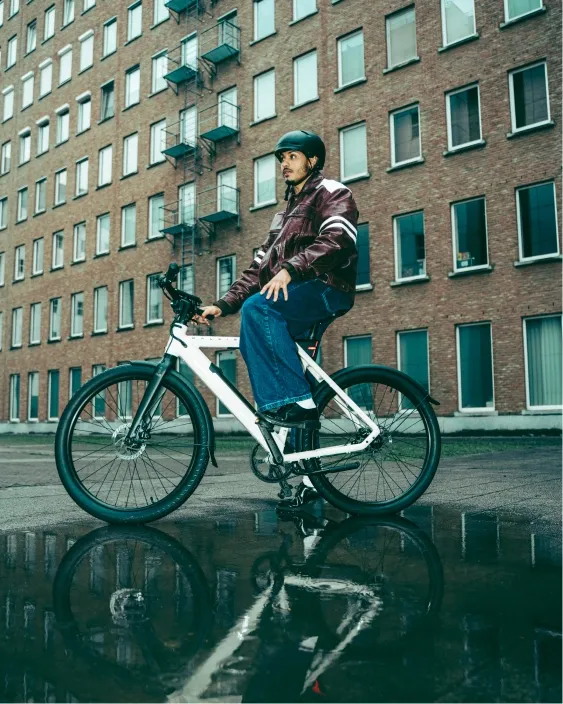
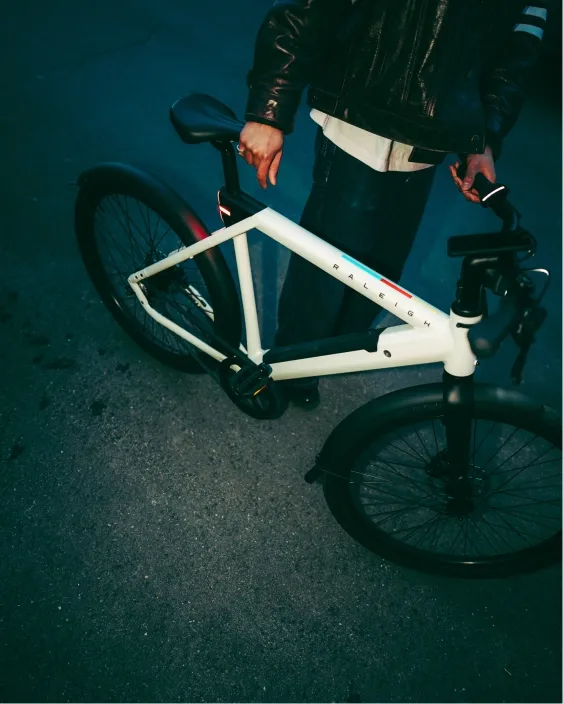
The road ahead
This isn’t just a logo refresh with a few style guides. It’s a complete brand system that extends the “present tense” positioning across all aspects of the brand, including how it looks, how it talks, and (of course) how it moves.
By building this identity to scale while keeping it rooted firmly in specificity, we helped Raleigh position itself powerfully and consistently across every channel.
For a brand that’s been around for 138 years, it’s a refresh that feels as distinctive as it feels honest. Not looking back. Not trying to predict the future. Just moving forward with character, confidence, and a clear sense of self.
Nyiyaparli Widi
Bringing a 41,000-year-old culture back to life through gaming
( Services )
- Customer Experience
- Tech & Data
For over 41,000 years, the Nyiyaparli people have called the rugged Pilbara region of Western Australia home. Their culture is among the oldest in the world.
And yet, with just eight fluent speakers remaining, the Nyiyaparli language is critically endangered.
Rather than dwelling on what was being lost, the Nyiyaparli Living Language Project (NLLP) was created to preserve Nyiyaparli and keep it alive forever.
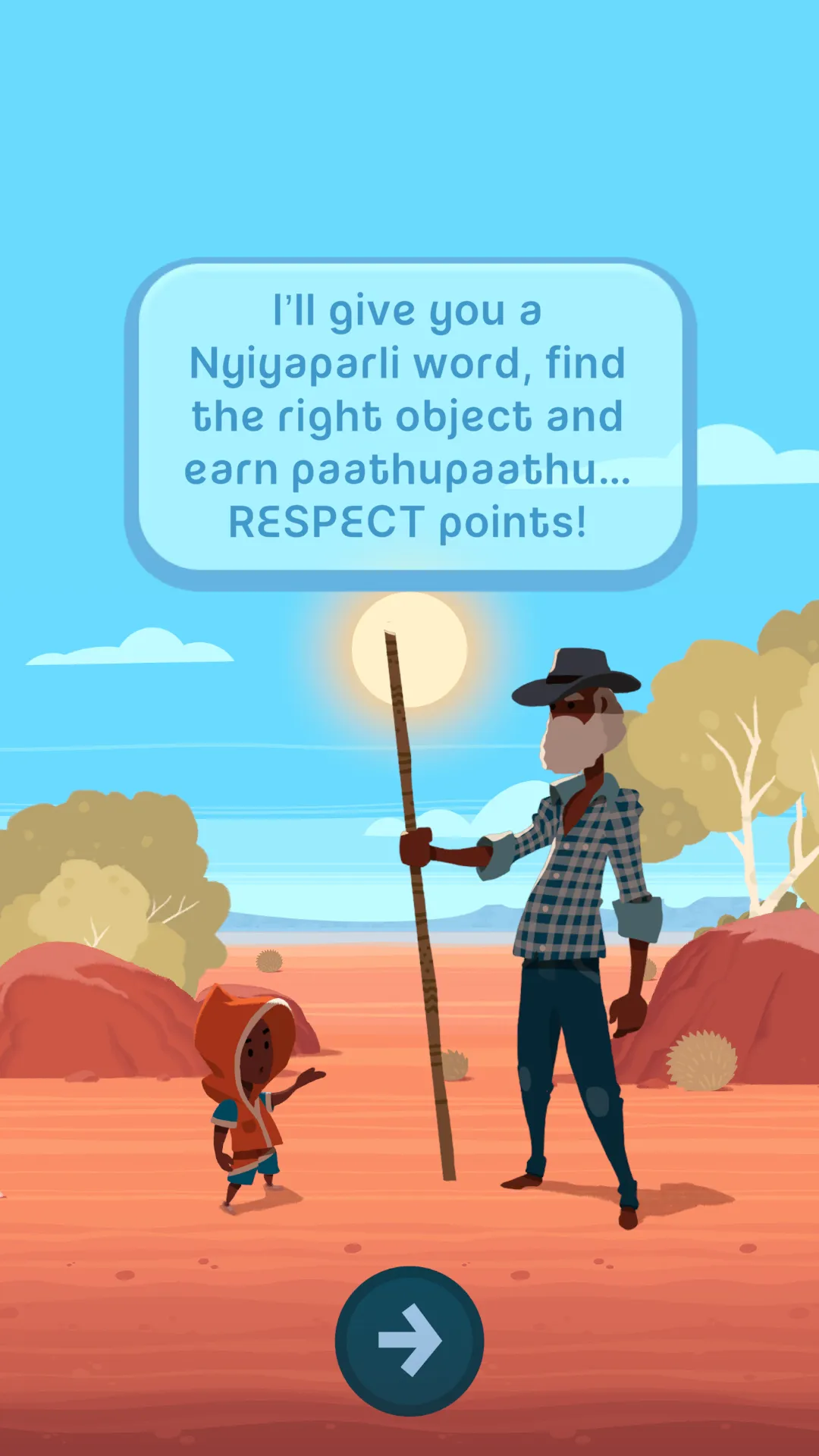
To make that vision a reality, we were humbled and proud to help Karlka Nyiyaparli Aboriginal Corporation RNTBC (custodians of the NLLP) and the Nyiyaparli community create Nyiyaparli Widi (“Widi” = “Game”). A mobile-first language-learning game that immerses both young people and adults in their native landscape as they collect cultural items, complete educational quests, and learn everyday words along the way.
Community-led co-creation
From the beginning of our work, we understood that while this was precisely the kind of impact-driven work that aligns with our mission as a B Corp, good intentions wouldn’t be enough. Authentic cultural representation demands deep collaboration, not external interpretation.
To that end, we embedded ourselves within the Nyiyaparli community’s process. We worked hand in hand with the NLLP Cultural Working Group, senior language speakers, Nyiyaparli Rangers, and community members through multiple cultural workshops to ensure our approach was genuine.
Our game design choices reflected this collaboration and everything we learned from it.
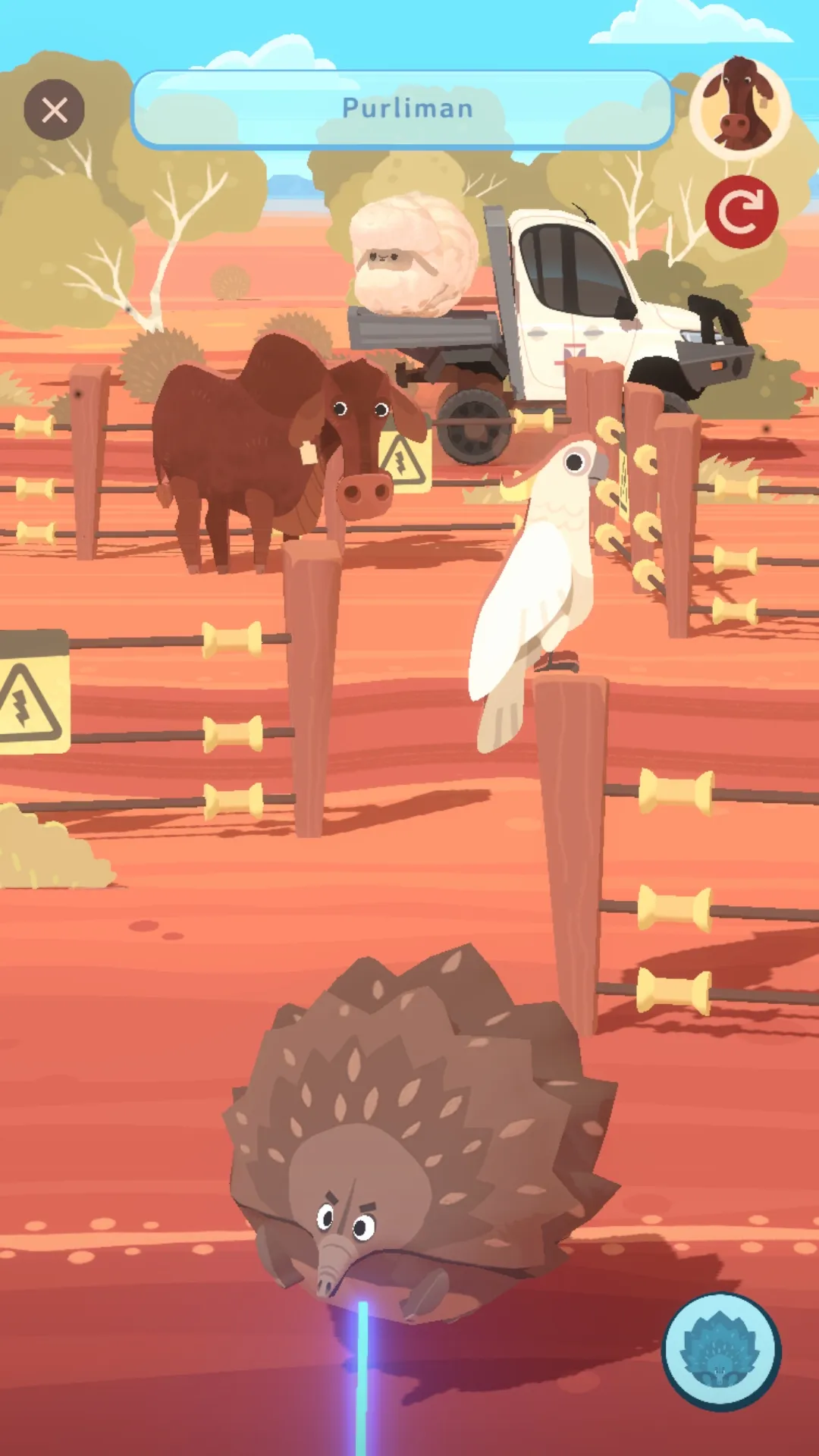
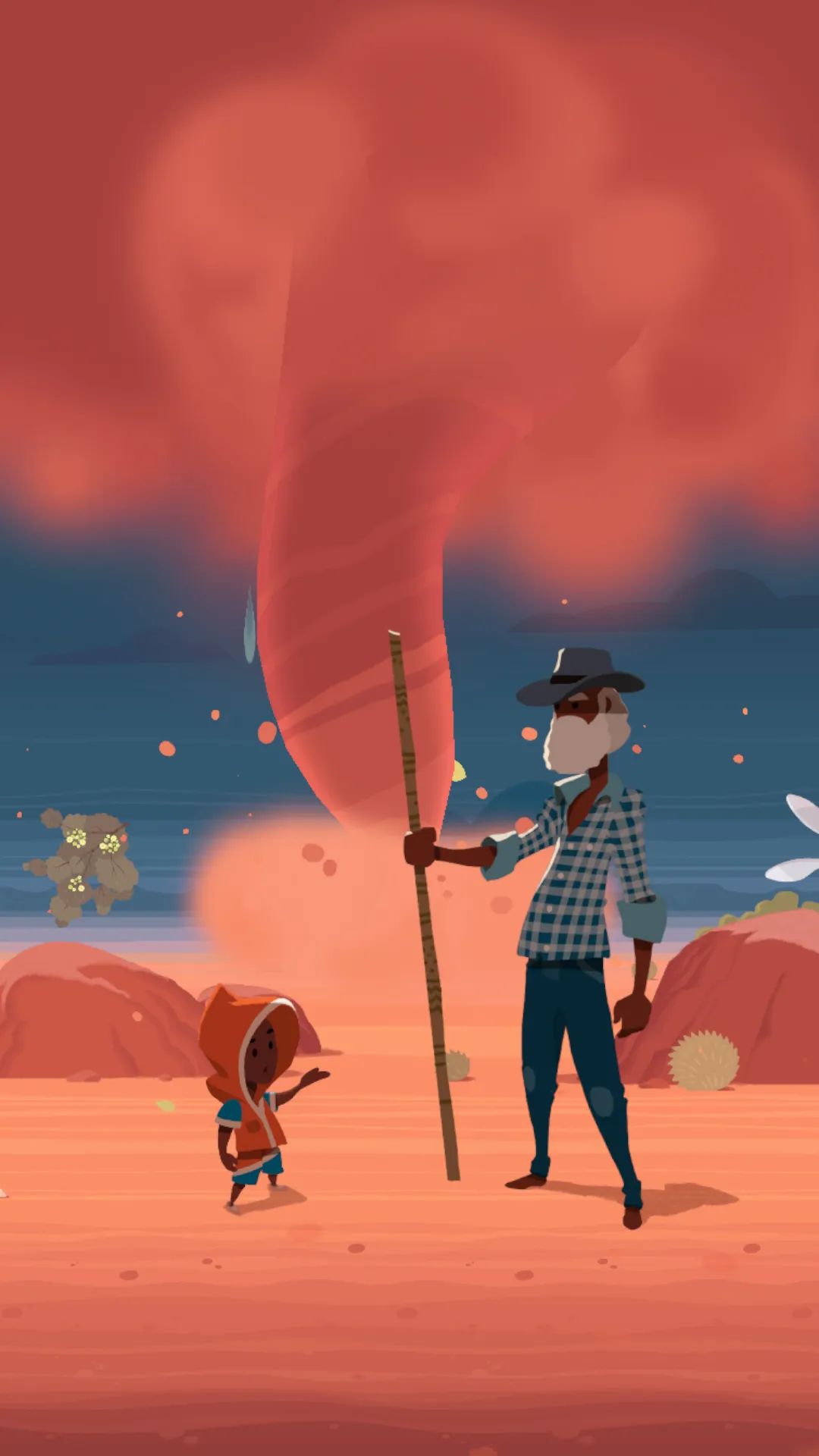
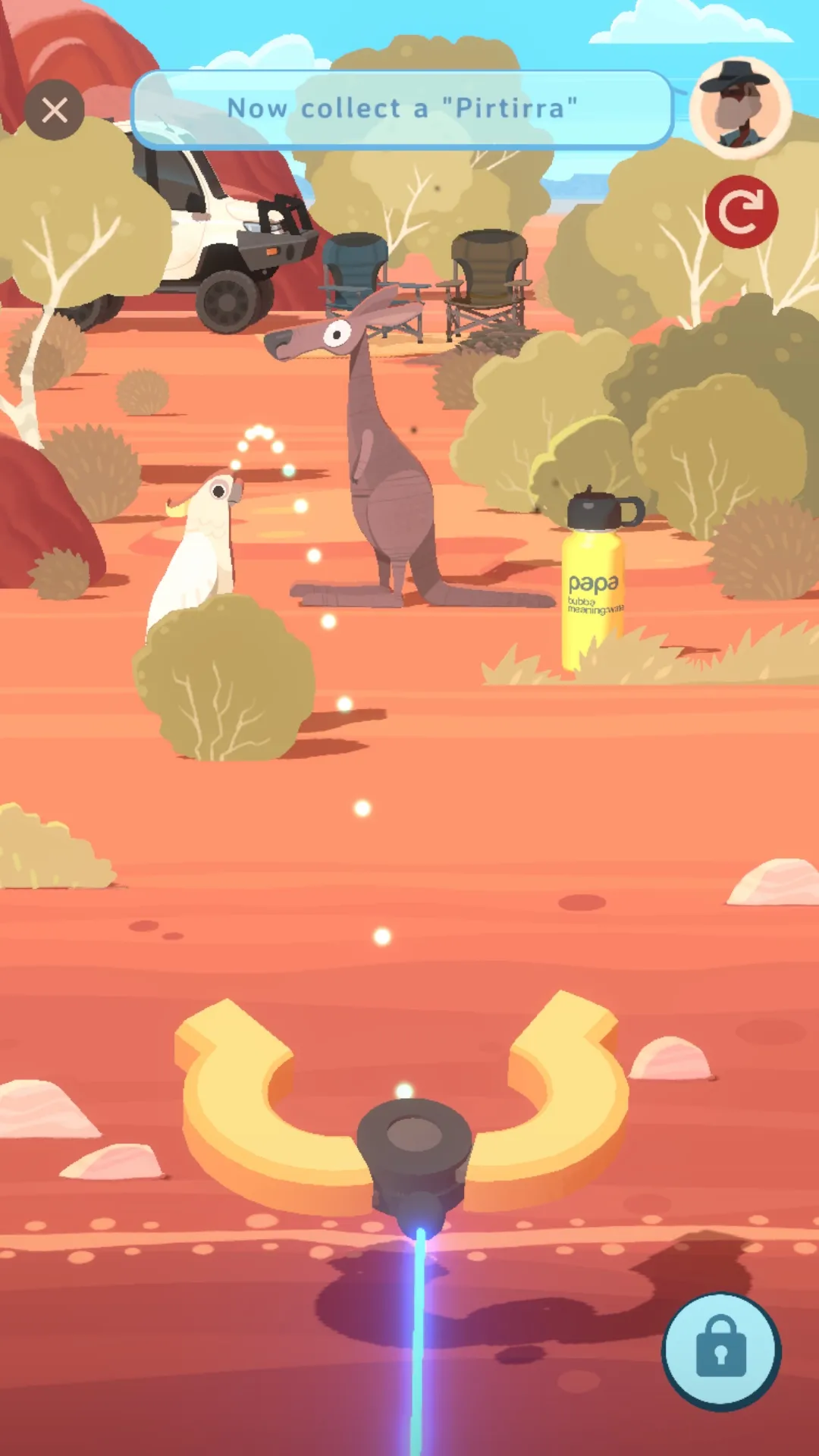
Location & geography: The layout of the game was built to reflect real, culturally significant places on Nyiyaparli country. Players would begin their journey at the Ngawanykurrana (14-Mile) stockyards camp on Palkarra (the Fortescue Marsh). From there, they explore other key locations from plains to wetlands, including:
- Nyiyaparli Yurlu (Country)
- Marnta (Chichester Ranges)
- Kurtuwa (Ethel Creek Station)
- Panpatina (Newman township)
Voice & language: All voice acting was performed by Nyiyaparli community members, both children and adults. Over three intensive recording days, and culturally supervised by a number of senior lanuage speakers, the project team captured around 90 Nyiyaparli words, preserving the language and its natural rhythms and nuances.
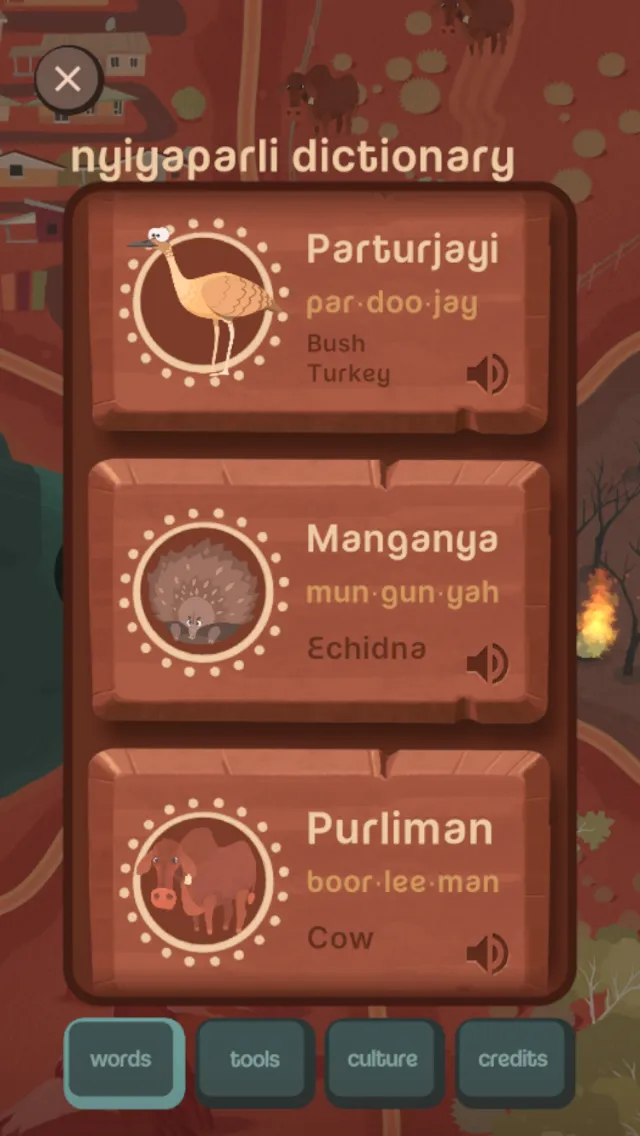
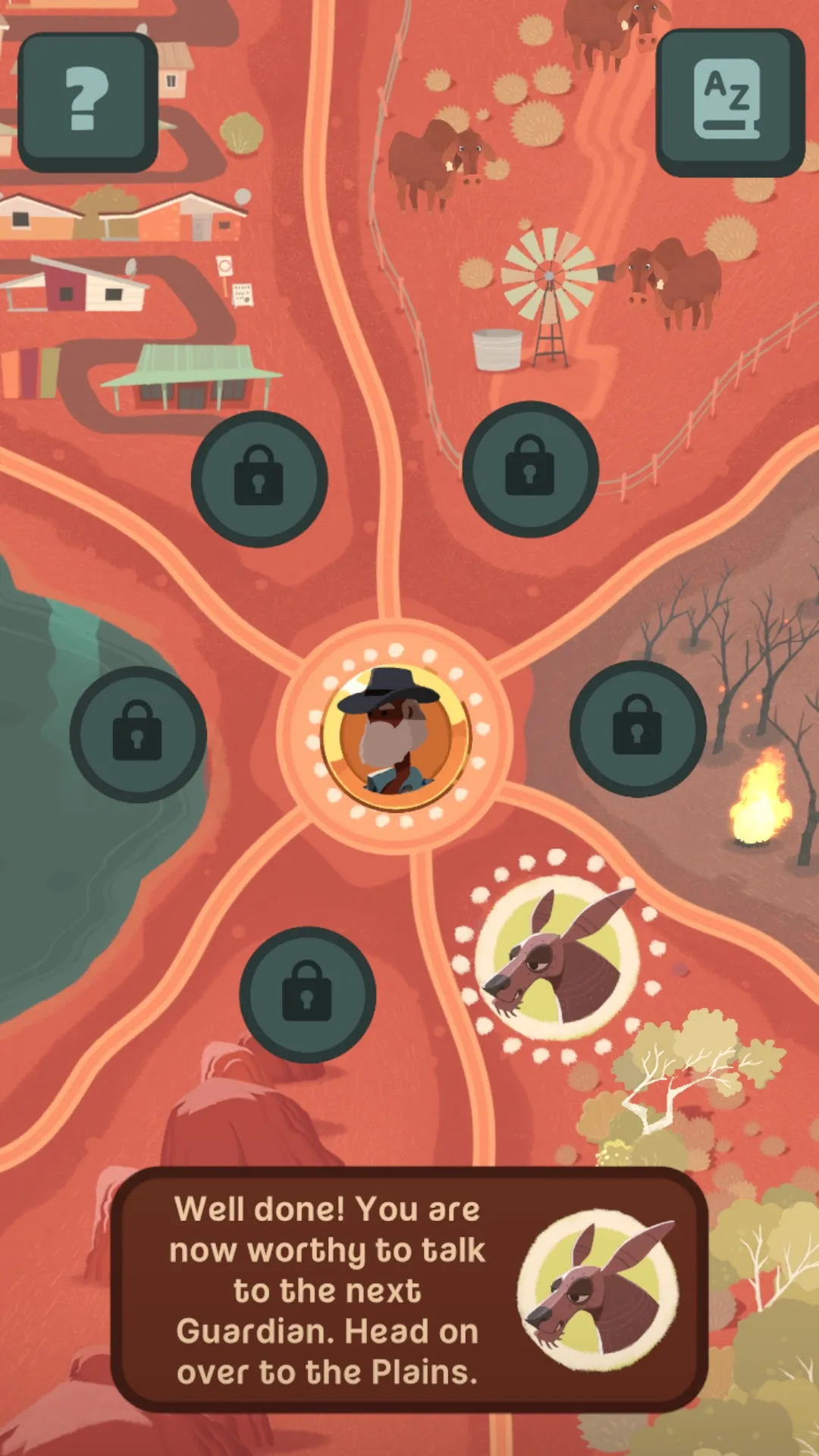
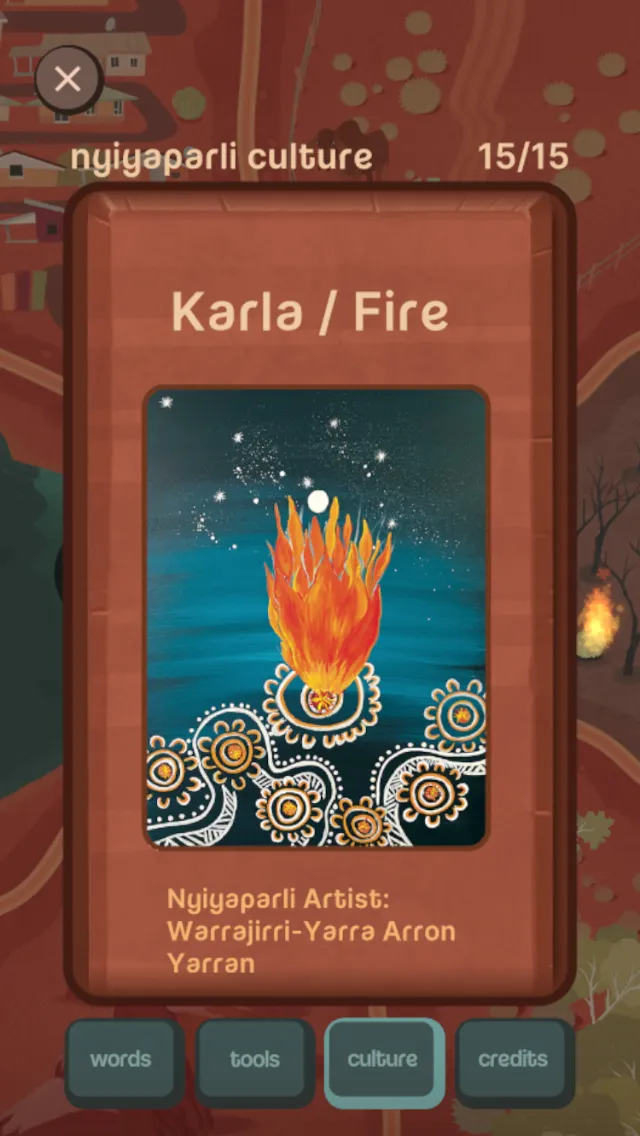
Art & music: The game’s visual identity was primarily created by DEPT® artists and producers, while Nyiyaparli Rangers created the song.
Cultural knowledge: Rather than generic gameplay mechanics, we built culturally relevant interactions around collecting traditional items, learning about native plants and animals, and understanding the significance of cultural tools and practices.
Building an authentic experience
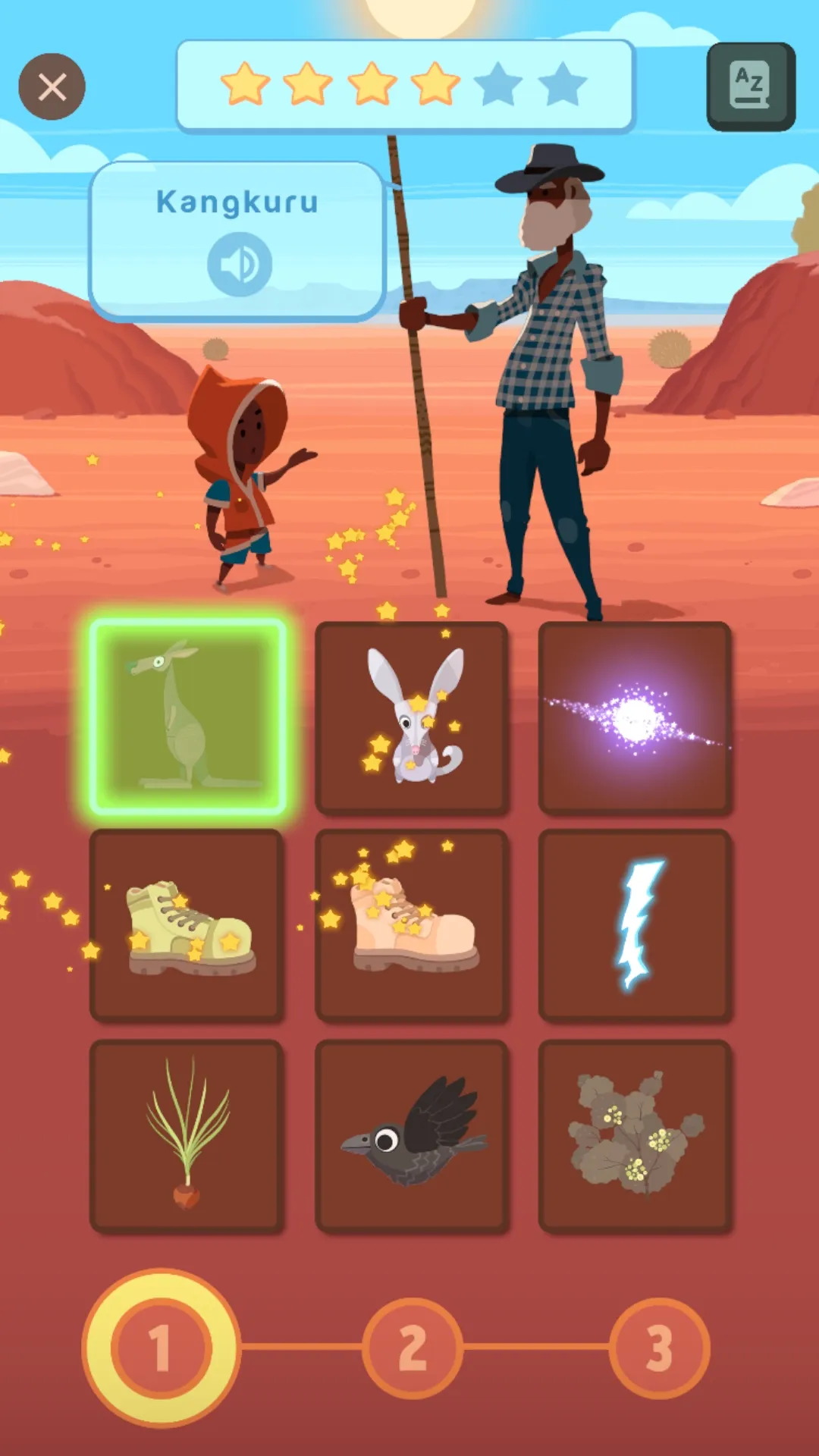
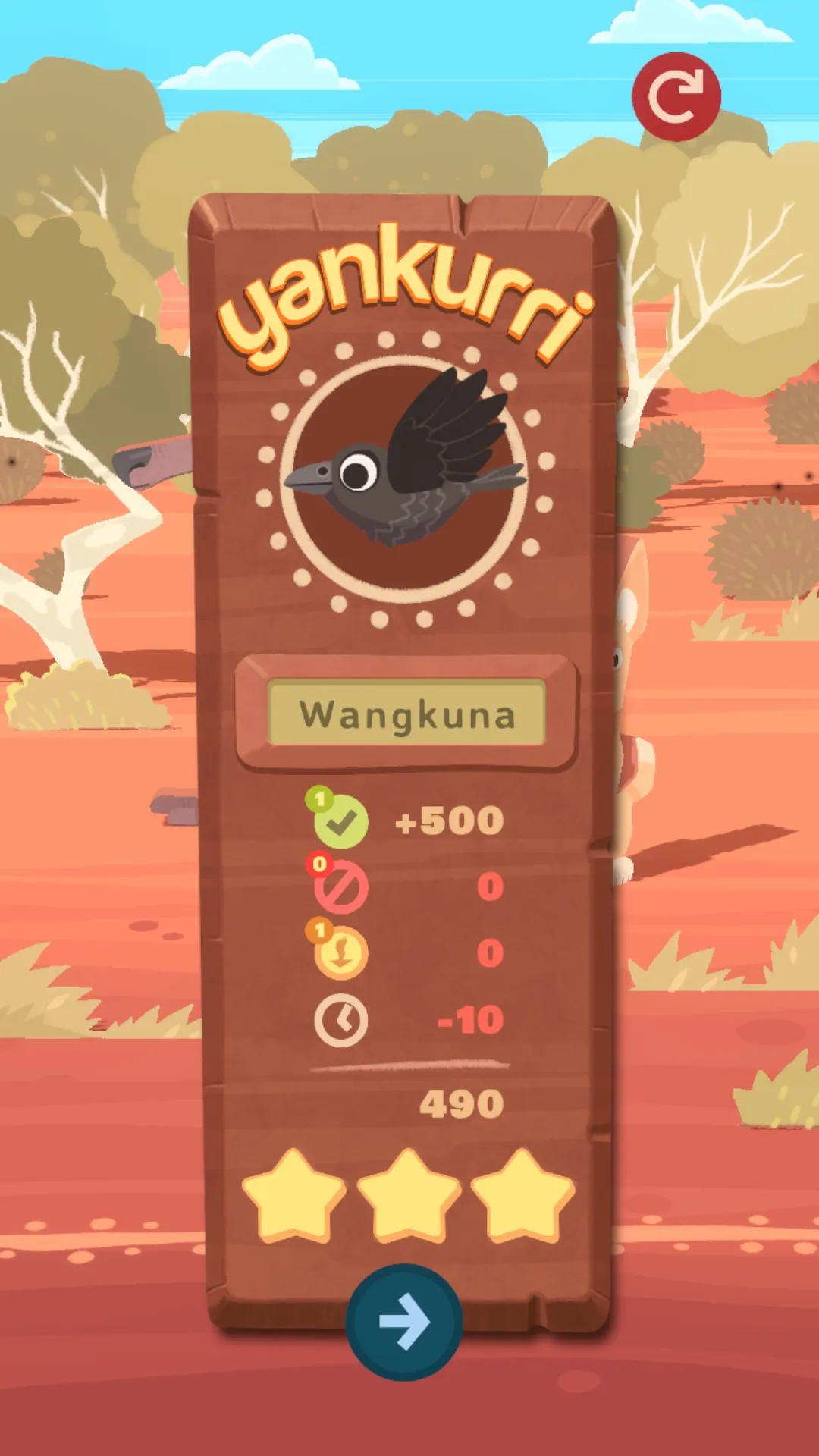
Nyiyaparli Widi transforms players into “junior rangers,” collecting unique cultural items and learning everyday Nyiyaparli words through immersive gameplay. Players earn Paathupaathu! (“Respect!”) points as they progress, unlocking new levels and cultural challenges.
Key features include:
- Discovering and collecting authentic cultural artifacts
- Learning language through contextual, in-game interactions
- Exploring real cultural locations in Nyiyaparli Country
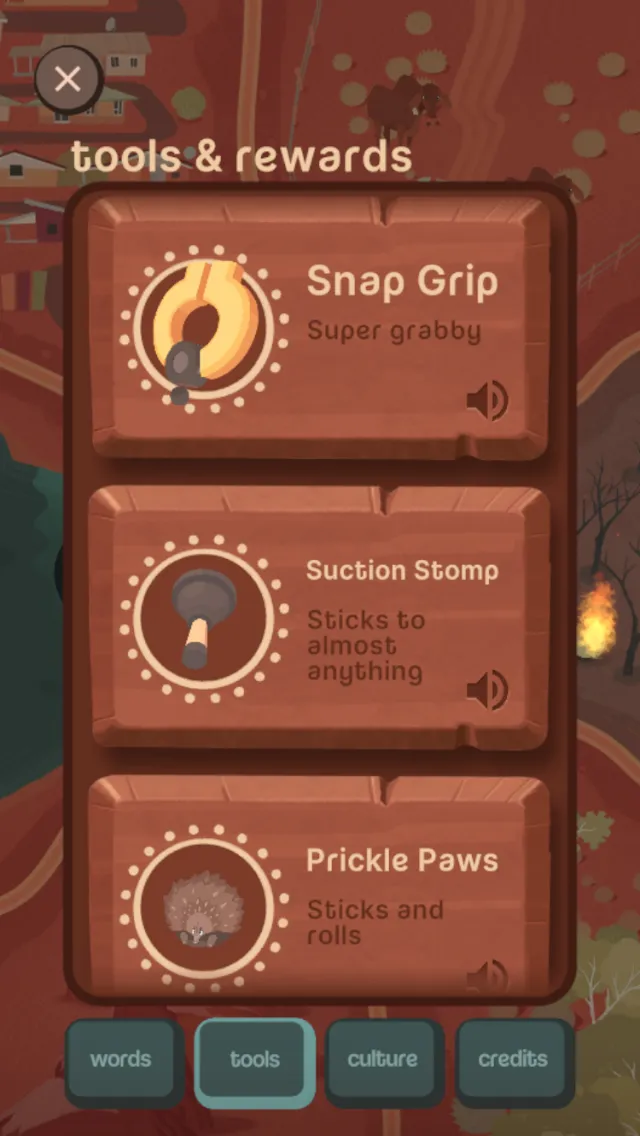
- Unlocking culturally relevant power-ups and tools
- Competing for high scores while building cultural knowledge
- Replay mechanics that reveal hidden cultural treasures
At the heart of the gaming experience is how these features come together to serve the larger cultural mission.
During play, the game teaches new phrases and vocabulary in a way that sticks. However, at a much broader level, the game also helps inspire young people (and adults) to develop a connection to place, culture, and community.
Impact beyond the screen
Nyiyaparli Widi is simultaneously an educational tool and a celebration of a vibrant language and culture. Above all else, however, it represents a cultural lifeline.
For Nyiyaparli children, it offers a pathway to connect with their cultural heritage in a format that speaks to their digital-native upbringing. For the broader community, it ensures that precious cultural knowledge doesn’t disappear with the passing of elders.
It demonstrates how technology can serve indigenous communities when the process is truly collaborative. By centering community voices and cultural protocols throughout development, we created something that belongs to the Nyiyaparli people—not something made about them.
Every time someone plays Nyiyaparli Widi, whether indigenous or non-indigenous, they are contributing to vital preservation efforts to keep the Nyiyaparli language alive forever.
AKAD
Redefining education marketing
( Services )
- Brand & Media
In 2025, AKAD came to us with a clear challenge: How do you stand out in a market shaped by tradition and seriousness, without ending up looking like every other university?
Most education campaigns still rely on overly serious, sensible tones: chalk dust, beige walls, predictable promises. But for the next generation of learners, we wanted AKAD to stand out for real.
Together, we reimagined how AKAD shows up for young adults – people building their careers, who certainly don’t find “normal” inspiring.
A market that plays it safe
The Swiss education landscape is crowded, filled with institutions speaking the same familiar language: practical, accredited, safe. In a culture that values modesty and understatement, these messages tend to blend together. For younger audiences, it all feels… pretty irrelevant, sometimes even a bit outdated.
For AKAD, it was crucial to reach Gen Z and young Millennials – people juggling jobs, relationships, identity, and the ever-looming “What comes next?” question. Many feel restricted by traditional education paths, worried about choosing a future that feels too small or too limiting.
AKAD needed to understand how this audience perceives the brand. The goal: meet young professionals exactly where life happens – on the street, at home, in their feed. AKAD shouldn’t feel like just another education provider, but like the rule-breaker in a category that rarely breaks rules.
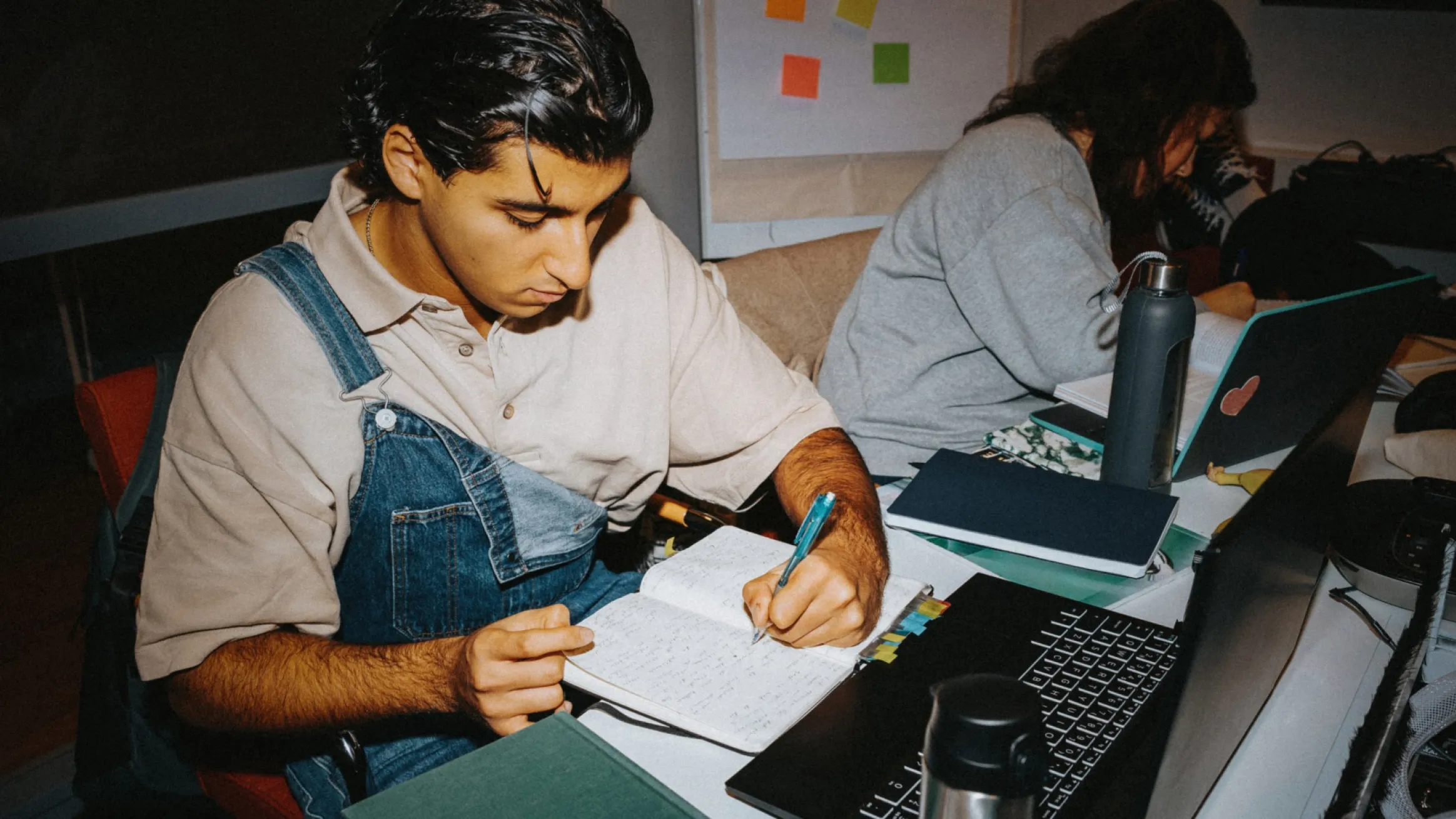
Education isn’t a sneaker. It’s a trust decision.
For this young audience, “trustworthy” doesn’t automatically mean “boring.” To capture attention, AKAD needed to align the brand with lifestyle and ambition. We focused on a mindset we saw again and again: education decisions are ways of breaking out of a pre-drawn life path.
We positioned AKAD in a new, untapped brand space where flexibility becomes the new premium. The brand territories were intentionally bold, hedonistic, and uncompromising—rooted in the real lives of our young audience and the “Brat” culture, which prefers breaking expectations over fulfilling them.
In a category defined by restraint and tradition, AKAD chose to show student life as it actually is: chaotic, funny, intense, and full of energy.
Instead of perfection, we leaned into personality. Instead of pretending education is a flawless idyll, we highlighted the real (and often exhausting) mix of learning and life.
The result is anything but trivial. It’s culturally relevant. And it works. The campaign drove attention, organic engagement, and meaningful resonance with exactly the audience we wanted. Not because it was loud, but because it was honest.
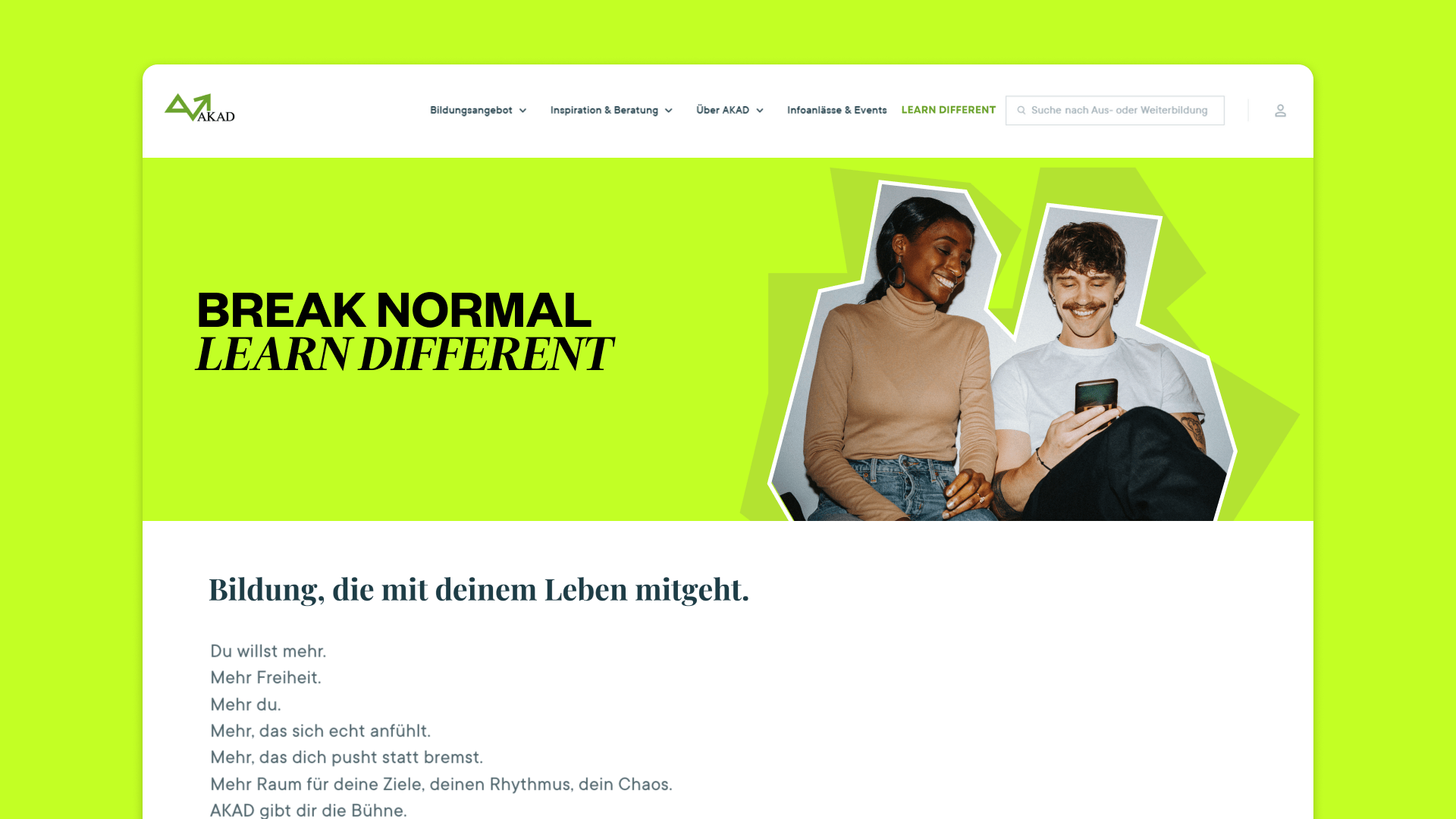
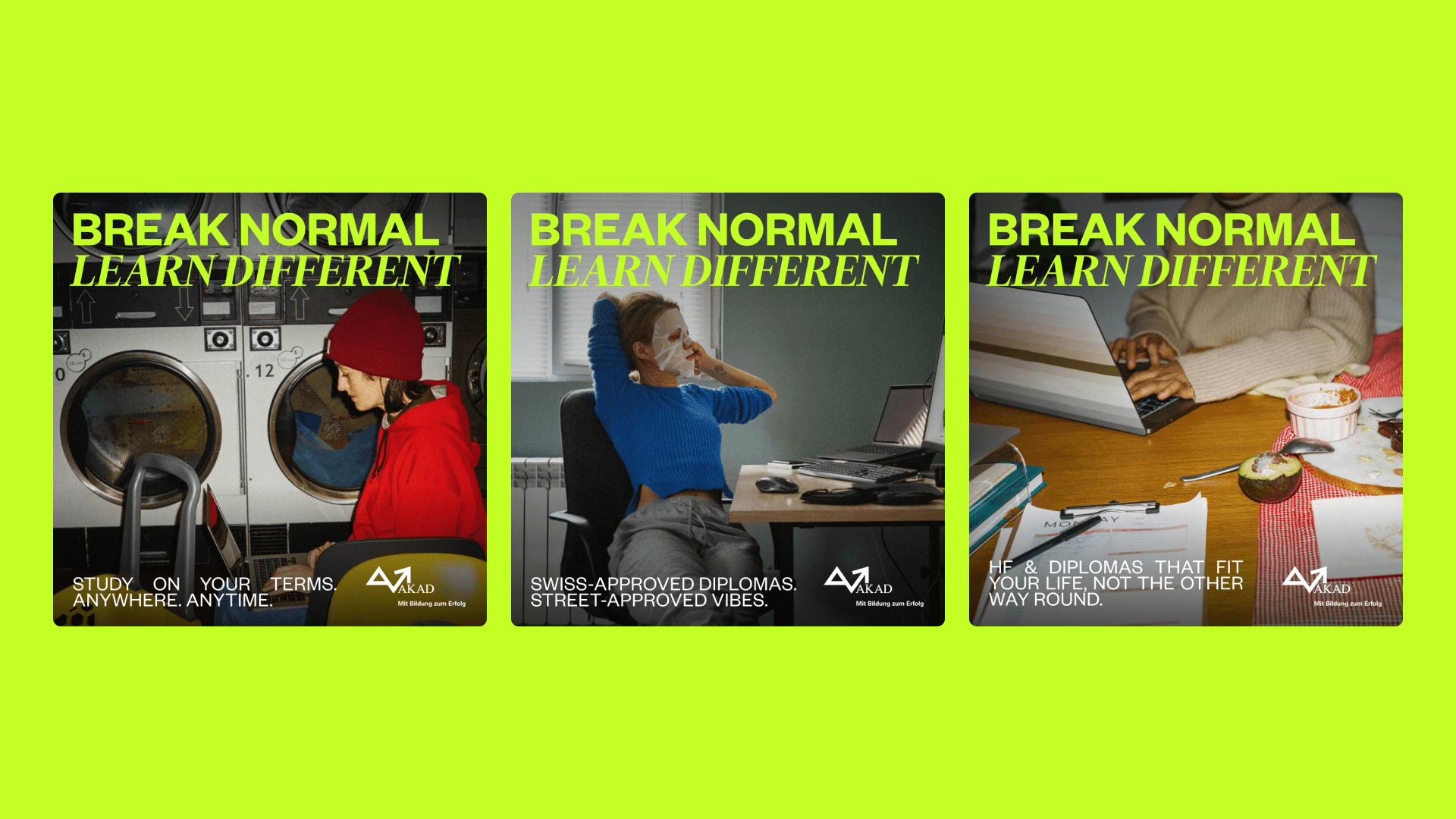
“BREAK NORMAL, LEARN DIFFERENT”
This creative platform became AKAD’s rallying call, and a clear signal that the brand is stepping away from classic education clichés.
We developed a high-contrast look built on a raw black-and-white foundation, illuminated by “Neon Matcha.” The design needed to feel street-approved and stand out sharply against the grey tones of the commuter routine.
In tone and messaging, we transformed academic acronyms into playful “Bold Codes” – inspired by gaming and tech culture – to position AKAD’s programs as future-forward and full of energy:
- HF (Höhere Fachschule) → High Future
- BMS (Berufsmaturitätsschule) → Boss Mode Start
We created an “Anti School” world for the campaign, centered on learning on your own terms. Flash photography, underground zine references, and wild-posting aesthetics helped portray the campaign’s protagonists as “career rebels” – people who don’t wait for permission to carve their own path.
The campaign ran across DOOH and social (TikTok and Instagram), precisely where the audience seeks inspiration, not instructions.
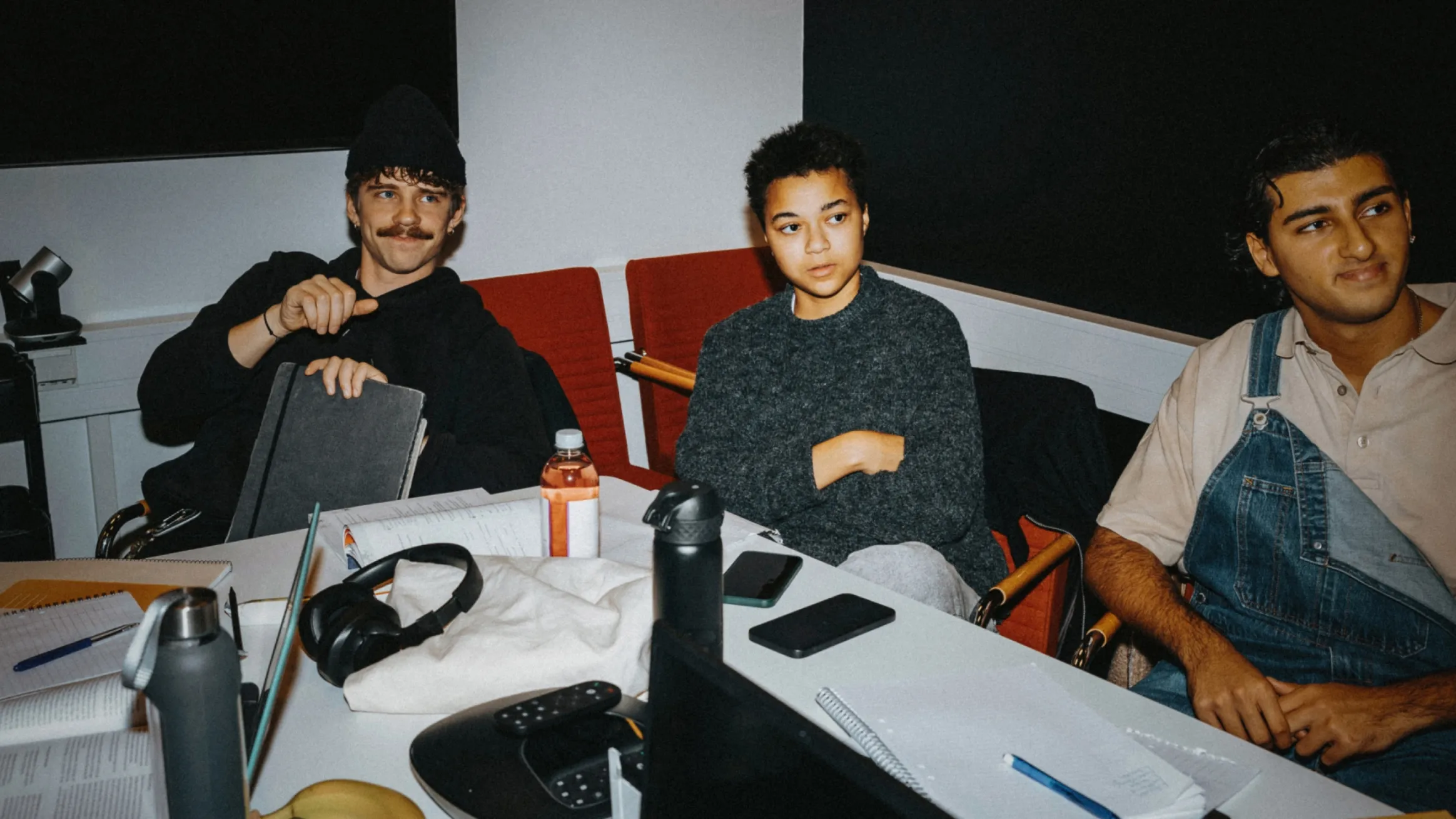
Why relevance beats reach
For years, marketing held onto a simple formula: more impressions = more impact. But platforms have changed the rules. Today, it’s not about how many people you reach, but how many feel genuinely spoken to. Content spreads not because it has the biggest budget, but because audiences instantly think: “This is me. This is my life.”
Relevance spreads on its own. Reach simply helps it travel further.
Results that speak for themselves
The campaign generated over 19 million impressions across DOOH, Meta, TikTok, and YouTube, creating strong awareness and brand demand, as reflected in a clear rise in organic AKAD search queries. Video channels were efficient: TikTok and Meta delivered low CPVs. YouTube impressed with a CPM of 11.41 CHF and a strong indirect influence on brand demand and conversions.
-
+19M
Impressions
-
0.01–0.04 CHF
CPVs on TikTok / Meta
-
11.41 CHF
CPM on YouTube
Credits
Client
ANDREA PIETSCH
Account & Project Management
IRIS CLAUS
LEAH KRUSE
Strategy
JOHANNES KLEIN
Creative
TINA BLECH
GIULIO RUBINELLI
Design
NATACHA STEYN
SÖNKE SCHÜRMEIER
VIRGINIA GUTIÉRREZ
Media
LAURA ITEN
ANNA DASHEVSKAYA
GERSON MOLINA JIMENEZ