

The Black Friday 2025 paradox: Calculated consumers & AI advantage


Black Friday has become a benchmark for a brand’s digital strategy, and in 2025, the shopping frenzy will be defined by two powerful and conflicting forces.
On one hand, a climate of calculated consumer spending and depleted savings means shoppers are more deliberate and value-focused than ever.
On the other hand, a revolution in AI has armed brands with unprecedented tools for targeting and personalization, creating a new landscape where you can win a greater share of a tightening wallet.
This collision means the old playbook of deep, site-wide discounts is incomplete. Winning in 2025 requires a more agile, data-driven, and human-centric approach that navigates both economic caution and technological expectations.
At DEPT®, we help brands navigate what’s next. Here is our playbook for Black Friday 2025, focusing on the five digital strategies that will make the difference between being part of the noise and leading the market.
A tale of two consumers
The macroeconomic climate for Black Friday 2025 is one of caution. With depleted savings and persistent inflation, consumers are being more deliberate with their spending. But this pressure isn’t felt equally. According to Visa’s U.S. Annual Economic Outlook and Neilson’s 2024 recap, the market has split into two dominant behavioral profiles:
- The value-seekers. According to GWI, over 75% of consumers in both the US and Europe demonstrate value-seeking behaviors, from self-identifying as price-conscious, to prioritizing flexible payment options like BNPL, to using comparison tools and researching the best deals. This “value-driven majority” is large, deliberate, and motivated by affordability, flexibility, and a need to make every dollar (or euro) go as far as possible.
- The experience-seeking affluent. At the same time, a smaller but powerful segment is still spending, but with a different lens. GWI shows just 8.6% of U.S. consumers and 12.7% of European consumers identify as “affluent,” and this group tends to prioritize brand trust, product quality, and a seamless experience over price. While fewer in number, they often deliver higher lifetime value and greater willingness to advocate for the brands they love.
CMO Takeaway: The most critical decision is choosing your primary battleground. Are you built to win on undeniable value for the broader market? Or on creating a premium, experience-led proposition for fewer, but higher-value customers? A focused strategy that aligns with your brand’s strengths will be far more effective than trying to be everything to everyone.
The 2025 shopper is AI-powered, authenticity-obsessed
The customer you’re trying to reach has evolved. They’re empowered by technology but more skeptical than ever.
- AI as a personal concierge: AI is no longer just a back-end tool; it’s a consumer-facing shopping assistant. A stunning 43% of Gen Z consumers are comfortable having an AI agent shop on their behalf. They expect you to anticipate their needs with hyper-personalized recommendations and experiences in real time.
- The authenticity crisis: The rise of AI-generated content has fueled a crisis of trust. 75% of Americans trust online content less than ever before. Consumers gravitate toward brands that offer radical transparency and align with their values.
- The non-linear journey: The traditional marketing funnel is long dead. A customer might discover a product on Amazon, research it on Reddit, and buy it through their favorite influencer’s commission link. They expect a consistent, frictionless experience at every step.
CMO Takeaway: The modern shopper trusts AI to find products but doesn’t trust the content they see online until it’s validated. This is the central challenge. Your job is to build a brand so authentic and transparent that it becomes a trusted signal in a noisy world, delivering a seamless experience for customers no matter where they are on their non-linear journey.
The DEPT® Black Friday playbook: 5 strategies to drive growth
1. Rebalance your media mix for full-funnel impact
Customer acquisition costs are high, and the digital ad landscape is defined by volatility.
The real challenge for the Black Friday season is rebalancing the media mix to connect the dots across a fragmented customer journey. It’s about combining channels like retail media and social media to work together, integrating the entire funnel, and driving efficiency through high-impact owned channels.
- Pivot to retail media networks (RMNs): RMNs are set to capture one-fifth of all digital ad spend in 2025 for a reason. They provide access to high-intent shoppers at the point of sale, powered by robust first-party data that delivers measurable ROI.
- Connect your funnel with integrated campaigns: Treat channels as interconnected parts of a whole. Use your owned data with the rich first-party data from RMNs to inform and target your social and CTV campaigns. This full-funnel approach boosts efficiency and turns upper-funnel awareness into lower-funnel conversions.
- Take advantage of your owned channels: Your most powerful performance lever may already be in your control. Owned channels, from your website to email, SMS, and loyalty programs, are essential to driving full-funnel performance, and they shouldn’t operate in isolation. Used strategically, they can flex across both D2C and retail objectives, depending on where the shopper is most likely to convert.

For example, DEPT® worked with the beauty brand good hair day to overhaul its Amazon advertising strategy. By focusing investment on high-traffic keywords and key deal periods, especially Black Friday, we helped them navigate the competitive beauty landscape. This RMN strategy resulted in a 50% year-over-year growth in total sales, a 113% increase in advertising sales, and several of ghd’s top products became bestsellers on Cyber Monday.
2. Layer smart personalization onto bold creative
Yes, consumers have high expectations of personalization. But that doesn’t mean you abandon broad-reach creative. Some of the most effective campaigns in recent years have been built around a single, clear idea that resonates broadly, then flexes in execution.
The goal isn’t to trade big ideas for hyper-niche segmentation. Instead, it’s to scale your message efficiently while layering smart, AI-driven personalization once a customer shows intent. Creative still leads, but personalization refines the path once the journey has begun.
- Build a first-party data fortress: With third-party cookies gone, first- and zero-party data are your most valuable assets. Invest in collecting this data through engaging loyalty programs, interactive quizzes, and other value exchanges where customers get a tangible benefit in return.
- Orchestrate journeys in real time: Move beyond static segments. Use AI to adapt the customer experience based on live behavior. This means AI-powered wishlists that follow users across sessions and dynamic product recommendations that shift with every click.
- Personalize the promotion: Use your data to personalize the offer itself. Create tiered promotions that reward higher spending, offer exclusive discounts to VIPs, and generate dynamic bundles to increase Average Order Value (AOV).
3. Build trust with action, not just words
In a low-trust digital world, “authenticity” often feels like a buzzword. For Black Friday, building trust requires taking concrete actions that prove your brand’s integrity when it matters most.
- Amplify real customer voices: The most trusted voice is another customer’s. Prominently feature user-generated content (UGC) like reviews, unboxing videos, and social posts in your Black Friday campaigns. This provides powerful social proof at the moment of decision.
- It’s not all about reach: Consider shifting budget from mega-influencers to micro-influencers who have a genuine, demonstrable affinity for your product. Their recommendations carry more weight with niche communities and drive higher engagement. Structure these as long-term partnerships focused on authentic advocacy, not one-off transactional posts.
- Contribute, don’t just claim. Consumers are skeptical because they’ve heard it all before. They want to know what you’re doing differently and why it matters. Use Black Friday as a moment to cut through the noise with real impact: Spotlight product innovations that reduce waste, slower shipping that lowers your footprint, or give-back programs that turn purchases into contributions. Most importantly, practice radical transparency instead of making misleading claims that risk being seen as greenwashing
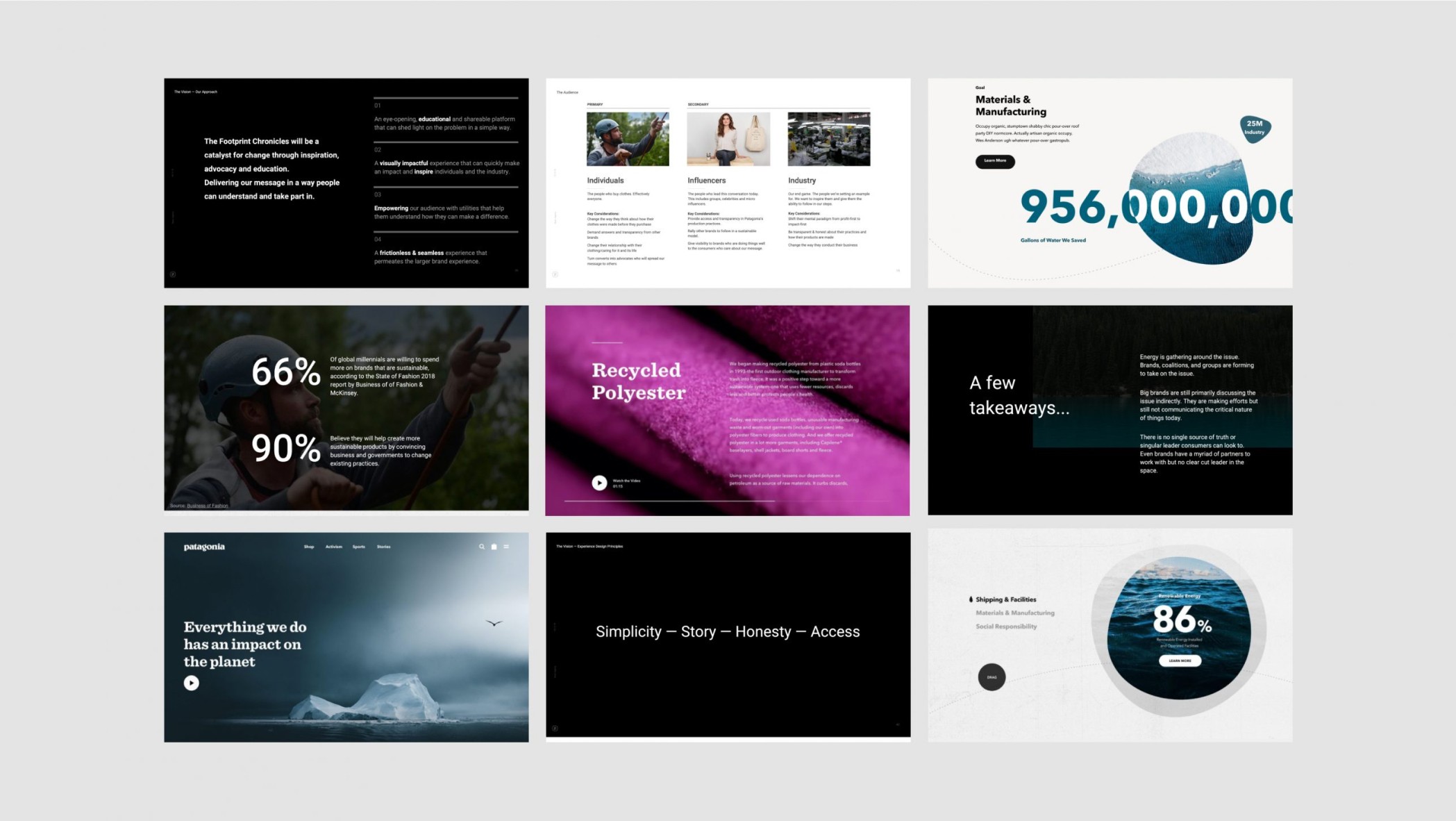
Take Patagonia’s digital platform, which BASIC/DEPT® helped transform into a hub for activism. We integrated their environmental mission and transparent product stories into the commerce experience, giving shoppers a chance to pause and consider a product’s impact, turning a simple purchase into a statement of values.
4. Master the moment of purchase
The final steps of the journey (payment and fulfillment) are where most sales are lost. Cart abandonment rates can exceed 76% during Black Friday, with most drop-offs happening at the payment stage. Mastering the moment of purchase is about converting that hard-won, lower-funnel traffic.
- Offer flexible payments: In a cash-flow-conscious economy, Buy Now, Pay Later (BNPL) is a critical conversion lever. For a shopper arriving from an ad, seeing BNPL and mobile wallet options immediately removes a key barrier to conversion.
- Optimize mobile checkout: With mobile driving the majority of traffic and sales, the checkout must be ruthlessly simple. This is especially crucial for traffic originating from mobile-first channels like social commerce and apps, where a clunky checkout process will lead to an immediate bounce.
- Learn from (retail) checkout behavior: The best checkout strategies aren’t invented, they’re observed. Retailers like Amazon have spent billions optimizing checkout for speed, trust, and convenience. DTC brands can adapt by meeting those same expectations by integrating trusted, seamless options like Amazon Pay, Apple Pay, or Shop Pay.

Some brands, like Liquid Death, take it a step further, using their own sites to drive high-intent shoppers directly to retail partners.
This not only boosts conversion rates but also builds momentum and shares on platforms like Amazon. Meanwhile, features like geo-targeted links or “Where to Buy” modules give customers more choice and a faster path to purchase.
5. Drive conversion with immersive, actionable experiences
“Creating experiences” can sound vague. In practice, it means using technology to answer customer questions, build purchase confidence, and reduce returns. With product discovery now heavily driven by visual platforms like TikTok and Pinterest, these tools are direct responses to how consumers shop today.
- Use AR to increase purchase confidence: For categories like beauty, fashion, and home goods, Augmented Reality is a proven conversion tool. Letting a customer “try on” a lipstick shade or visualize a sofa in their living room directly addresses purchase hesitation. Brands using AR have seen conversion rates increase by up to 94% because it bridges the gap between online browsing and tangible reality.
- Connect inspiration to inventory with visual search: Consumers constantly discover products through images on social media. Visual search technology allows them to take a screenshot or photo and instantly find that item (or similar ones) in your store.
- Make content shoppable: The line between content and commerce is gone. Turn inspiration into transaction by making your video content and live streams on platforms like TikTok and YouTube directly shoppable. This creates a seamless path to purchase within the entertainment experience, capturing impulse buys and converting interest at its peak.
For example, DEPT® partnered with the fashion outlet Otrium by creating Ovatars, diverse, AI-generated models. By blending product photography with generative AI, we created an endless stream of new, high-quality shoppable visuals.
The paradox of this year’s shopping season is clear
Consumers are cautious, but opportunity is abundant for the brands that adapt.
And while the strategies in this playbook are deeply applicable to the Black Friday frenzy, they’re also the foundational components of a more agile, intelligent, and customer-centric commerce engine. By embracing them, you’ll both earn conversions and build lasting brand equity in the process.