

ChatGPT ads & the next phase of AI-driven discovery


For months, as the buzz around an upcoming wave of LLM advertising has been building, the question wasn’t if, but how ads would arrive.
Conversational AI sits in a fundamentally different role than search, social, or feeds, and monetization would only work if it respected that difference.
Now, the experiment has begun.
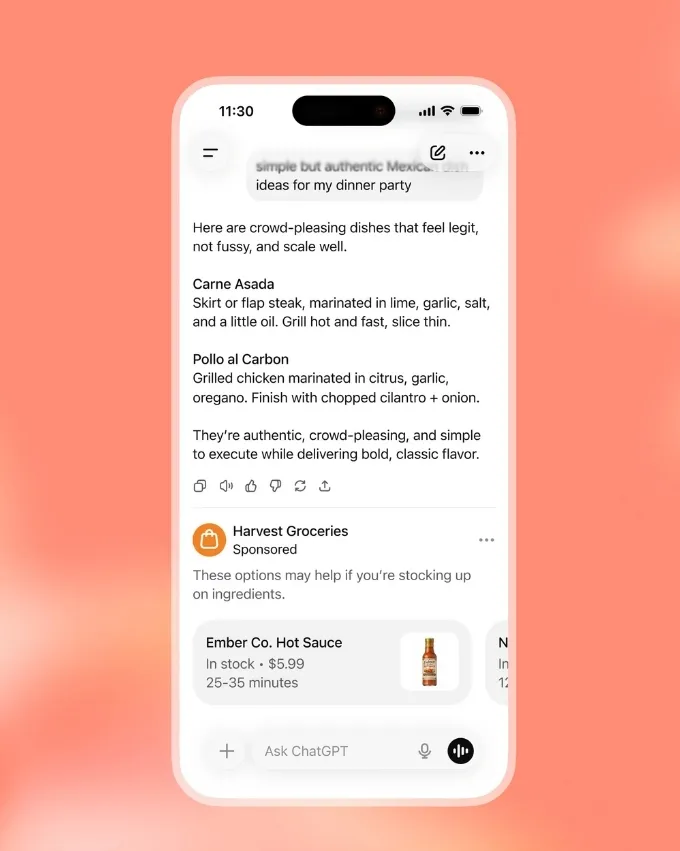
OpenAI confirmed it will start testing ads in ChatGPT across both the free and Go tiers in the U.S., with placements appearing at the bottom of relevant responses and clearly separated from organic answers. The stated goal is broader access, AKA funding powerful AI tools while preserving answer independence, user control, and trust.
Unsurprisingly, the reaction from users has been immediate. If advertising is going to exist inside AI systems people rely on for real decisions, it has to earn its place by being genuinely useful. Done right, this moment marks the start of a higher standard for what advertising can be: a service layer intertwined throughout the commerce experience.
Why conversational ads are judged differently
Users’ mixed reactions to ChatGPT ads aren’t surprising, but they don’t necessarily reflect a rejection of advertising itself. It’s a reflection of how people use conversational AI and what they expect from it.
Rather than a destination or a feed, users experience ChatGPT as a helper. When you open a chat, it’s typically to ask for guidance in some capacity. That creates a different psychological contract than scrolling social media or scanning search results. Even subtle monetization signals can feel amplified when they appear alongside an answer that’s meant to be objective.
This is why early user sentiment matters. In conversational environments, relevance alone isn’t enough. Advertising must feel additive, helpful, and transparent.
The same ad placement that would feel unremarkable in search can feel intrusive in chat. In search, users expect ranking and competition. In conversation, users expect reasoning. When an AI system explains why something is recommended, any perceived commercial influence, even if clearly separated, will be scrutinized more closely.
The upside is that this scrutiny creates clarity. Conversational AI leaves very little room for lazy advertising. If an ad doesn’t help a user move forward by answering a question, reducing uncertainty, or simplifying a decision, it will stand out immediately. That pressure is both uncomfortable and productive, forcing the ecosystem toward higher-quality, higher-intent experiences from the start.
From buying visibility to earning participation
ChatGPT ads formalize something brands have already been preparing for: AI-driven discovery happening at moments of real intent. The difference now is that OpenAI is introducing a paid layer inside those moments, with clear rules around placement, labeling, and separation from answers.
For brands, readiness matters more than creativity. Ads are triggered by conversational context, which means they appear when a user is already trying to solve a problem, evaluate an option, or make a decision. That shifts the role of advertising closer to guidance than promotion.
As DEPT® Global EVP of Strategy Isabel Perry shared with Digiday, “The native experience will be conversational. It would be extremely weird if the brands don’t support conversation.”
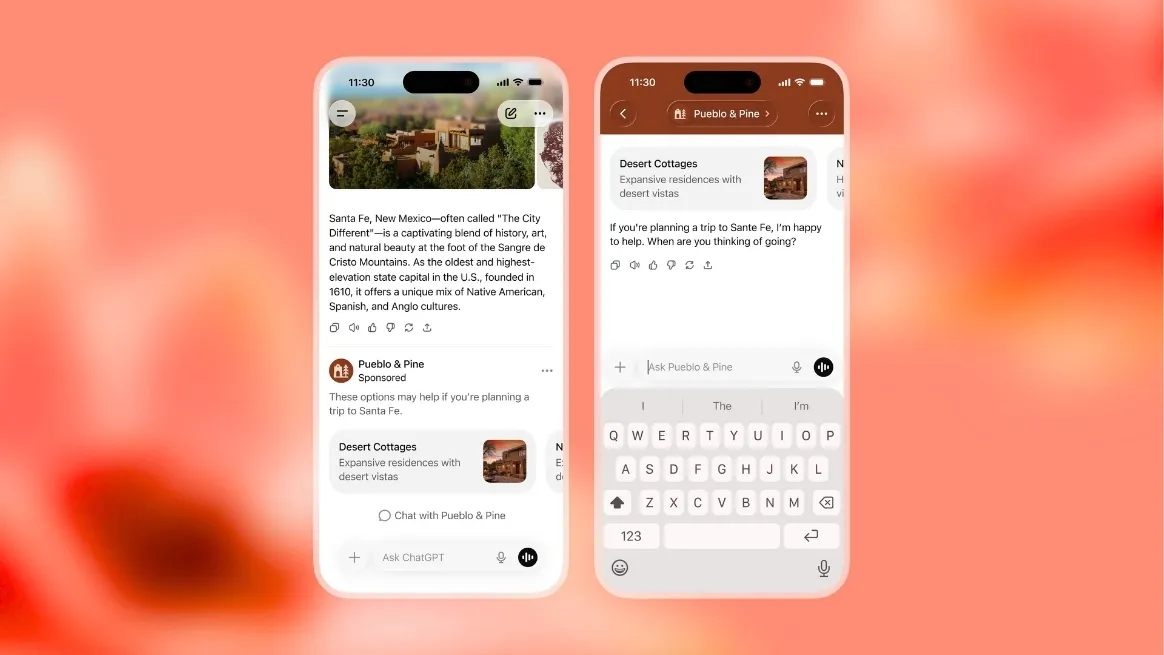
Early examples suggest that these placements will reward brands that can clearly explain their offerings, anticipate common questions, and reduce friction in the decision process. Over time, we expect formats to move beyond static cards toward more interactive experiences, where users can ask follow-up questions directly within the ad. In that scenario, the quality of your brand’s answers matters as much as the initial placement.
This is why early testing is valuable. If you participate early, you can learn how users engage with conversational ads, which questions surface most often, and where confusion persists. Those insights will inform everything from messaging and product descriptions to how offers are structured for AI-native environments. The goal is to understand how conversational intent actually converts.
The foundation still matters. Brands that already show up consistently in organic AI responses tend to have clear positioning, structured product or service information, and signals of real-world credibility. Paid placements build on, rather than replace, that foundation. Without it, ads risk feeling disconnected from the conversation they’re trying to enter.
OpenAI’s approach also suggests restraint. Ads are limited in placement, excluded from sensitive categories, and designed to remain clearly distinct from responses. This isn’t a high-volume inventory play, but a controlled rollout, designed to test whether advertising can coexist with a high-trust interface. This creates a narrow but important window to prepare systems, content, and internal expectations before formats harden and competition increases.
In practical terms, this moment favors brands that treat conversational advertising as an extension of how they already help customers understand, choose, and move forward.
What brands should do today
ChatGPT ads are rolling out deliberately, with limited inventory and clear guardrails. That creates a narrow window where early participation shapes how the channel develops and where learnings matter more than scale.
- Plan an early test focused on learning, not efficiency: Early testers help shape formats and best practices, while gaining insight into how ads perform in high-intent conversational moments.
- Align your core offer for AI-native contexts: Be clear about what you offer, who it’s for, and how it compares to alternatives. Conversational ads work best when they reduce decision friction, not when they introduce more claims.
- Prepare for interaction, not just placement: Expect users to ask follow-up questions directly from ads over time. Be ready to explain options, requirements, and trade-offs clearly and consistently.
- Move quickly on access and readiness: Inventory will be constrained early. Brands that confirm eligibility, required assets, and internal approvals ahead of launch will be best positioned to test when opportunities open.
ChatGPT ads won’t reward volume or novelty. They’ll reward brands that show up prepared to be genuinely helpful at the moment a user is trying to decide.