
Zero-click searches and the future of e-commerce product discovery


Today, ranking on the first page of Google doesn’t guarantee website traffic.
Because nearly 70% of searches now end without a single click. That’s the reality of zero-click search, where answers, product recommendations, and media appear directly on the results page through Google Shopping, AI Overviews, and other features.
This shift has major implications for e-commerce, and particularly brands that rely on DTC strategies. Product discovery is no longer driven solely by what’s on your website or how well you rank. Instead, visibility depends on how well your content is structured for AI, how consistently your brand shows up across platforms, and how useful your product information is to machines, not just humans.
What zero-click search means for e-commerce
Zero-click search isn’t new, but its scale and influence are. What started with featured snippets and knowledge panels has evolved into something much broader. Google’s results pages are now layered with AI-generated summaries, shopping carousels, video embeds, social content, and visual search results, pushing organic listings further down the page.
The rise of AI-powered search has also changed how people interact with queries. Instead of typing in product names or categories, users now ask natural language questions (“what’s a good concealer for sensitive skin?”) and expect instant, curated answers. For e-commerce brands, that means you’re not just competing for clicks, but to be included in the answer itself.
This affects the funnel in a few key ways:
- Top-of-funnel visibility is increasingly controlled by platforms and AI.
- Middle-of-funnel consideration is shaped by third-party content (reviews, forums, influencers).
- Bottom-of-funnel conversions still often happen on your site or a retailer’s, but only if shoppers navigate there first.
Not all brands are affected equally. Companies in visually driven or fast-moving categories—like fashion, beauty, tech, or wellness—tend to feel the impact sooner. So do brands that rely heavily on organic traffic for discovery, with publishers getting hit the quickest and with the most severity.
But across industries, the trend is clear: the path to organic product discovery is shifting away from websites and toward AI-powered ecosystems.
How Kendra Scott is expanding visibility and driving sales with AI
Jewellery brand Kendra Scott has been one of the fastest movers when it comes to adapting to the realities of zero-click search and AI-driven discovery. Its approach blends content expansion, AI-powered customer experiences, and site improvements designed to meet both customers and AI models where they are.
One major initiative has been a large-scale content buildout aimed at increasing organic visibility. Since mid-2024, Kendra Scott has added 8,000 new pages to its website, many generated with the help of generative AI. These pages are organised around themes and use-case-driven queries (“gifts under $50,” “everyday hoops for sensitive ears”) rather than specific product names, giving the brand a better chance to surface for long-tail searches that frequently trigger AI Overviews in Google.
Today, 27% of these pages appear on the first page of search results, accounting for 5% of Kendra Scott’s annual web traffic—demonstrating just how much content it takes today for a category-leading brand to drive organic traffic to product-focused pages.
At the same time, the company has been investing in AI-powered customer tools on-site. Its AI Copilot, a chatbot that answers product and style questions in real time, now resolves 93% of customer inquiries, up 53% from the tool’s previous version. As a result, 6% of Kendra Scott’s e-commerce sales are now influenced by the Copilot, and revenue tied to these interactions is up 160% year-over-year.
Finally, Kendra Scott is modernising its tech stack to create faster, more consistent experiences across channels. Migrating to a progressive web app architecture has improved site speed by as much as 20%, which directly lifts conversion rates.
Takeaways for commerce brands:
- Expand your content footprint: build thematic landing pages that align with how people (and AI models) phrase their questions, not just product-specific pages.
- Use AI to enhance, not just automate, the customer journey: real-time support tools like chatbots and predictive product recommendations can capture demand even when organic visibility declines.
- Improve site performance and architecture: fast, consistent experiences are a ranking factor for search engines and a conversion booster for customers.
This mix of content, AI-powered assistance, and technical optimisation is helping Kendra Scott maintain visibility and drive sales, even as traditional organic search channels become more competitive.
How Cetaphil is adapting AI-powered search habits
Cetaphil is leaning into AI-powered search by reshaping the ecosystem of content that AI pulls from, particularly to reach Gen Z consumers who are increasingly skipping traditional search altogether.
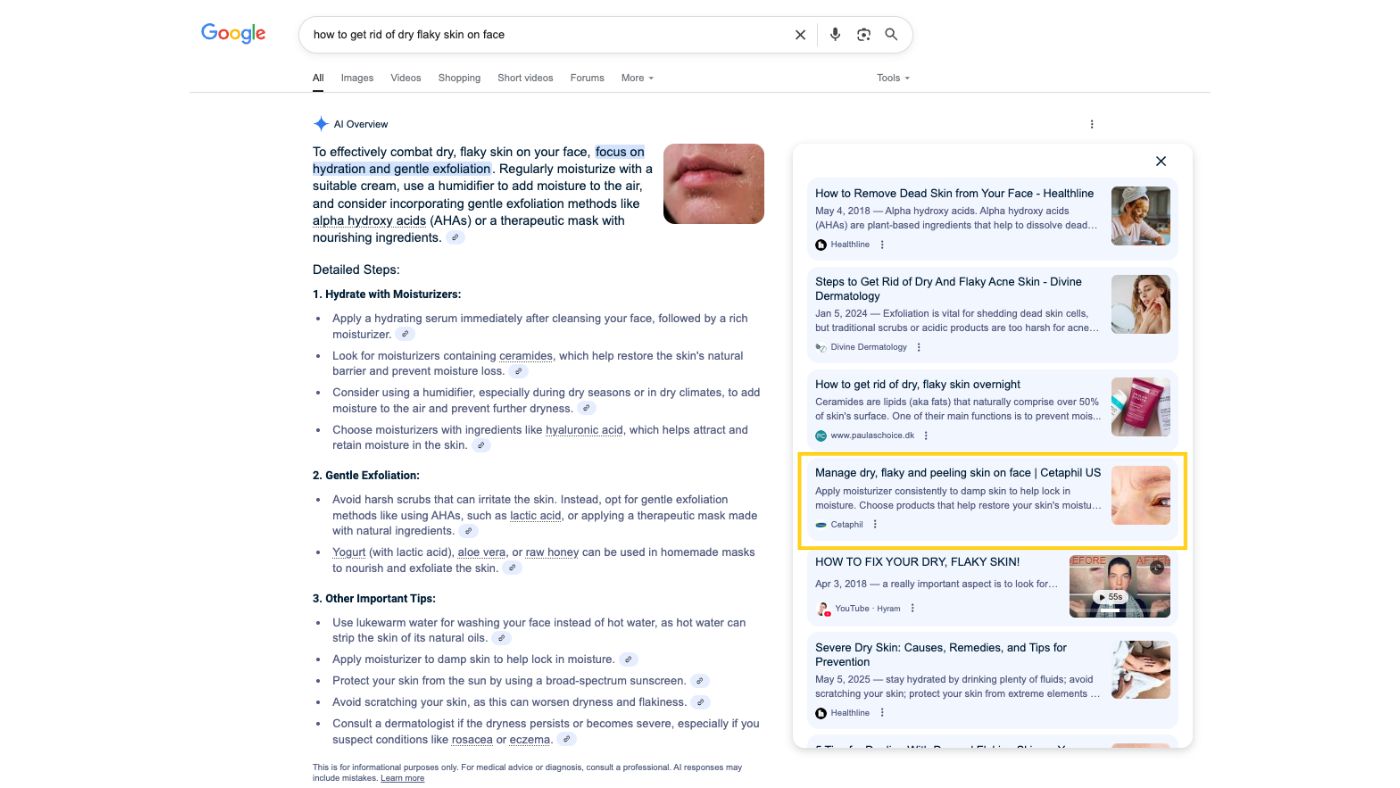
Earlier this year, Cetaphil launched a pilot campaign specifically designed to increase the brand’s visibility within Google’s AI Overviews. The campaign was targeted around non-branded, symptom-driven searches like “how to get rid of dry flaky skin on face.” Rather than trying to drive clicks directly, Cetaphil focused on having its products mentioned in the AI-generated summaries themselves.
To achieve this, the brand shifted its paid search strategy. It created landing pages optimised for the kinds of queries that trigger AI Overviews, and it began testing different content formats, including AI-generated educational material and user-friendly explainers. These assets were designed to align with the conversational tone of Gen Z’s search behaviour and to appear credible to the AI systems generating summaries.
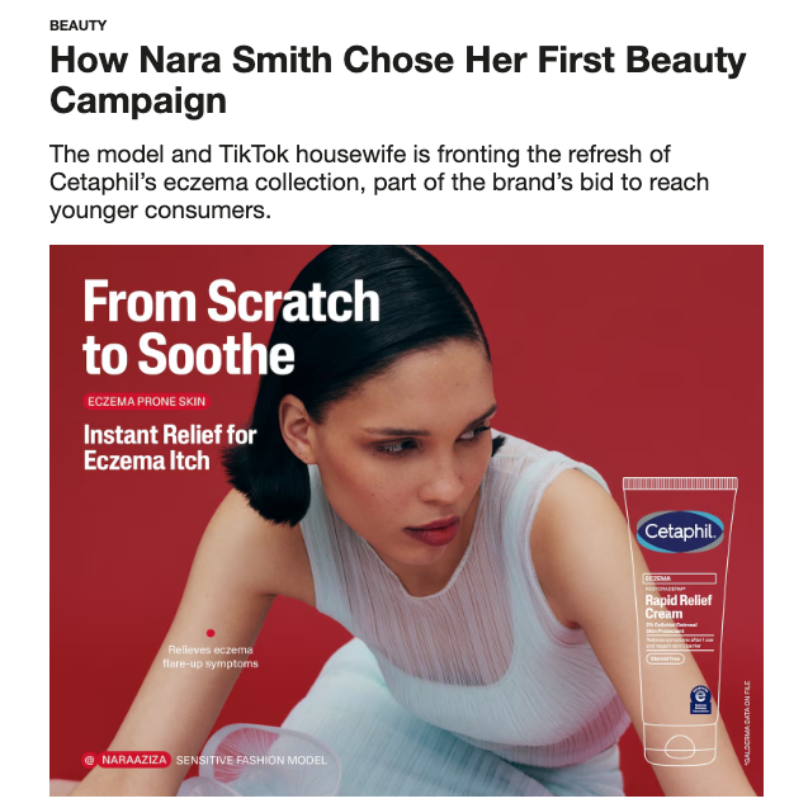
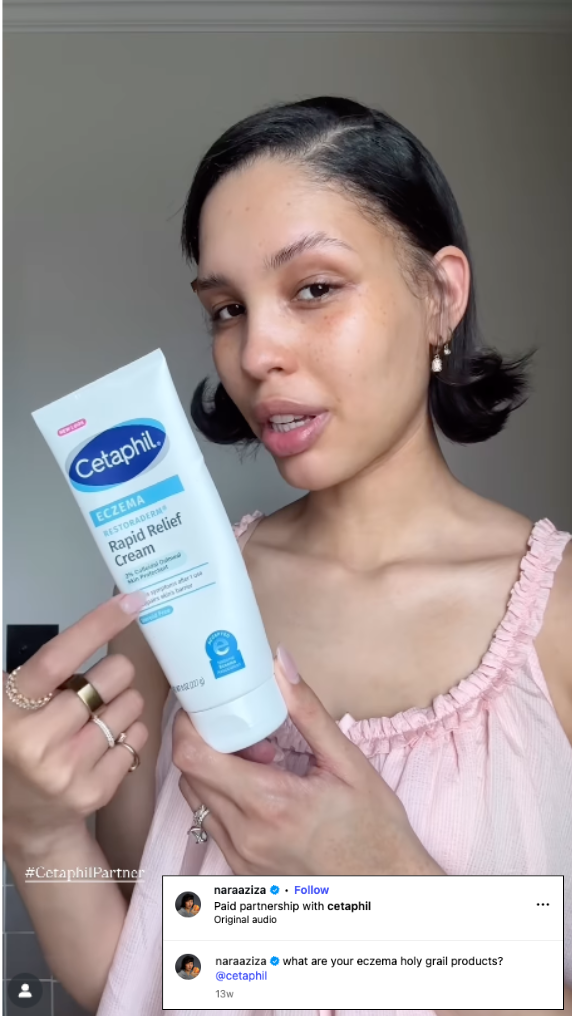
In parallel, Cetaphil has expanded its PR and influencer efforts, understanding that AI engines often pull from high-authority third-party content. By increasing the number of credible mentions across digital publications and creator channels, as well as working with popular influencers such as Nara Smith, the brand is improving its odds of being included in generative responses, especially for product types where peer recommendations and reviews heavily influence purchase decisions.
Takeaways for commerce brands:
- Target how people search, not just what they search for
- Rethink paid search as a visibility tool, not just a traffic driver
- Invest in authoritative off-site content
Staying visible in the era of AI-powered discovery
Product discovery today happens across AI-generated summaries, social feeds, and multimodal search results, often without a single click. To earn organic visibility, brands can no longer rely solely on traditional SEO tactics. Everything from copy to design to UX must be created with both people and AI crawlers in mind.
At DEPT®, we’re actively developing and testing Generative Engine Optimisation (GEO) tools to help commerce brands adapt to this shift. That includes structured data audits, PDP enhancements tailored to AI Overviews, and experimentation with off-site content strategies to influence how and where products appear in generative search results.
Still, this space is evolving fast. As agentic AI, personalised shopping recommendations, and AI-native search experiences continue to mature, commerce brands must be able to continuously adapt. Tactics that work today to surface a product in an AI summary or a visual search carousel may be outdated in six months.
Brands that are and will continue to succeed are those that are ones designing for flexibility, testing early, and treating visibility as a holistic, AI-aware strategy. Because in a zero-click world, discoverability isn’t a byproduct of good SEO. It’s a product of smart design, partnerships, and placements.