
TikTok SEO: a scalable framework to rank, resonate, and rise


Let’s be blunt: many brands are invisible on TikTok search (even big players).
Type “energy drink” into TikTok’s search bar, and Red Bull doesn’t show up until video #8. Meanwhile, competitors grab prime real estate and narrative control.
These are missed opportunities to own key (and often viral) conversations. TikTok’s search tab is the front page of the internet, and brands neglecting basic optimisation are falling behind.
To help brands consistently rank, resonate, and rise on TikTok’s search tab, we created this step-by-step framework:
1. Start speaking TikTok’s language
Everything starts with identifying what your audience is searching for.
- Start with Google: use tools like the SEMrush API to identify high-volume keywords (e.g. “pre-workout,” “study motivation”).
- Translate for TikTok: reword Google terms into TikTok-native language using large language models (LLMs). Think slang, short phrases, and casual syntax.
- Double down on TikTok data: use Creator Search Insights for raw keyword data. Or scrape TikTok Creative Centre for trends, search indexes, and demographic breakdowns.
Prioritise keywords with rising trend momentum, relevant demographics, and content gaps you can fill.
2. Turn keywords into click-worthy content
Bridge the gap between search intent and brand-aligned creativity.
- Train an LLM on TikTok’s secret sauce: viral hooks, tone, formats, and cultural trends.
- Inject your brand DNA: mission, tone, and audience specifics.
- Auto-generate tailored content ideas for each keyword, blending search demand with platform-native execution.
This will lead you to crafting with intent, rather than guessing what to post.
3. Make your assets scroll-stopping
Bridge the gap between search intent and brand-aligned creativity.
- Curate the best-performing ideas with platform experts.
- Build content that feels native, not forced: use trending audio, layer in native subtitles, incorporate keywords in the voice-over (the #1 SEO signal on TikTok).
Never keyword stuff. Weave them naturally into storytelling for maximum impact.
4. Grade your assets before you publish
Before going live, run your content through an AI-powered quality check. You’ll need your finished video and your brand’s creative guidelines.
AI will score your content on criteria determined by you. At DEPT®, we often use:
- Keyword presence in voiceover
- Hook strength in the first three seconds
- Relevance to search intent
- Use of trending audio
This step turns gut-feel publishing into data-backed decision-making.
5. Fine-tune to win the algorithm
Did your content pass the test? If not, here’s how to iterate. LLM-generated feedback pinpoints improvement areas:
- Weak hook? Punch it up.
- Keyword missing from the voiceover? Add it in.
- Not visually engaging? Enhance cuts or transitions.
Your social team uses these insights to refine content before it underperforms.
6. Performance analysis: learn, adapt, repeat
Post-launch, it’s all about tracking and evolving. The metrics that matter:
- Search Ranking: where does your video show up in TikTok’s search
- Engagement Signals: views from search, watch time, saves, and shares
- Completion Rate: are viewers watching to the end?
This data feeds back into your model, making every new content cycle more innovative and more effective.
Putting this process to the test with an international airline
On TikTok, users search for anything and everything. But one of the most popular categories of search is travel.
- A recent survey of TikTok users reported that 78% rank travel content among their top five favourite content categories.
- In 2023, TikTok found that 71% of its European users said they were more likely to book a holiday based on recommendations they’ve seen on the platform.
Recognising the increasing importance of TikTok SEO for travel brands, we helped a major European airline explore the platform’s potential using our framework to optimise the quality and volume of their hotel-focused social video content and maximise search views.
-
5x
higher than unoptimised TikTok
-
9.39%
views attributed to search (vs 1.87% pre-experiment)
-
260K
total views
Identifying what the audience is searching for
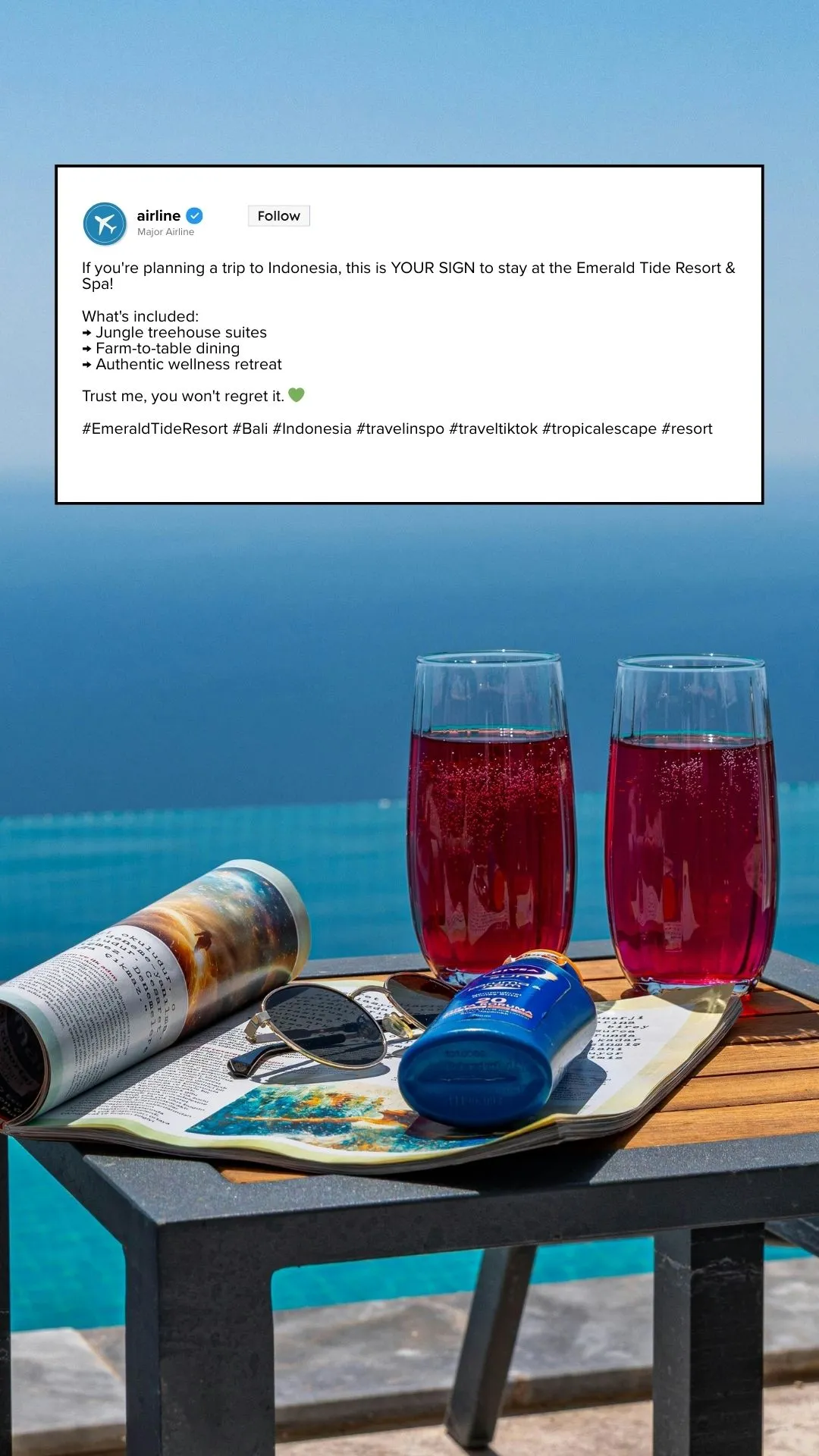
For the airline to rank on TikTok, we had to apply search terms that aligned with a user’s discovery mindset, rather than their pre-existing brand intent. That said, the top search terms we used were not for the name of the airline itself, but for specific hotels and locations, like [EXAMPLE luxury resort] or [five-star hotel in LOCATION].
Here are some examples:


Bridging the gap between search intent and brand creativity
To create search-worthy content for the airline, we partnered with two TikTok creators and sent them to four different hotels. Working with the creators, we delivered over 40 pieces of video content, which we then used to create 24 posts shared across two of the airline’s owned accounts.
Each post combined the visual appeal of the hotels with the authentic, human touch of the creators—a key ranking factor on social platforms.
Creating scroll-stopping assets
To ensure the 24 creator-generated posts were primed for discovery, we leaned into formats that perform well for hotel searches.
The single best-performing post overall was for the [HOTEL NAME] in [LOCATION] and combined great footage with a TikTok-friendly voiceover optimised for the keywords associated with this prime holiday destination.
However, we also found that many of our other top-performing posts were our more minimalistic ones. These relied on eye-catching videos of the stunning scenery surrounding the hotels and swapped voiceovers for some of TikTok’s best-fitting trending audio tracks.
Analysing performance
For the airline, our experiment with TikTok SEO was a success. Our 24 optimised posts earned, on average, a percentage of views from search five times higher than that of the airline’s existing posts.
With these “discovery mindset” views representing a new target audience for the airline, the experiment’s results also provided some crucial signals for the brand going forward, such as the reach of different keywords and the overall cost-effectiveness of our efforts.
Most importantly, the airline is now well-positioned to optimise its short-form video content across additional platforms, such as Instagram and YouTube Shorts, as new opportunities and tools emerge and competition intensifies for social SEO rankings.
Opportunities for further automation
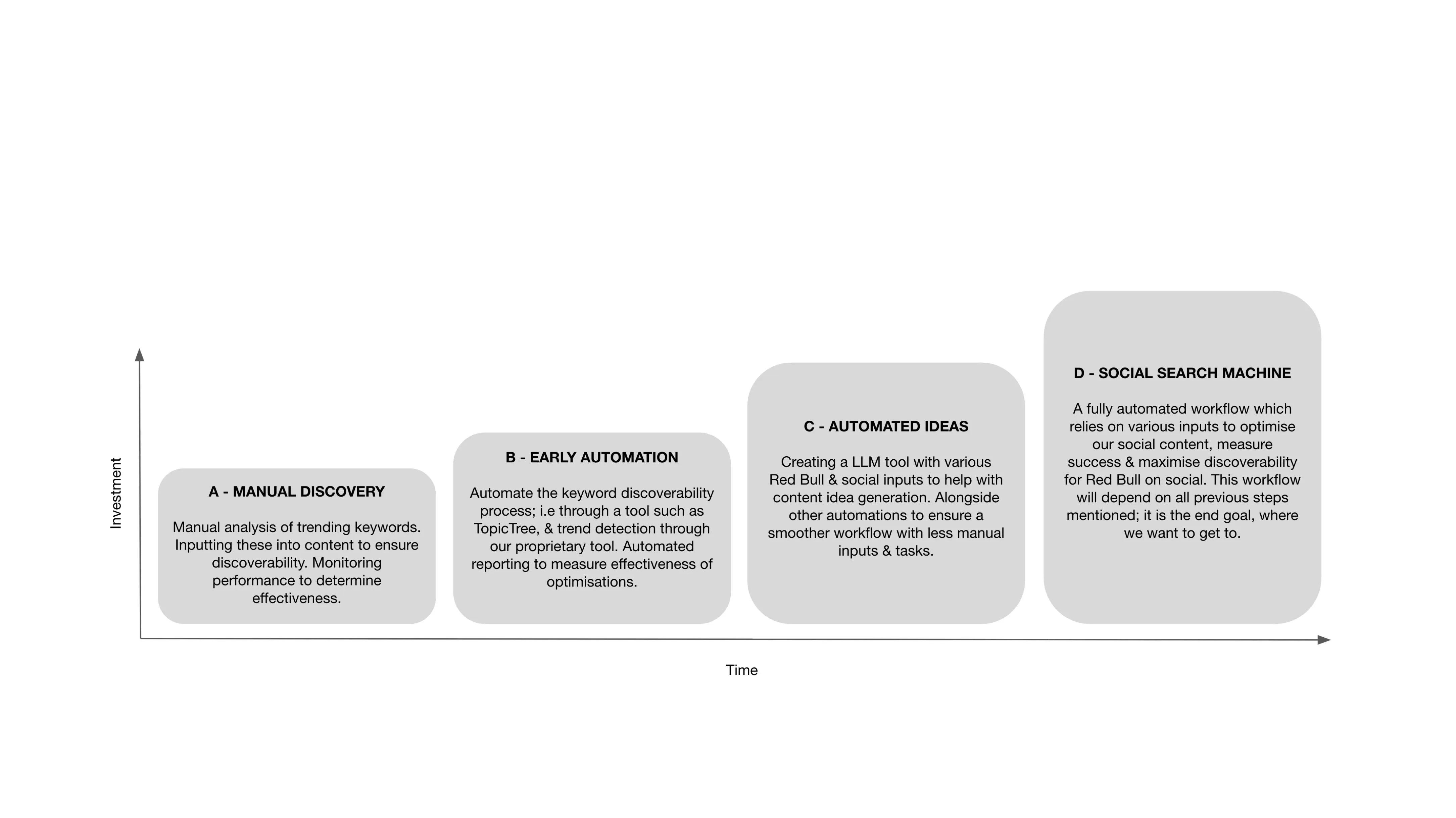
While our work with the airline demonstrates how this optimisation process can be done manually with success, we’re also exploring ways to automate the process using AI. Here’s our roadmap for TikTok SEO automation:
TikTok SEO isn’t optional for modern brands
If you’re not optimising for TikTok search, your content is only doing half the job. This framework helps you scale SEO into your creative pipeline, turning views into visibility and content into conversions.
Want to dominate TikTok’s search results? Start with search. Then build smart, native, and strategically optimised content at scale.