



When investigating headless content management systems and whether it’s the right solution for your business, you will undoubtedly encounter various pros and cons. You can simplify this process by aligning the advantages and drawbacks of a headless CMS by comparing it with a classic CMS, making the decision process a whole lot easier.
What is a headless CMS?
Nothing to lose your head over, to be perfectly honest – yes, pun intended. When you boil a headless CMS down to its essentials, you will get a database with a simple user interface. It serves your data via an API to any client (website, mobile app etc.) that may depend on it.
Similar to database tables, a ‘content model’ is a core concept of any headless CMS that, when defined, gives structure to the data. Content model examples are concepts such as ‘Product’, Contact person details’, ‘Content page’ etc.
Content models contain fields that the end-user can fill in, producing a data object which is essentially your content. Data objects are an equivalent to a table row. Most self-respecting headless CMS systems will allow you to reference other data objects in order to form advanced structure and dependencies within the data itself. A foreign key, if you will.
Now you may be asking yourself “if a headless CMS is nothing more than a database, what use do I have for it? Why not simply have a database?”
Well, you could, but you would be missing out on some key advantages that a good headless CMS will provide you and your team.
What are the advantages of a headless CMS?
When working with a headless CMS, you will benefit from easier setup, simplified maintenance and will be working with a well-tested set of tools that make content creation and validation much simpler. A headless CMS will make your data available to any number of clients across platforms and programming languages, thus allowing you to create platforms instead of simple websites. To top it off, you will also have access to built-in support for data versioning, meaning that you can correct any mistakes without dealing with database backups.
- Timesaving tool: A headless CMS is another tool in the software engineer’s tool-belt. It will save you a lot of time when building a system either for yourself or your clients. Moreover, you save even more time if the system you are building is evolving and changing, thereby requiring you to alter your data types.
The very fact that you can open the UI and create new and edit existing data types spares you a lot of effort. No need to mess around with SQL and database upgrade scripts. It is all handled by the CMS. - Validation for properties: Contrarily to a regular database, with a headless CMS, you’ll benefit by being able to define powerful validation properties. By defining the required fields as well as the string field format (email, phone, regex, etc.), managing data quality is effortless. Moreover, a headless CMS provides you with the choice of how to display input to the end-user. The goal may be to display a list of strings as a single text box that produces ‘tags’ on every press of the ‘enter’ button. It could be multiple text boxes, one below the other for easy editing; limiting the scope of available dates on a calendar; the number of decimal points for a number; type of file you want to allow your end-users to upload, or the maximum dimensions of the image.
You get the point, a headless CMS will put all these tools at your disposal with only several clicks, leaving you to spend your time writing meaningful code. - Data history and backup: Once your end-users start using the CMS, you may run into a situation where critical data is deleted or overwritten, and you need to get it back. A headless CMS will generally allow for a smooth data object audit. See who destroyed the data so they can get a slap on the wrists while you restore any lost values in just a few clicks. No need to fumble around with days old database backups that will restore your data to an ancient version only to restore one critical piece of information.
- Stability: An established, ‘battle-hardened’ headless CMS will generally be well tested, stable and bug-free. It will save you the stress of writing a custom UI for data input, much like a classic CMS will.
- Cloud: Headless content management systems are cloud-based, meaning that it is a server which is available to you and your end-users 24 hours a day/7 days a week. The only tool that you will need to access it and edit the data is a simple web browser. No specialised tools required for you or the end users.
Headless vs. classic CMS
So far, a headless CMS seems to have many advantages over a simple database, but what sets it apart from a classic CMS? Seeing how a classic CMS will usually be able to boast the same features, which of the two is better? Which one should you use? The answer depends on what you are trying to build.
If you’re building a website, a classic CMS is a perfect choice as it will allow your internal users to access it directly and preview any changes while editing the data. If you are dealing with a classic open-source CMS, you will perhaps be able to alter it and install custom plugins to allow more functionality.
But what happens when you want to build a complex platform? Imagine a project where you need to build several websites and mobile apps for both Android and Apple ecosystems which, in turn, share the data with the website. Hypothetically, the system may involve additional services that run on Linux and Windows servers. And what if you want to support third-party developers?
In this over-exaggerated scenario, a classic CMS fails to deliver, given that you would need to write your own API around it to satisfy all those apps and services. You will need to manage caching, security and data consistency, for example.
A headless CMS will provide these features to you ‘out of the box’ as the API is the primary way for you to interact with a client app, website or any other client. It allows you to specify security tokens that can only access a specific subset of data. By generating unique security tokens for each data consumer, you can create a safe way for any client apps to read and write the data that they have access to. Multiplatform compatibility is not a concern since you will generally be dealing with JSON, which every modern programming language can process.
Webhooks
Another powerful feature of a headless CMS is the ability to define and fire off webhooks. These are simple event-driven systems that send HTTP requests that you define to any URL of your choosing. For example, this allows you to notify all of your websites that a product description in the CMS has changed, and that the cache should be cleared to retrieve a fresh copy of the data.
What are the downsides of a headless CMS?
While boasting many advantages, a headless CMS is not perfect. It will put some obstacles in your way and make certain scenarios complicated to deal with. For example, difficulty in testing new features without affecting live environments, offline work for your client systems, and the fact that your data exists on a server which you don’t control.
- Testing difficulties: testing your code for various environments (test, integration, production), may not be as straightforward on a headless CMS, because many of them do not support this feature. More often than not, you will be dealing with a single environment and one set of data, which causes issues when developing new features or changing existing ones in a way that forces you to adapt the data models.
- Ideally, one would do so on an isolated environment so as not to affect the existing data. Some headless systems include tools for duplicating your data and allowing you to access it separately from the original, which solves half the problems related to this drawback. However, when making changes to content models or the data itself and the time comes to release the new feature, developers often face problems in propagating those changes back to the original environment without damaging it or causing data corruption. You can expect manual data model adjustments in some headless CMS systems.
- Always online problems: despite the benefits of a constant online presence, it can be a problem when your client software loses access to the internet. Unless you put in a lot of effort to cache your data and properly synchronise any changes with the headless CMS, it may cause you a lot of headaches when the various mobile apps, services, and applications come online and start injecting old data into the existing system. You may get messed up IDs, duplicate data, out of order data, etc.
- Data behind a paywall: in the case of paid solutions, you will be required to shell out a monthly subscription. If you don’t pay your subscription, your data may no longer be made available to you. It’s as simple as that. You may be spared this downside when using a free product, but free products often have a stigma of being of lower quality due to low incentives for developers to maintain and update them.
- In most cases, you will probably be able to retrieve your data via support staff, but unless you pay your subscription, the API access is going to be blocked, thus rendering your clients completely cut off from the data.
‘Too long, didn’t read’ summary
A headless CMS is an advanced database with a simple interface. One should view it as a tool that will save you a lot of time and effort because it will usually come with powerful features for validating data, ensuring its safety and versioning. It will generally be stable and well tested. Another major benefit is that your data will be available to you via an API 24 hours a day/7 days a week. A headless CMS’s most important feature is that it bridges the gap between platforms and programming languages, as it will generally serve your data in the form of XML or JSON.
A common problem that comes with using a headless CMS is the lack of support for data separation for multiple environments (test, acceptation, integration, production, etc.). It will often be quite a bit of work to alter production without a lot of careful, manual editing of content types. Being always online is good when it works as intended, but if your clients lose connection to the headless CMS API, you may run into issues with data synchronisation. Finally, if you use a licenced headless CMS, your data will be behind a paywall.
More Insights?
View all Insights


Questions?
Global EVP Technology
Jonathan Whiteside



Every business has a different growth trajectory. Technology that doesn’t scale in the right directions can become a blocker to future growth, and is one of the reasons why a headless approach is increasing in popularity; as businesses can gain more flexibility and discover greater possibilities for customisation and personalisation.
There are several reasons for the shift towards headless architecture, but speed and scalability most often drive the decision to implement a headless technology stack.
Unleashing the power of microservices
By combining best-of-breed platforms, with niche functionality specialised for commerce, search, payment or data management and so on, businesses can completely customise their front-end to suit their unique needs, as opposed to working with a predetermined tech structure provided by an all-encompassing solution.
When these platforms are integrated with a headless CMS, brands benefit from a centralised content hub. This makes editing much easier: a change in one place is seamlessly deployed everywhere the content is located. Unification improves brand consistency and compliance, and gives marketers more freedom to launch and optimise campaigns in real-time. As a certified Contentful partner, DEPT® utilises the future-ready cloud-native solution to help organisations accelerate growth.
Scaling omnichannel content management
Content consumption is evolving to be more fluid with audiences moving from one device and platform to the next, looking to be immersed and entertained without any interruptions. For brands to keep up with the demand for digital experiences, they need to move fast and avoid bottlenecks of multi CMS silos that can form in different markets or sub-brands when systems’ aren’t connected.
Creating an internal single source of truth through the headless CMS connects departments and streamlines delivery. Push-button deployment moves content into production and radically increases the velocity of fresh content on a global, enterprise scale. Brands can better align content across channels, repurpose existing content to improve its impact and ensure the right message reaches each target audience. The possibilities are limitless. Contentful’s open APIs work seamlessly with other tools or microservices and equip marketers to deliver a truly omnichannel strategy.
The solution is not only favoured by businesses and their marketing teams, but also by digital builders, according to Depsters that were recently Contentful certified.
Advancing commerce and beyond
Headless commerce allows businesses to adopt new touchpoints without needing to rework everything else. Contentful’s building block approach integrates with emerging technologies like AI-powered voice assistants, wearables, and smart applications, while still leveraging traditional channels like web, social media and SMS.
“A modern stack of integrated solutions is required for brands to keep pace with changing commerce by delivering relevant content when, where and how consumers expect it. Contentful runs on the world’s leading commerce platforms, including CommerceTools and Amazon, advancing businesses’ application of these platforms by supporting features such as AWS Auto Scaling,” said Daniel Proctor, Senior Developer at DEPT®. “Wherever Contentful is integrated, its content delivery API (CDA) enhances performance with fast, flexible, caching that can be tailored to individual customer needs and locations. As a result, Contentful effectively manages large spikes in traffic, maintaining a strong cache hit ratio (CHR) and seamless scalability as businesses grow globally.”
DEPT®’s Solutions Architect, Andy Whitehead adds: “The Contentful Marketplace has so many applications available to extend its capabilities through third-party services. You can also write your own custom extensions to work for any different scenario. Contentful’s in-depth documentation and software development kits (SDKs) simplify custom work and make collaboration between developers easier, whether that’s joining a client’s in-house team or getting caught up to speed when optimising the platform down the line with new functionality.”
Content delivery plays a key role in all industries, not just e-commerce. Moving quickly, without being held back by development constraints of some more traditional CMS platforms, is critical for conversion rates and is a growing requirement when building a stable solution at scale. This applies in a B2B context as well. More than 80% of business purchasers surveyed by Salesforce want consumer-level customer experience, and more than two-thirds of respondents say that they have switched vendors to get it. There’s a huge opportunity for B2B business owners to tap into through better technology and personalisation, considering 77% of B2B buyers surveyed by Gartner described their most recent purchase as very complex or difficult.
Reducing development time
Contentful’s new take on content as a service (CaaS – a sub-group of SaaS) simplifies the set-up and deployment processes, allowing developers to get started faster and spin up solutions that reduce businesses’ reliance on technical teams.
“Contentful is programming language agnostic, meaning teams can work in their preferred language and businesses moving into the model can keep content as it is without having to migrate data, for example, as they move from an HTML site to a React single-page application (SPA),” commented Andy Blyth, Technical Architect at DEPT®.
He further adds, “Contentful is constantly adding new features and functionality, allowing businesses using the service to evolve with the latest technology. Tagging has recently been released, grouping pages or objectives by characteristics or usage, which creates content classifications and eases the process of organising various components and multimedia files for editors.”

“Contentful is constantly adding new features and functionality, allowing businesses using the service to evolve with the latest technology.”
Andy Blyth, Technical Architect, DEPT®
Publishing content at scale
Chris Eccles, Technical Architect at DEPT® describes a Contentful project currently in development: “We’re working with an online learning provider that also performs English language tests for university, professional or migration applications. Contentful is populating the platform and we’re using its new web app, Compose. Setting up structured and reproducible fields is straightforward and the content management interface is the most intuitive I’ve ever seen. It uses a page-based model to streamline the process of adding and publishing content at scale, giving editors clear and flexible templates to quickly deliver uniform digital experiences, and in this case, across all of its programmes and courses.”
Contentful’s uncluttered interface experience helps reduce the level of intimidation and complexity for the user with simple logic and drag-and-drop features. Its ability to integrate with more no-code and low-code (NC/LC) tools means people from cross-functional teams have the ability to offset business demands for development, automate processes and accelerate digital transformation.

“The content management interface is the most intuitive I’ve ever seen.”
Chris Eccles, Technical Architect, DEPT®
Solutions for future business goals
Making the move to microservices via integrated headless solutions like Contentful creates the foundation for growth, however that may relate to your business. It’s easy to look at a new piece of technology and relate to case studies that highlight how it helped other companies increase volumes of sales, but growth is more dynamic and often involves changing workflows, governance, supporting technology and even security needs.
Overconfidence in a system’s ability to scale, without taking into account growing pains and unforeseen complexities can block innovation and lead to technical depth. In today’s ever-changing landscape, it’s difficult to predict what the future will hold, therefore, creating a solution built for change will underpin any avenue.
Putting Contentful into practice
Over the years, DEPT® has supported various companies with the successful application of Contentful. We collaborated with global shipping container supplier CARU Containers on a digital transformation project that involved building a new B2B online store fuelled by Contentful and Salesforce.
The new website was launched across ten countries as part of the refreshed CARU brand. Content pages were created to tell the story of the company, the employees, and each product. Additionally, there was content for social sharing and digital advertising: whitepapers, listicles, infographics and interviews. Content was displayed dynamically and adaptive to the language and country of each visitor, allowing one site to match up with an international audience. This content suite gave CARU positioning on LinkedIn, Google Ads, Microsoft Ads and the Google Display network. During the six month period of analysis and improvement, conversion grew by 400%, a sizable improvement that any company would be happy to see.
Content was also a key ingredient in transforming the 2021 Eurovision Village into a 3D Virtual World. The Eurovision Song Contest was streamed live, alongside additional DJ sets and performances and fresh content was served up daily throughout the nine-day festival. DEPT® integrated Contentful as the CMS, enabling a partnership agency to interact with guests and communicate updates in real-time, such as changes to the line-up.
We’ve also collaborated on projects for leading seafood supplier, Sykes Seafood; B2B travel company, Cartrawler; the Global Psoriasis Atlas; student discount platform, Totum; and the world’s number one chemical distributor, DigiB.
To stay ahead of the competition, agility and adaptability is a must. If your company has already implemented a headless stack but isn’t maximising its capabilities to their full potential, or is still weighing up the options, we’re here to help.
Contact us to discuss your digital landscape and how Contentful may be able to fit into it, perhaps by enriching your product information management (PIM) solution with marketing content or translating content in a mobile app.
More Insights?
View all InsightsQuestions?
Client Development Director
Katy White
BISSELL
From click to clean: Building a digital flagship experience
When BISSELL, a household name in floor care, set out to revolutionize its digital presence, it needed a partner who could bring bold ideas and flawless execution to the table.
To future-proof the brand’s position as a leader in the increasingly competitive home care and cleaning products space, we knew BISSELL’s digital store and direct-to-consumer offerings had to be as advanced and sleek as the products it sells.
Through a multipronged partnership spanning creative, content, and commerce, we created a best-in-class digital ecosystem that not only streamlined the path to purchase but also redefined how BISSELL connects with its customers. The result is a multichannel flagship experience that elevates the BISSELL brand and provides customers more value across every touchpoint.

The strategy for transformation
Grounded in data and designed for impact, our and BISSELL’s strategy put customer experience and brand identity at the forefront. Our approach focused on three key pillars: enhancing the user experience, driving growth through digital excellence, and building a scalable, future-ready foundation.
Putting the customer first
The cornerstone of the strategy was to create an intuitive, engaging online platform tailored to customer needs. By mapping the user journey, we identified pain points and opportunities to inform what a seamless shopping experience would look like across off- and online channels.
Driving growth through data and design
With a focus on aligning design with data insights, we needed to build a platform that reflected BISSELL’s updated brand identity and resonated with its target audience. From high-quality photography and 3D animations to SEO-optimized copy, every element would be crafted to engage users and drive conversions.
Building for the future
Recognizing the importance of flexibility and scalability, we sought to modernize BISSELL’s tech stack with a headless commerce architecture powered by Salesforce.
A digital flagship, redefined
We collaborated with Godfrey Dadich to translate BISSELL’s updated brand identity into a sleek and modern digital design. By enhancing navigation and reworking the information hierarchy, the team made the customer journey intuitive and engaging from the first click to checkout. The new platform includes features like a product finder tool to simplify the decision-making process and interactive content to bring BISSELL’s products—and their value—to life.
To ensure a cohesive omnichannel experience for customers, we also revamped BISSELL’s approach to email with redesigned email templates that align with the new BISSELL.com. By integrating them with the updated website and broader digital ecosystem, BISSELL’s enhanced brand identity remained consistent across its owned channels.
Storytelling that sells
We took a strategic approach to BISSELL’s content to ensure all of the visuals and copy across the site were consistent with the brand, showcased its values, and resonated with its audience. This included both a tactical component—migrating hundreds of pages of content into BISSELL’s new CMS, Contentstack—and creative services.
By establishing a consistent tone of voice and defining clear content pillars, we helped BISSELL create a framework for making sure all written content meets brand standards and identity. We also bolstered BISSELL’s storytelling capabilities by providing them with visuals to use across the digital ecosystem. In addition to orchestrating a 10-day, five-location photo and video shoot, we developed interactive 3D models to spotlight hero products, highlighting their standout features in an engaging and informative format.
Scaling copywriting with AI
We combined AI technology with human expertise to optimize over 560 pages of BISSELL’s digital content. This hybrid approach resulted in engaging, user-centric copy for 24 category landing pages (CLPs), 59 product listing pages (PLPs), and 373 product pages. By blending AI efficiency with human creativity we ensured all content was SEO-optimized and true to BISSELL’s brand voice. This scalable process allowed for rapid delivery of high-quality, conversion-focused copy, refined by human editors to ensure clarity, tone, and consistency.
-
560
Pages filled with digital content
-
59
Product listing pages
-
373
Product pages
Proving prowess with pets
BISSELL’s dedication to effective pet-specific cleaning solutions has made it a favorite among pet owners. We worked to integrate BISSELL’s animal love and expertise across the digital journey.
Our “Spick and Span” influencer campaign connected with pet parents through creators aligned with BISSELL’s values, driving 15.5M+ organic impressions. Influencer content amplified BISSELL’s “Pet Proven™” messaging, boosting awareness, traffic, and trust, achieving an impressive 7.09% ROI in its pilot rollout.
We also supported the launch of BISSELL’s industry-first Pet Proven™ certification program, simplifying shopping for pet owners. We ensured Pet Proven™ badges are prominently featured on BISSELL’s updated website, helping customers find high-performing, pet-friendly products with ease.
Results that shine
The success of BISSELL’s digital transformation is rooted in a truly collaborative process. From day one, we worked hand-in-hand, holding regular workshops, stakeholder interviews, and feedback sessions to ensure every decision aligned with BISSELL’s vision and goals. This close partnership allowed for seamless integration of strategy, design, and execution, ensuring no detail was overlooked.
Together, we redefined BISSELL’s e-commerce experience, creating a platform that is both intuitive and visually stunning. The revamped site now offers a streamlined customer journey, engaging content, and interactive product features that showcase BISSELL’s innovative solutions.
-
+33.5%
Conversions during the holiday season.
-
+24%
Avg. session duration during the holiday season.
-
-85%
in bounce rate.
Bissell
From click to clean: building a digital flagship experience
( Services )
- Brand & Media
- Commerce
- Customer Experience
- Tech & Data
When BISSELL, a household name in floor care, set out to revolutionise its digital presence, it needed a partner who could bring bold ideas and flawless execution to the table.
To future-proof the brand’s position as a leader in the increasingly competitive home care and cleaning products space, DEPT® knew BISSELL’s digital store and direct-to-consumer offerings had to be as advanced and sleek as the products it sells.
Through a multipronged partnership spanning creative, content, and commerce, DEPT® created a best-in-class digital ecosystem that not only streamlined the path to purchase but also redefined how BISSELL connects with its customers. The result is a multichannel flagship experience that elevates the BISSELL brand and provides customers more value across every touchpoint.
The strategy for transformation
Grounded in data and designed for impact, DEPT® and BISSELL’s strategy put customer experience and brand identity at the forefront. Our approach focused on three key pillars: enhancing the user experience; driving growth through digital excellence; and building a scalable, future-ready foundation.
Putting the customer first
The cornerstone of the strategy was to create an intuitive, engaging online platform tailored to customer needs. By mapping the user journey, we identified pain points and opportunities to inform what a seamless shopping experience would look like across off- and online channels.
Driving growth through data and design
With a focus on aligning design with data insights, we needed to build a platform that reflected BISSELL’s updated brand identity and resonated with its target audience. From high-quality photography and 3D animations to SEO-optimised copy, every element would be crafted to engage users and drive conversions.
Building for the future
Recognising the importance of flexibility and scalability, DEPT® sought to modernise BISSELL’s tech stack with a headless commerce architecture powered by Salesforce.
A digital flagship, redefined
DEPT® collaborated with Godfrey Dadich to translate BISSELL’s updated brand identity into a sleek and modern digital design. By enhancing navigation and reworking the information hierarchy, the team made the customer journey intuitive and engaging from the first click to checkout. The new platform includes features like a product finder tool to simplify the decision-making process and interactive content to bring BISSELL’s products—and their value—to life.
To ensure a cohesive omnichannel experience for customers, we also revamped BISSELL’s approach to email with redesigned email templates that align with the new BISSELL.com. By integrating them with the updated website and broader digital ecosystem, BISSELL’s enhanced brand identity remained consistent across its owned channels.
Storytelling that sells
DEPT® took a strategic approach to BISSELL’s content to ensure all of the visuals and copy across the site were consistent with the brand, showcased its values, and resonated with its audience. This included both a tactical component—migrating hundreds of pages of content into BISSELL’s new CMS, Contentstack—and creative services.
By establishing a consistent tone of voice and defining clear content pillars, we helped BISSELL create a framework for making sure all written content meets brand standards and identity. We also bolstered BISSELL’s storytelling capabilities by providing them with visuals to use across the digital ecosystem. In addition to orchestrating a 10-day, five-location photo and video shoot, we developed interactive 3D models to spotlight hero products, highlighting their standout features in an engaging and informative format.
Scaling copywriting with AI
DEPT® combined AI technology with human expertise to optimise over 560 pages of BISSELL’s digital content.
This hybrid approach resulted in engaging, user-centric copy for 24 category landing pages (CLPs), 59 product listing pages (PLPs), and 373 product pages. By blending AI efficiency with human creativity we ensured all content was SEO-optimised and true to BISSELL’s brand voice. This scalable process allowed for rapid delivery of high-quality, conversion-focused copy, refined by human editors to ensure clarity, tone, and consistency.
-
560
pages filled with digital content
-
59
product listing pages
-
373
product pages
Proving prowess with pets
BISSELL’s dedication to effective pet-specific cleaning solutions has made it a favourite among pet owners. We worked to integrate BISSELL’s animal love and expertise across the digital journey.
Our “Spick and Span” influencer campaign connected with pet parents through creators aligned with BISSELL’s values, driving 15.5M+ organic impressions. Influencer content amplified BISSELL’s “Pet Proven™” messaging, boosting awareness, traffic, and trust, achieving an impressive 7.09% ROI in its pilot rollout.
We also supported the launch of BISSELL’s industry-first Pet Proven™ certification programme, simplifying shopping for pet owners. DEPT® ensured Pet Proven™ badges are prominently featured on BISSELL’s updated website, helping customers find high-performing, pet-friendly products with ease.
Results that shine
The success of BISSELL’s digital transformation is rooted in a truly collaborative process. From day one, DEPT® and BISSELL worked hand-in-hand, holding regular workshops, stakeholder interviews, and feedback sessions to ensure every decision aligned with BISSELL’s vision and goals. This close partnership allowed for seamless integration of strategy, design, and execution, ensuring no detail was overlooked.
Together, we redefined BISSELL’s e-commerce experience, creating a platform that is both intuitive and visually stunning. The revamped site now offers a streamlined customer journey, engaging content, and interactive product features that showcase BISSELL’s innovative solutions.
-
+33.5%
conversions during the holiday season.
-
+24%
avg. session duration during the holiday season.
-
-85%
in bounce rate.
HSE
Giving Irish citizens better access to health services

( Services )
- Customer Experience
- Tech & Data
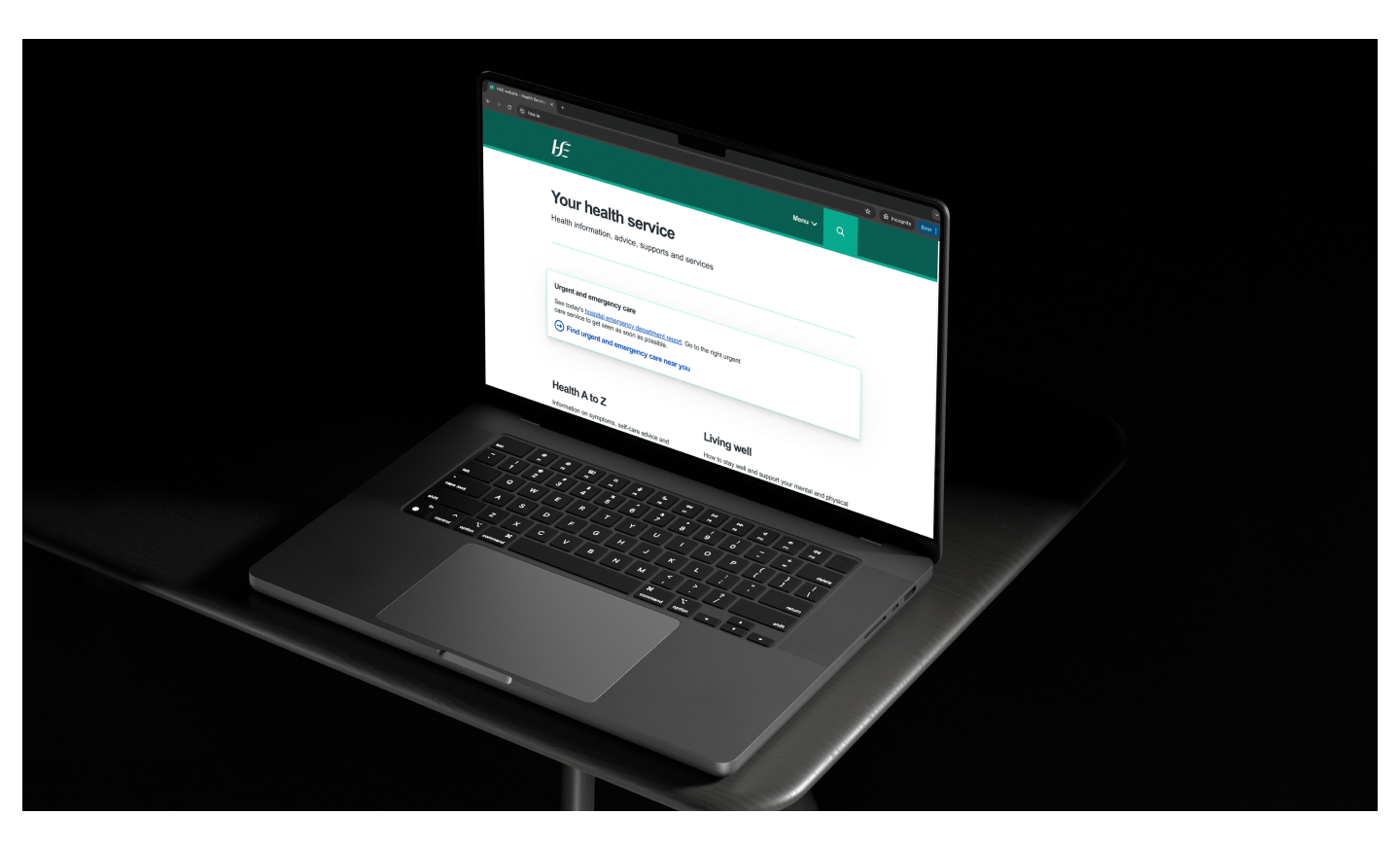
The Health Service Executive (HSE) is Ireland’s public health organisation, providing healthcare services to everyone in the country.
DEPT® has been a strategic partner since 2017, helping HSE improve Irish citizens’ digital access to healthcare services. Through innovation, accessibility, and a user-focused approach, we’ve helped transform HSE into a digital ecosystem that truly serves the people of Ireland.
The vision that started it all
HSE approached DEPT® with a clear goal: to give Irish citizens better digital access to healthcare services.
While they had the vision, they needed help to innovate and bring it to life. We embedded ourselves within their organisation, working as one team. This collaboration enabled us to combine strategy, design, technology, and content to create exceptional digital experiences for patients and employees alike.
How could we use design and technology to make life easier for Irish citizens? By prioritising accessibility and addressing the varying needs of the HSE ecosystem, we helped users find the right content, understand it, and engage confidently with the Irish health service online.

Aligning technology
Technology was the cornerstone of future success. However, HSE faced challenges with an outdated CMS, a rigid tech stack, and limited automation, all of which hindered innovation and scalability.
We implemented the following solutions to align their vision with a robust technical foundation:
- New architecture: Improved service reliability (resulting in zero downtime since launch) and reduced response times by more than 50%. The system now autoscales during periods of high demand and includes regional redundancy for disaster recovery.
- Built-in security: We embedded security protocols from the outset, including penetration testing, reducing risks, and ensuring adherence to high standards. Automated testing allows efficient deployment of developments without additional effort or cost.
- A new CMS: Wagtail, the CMS that powers NHS and Gov.co.uk, was selected for its headless capabilities, security, and flexibility. This approach enabled streamlined content management and the swift deployment of new products.

Improving accessibility for HSE.ie
HSE.ie is the main domain where most users begin their healthcare journey. Our research highlighted key issues:
- Users struggled to find help or engage with the organisation
- Content was outdated and failed to meet basic accessibility standards
- Information often did not align with user intent on search engines, leading to confusion about services
To address this, we created tailored experiences across dedicated subdomains:
- hse.ie: supports users seeking healthcare services
- healthservice.hse.ie: provides resources for staff to perform their duties
- about.hse.ie: explains how HSE operates to the general public
By prioritising accessibility, we transformed the digital experience for millions. The old site’s accessibility score of 65% has now risen to 92%, far exceeding industry benchmarks.
Accelerating products and services
With a new technical foundation and improved accessibility, we turned to HSE’s next major goal: launching new products and services to enhance health outcomes for Irish users.
Thanks to streamlined processes, a headless CMS, and a containerised approach, agile development and deployment became seamless. Within a year, we launched several key products, including:
- Mental Health MindPlan: This tool, developed using Wagtail/Django, React and Salesforce Service Cloud, provides tailored mental health advice. It features a fully accessible user experience, with a +96% completion rate since launch.
- My Diabetes & My Pregnancy: To deliver consistent health reminders, we created an automated digital messaging workflow, complete with data management, email design, and a user-friendly interface.
These initiatives now serve thousands of users and continue to drive meaningful health outcomes.
-
92%
Accessibility score
-
96%
Completion rate for
My Mental Health Plan -
0
Downtime since launch
Looking to the future
We’re proud to support HSE’s mission to improve healthcare for Ireland. By focusing on accessibility, simplicity, and innovation, we continue to deliver value through consulting, technology, and marketing.
What’s next? Our roadmap includes AI integration, supporting the new HSE Patient App, strengthening security measures, and delivering managed technology training. All of this will ensure we provide the best possible service for Irish citizens.
Awards & recognition
Award
Year
Category
Ireland eGovernment Awards
2024
Digital Health & Telemedicine
HDFC Ltd.
Transforming digital experience with Adobe Experience Manager

( Services )
- Tech & Data
HDFC Ltd. has provided mortgage services in India for 45 years, with a high satisfaction rate among its customers.
Appreciating what home buying means for its customers, the brand wanted to make the borrowing process seamless. So they turned to DEPT® to transform their digital experience ecosystem.
Enhancing the digital experience
HDFC Ltd. aimed to deliver higher performance, greater scalability, and more efficient marketing workflows. They also wanted to establish a consistent customer experience across all channels, from the website to the mobile app.
The transition to the new platform was challenging, as the company needed to migrate everything without disrupting current business operations.
In just three months, we deployed a new digital experience ecosystem in seven languages through our Adobe Experience Manager managed services.
Leveraging AEM for seamless migration and enhanced efficiency
First, we performed a necessary site migration to a new CMS. The pre-built core components of Adobe Experience Manager (AEM) helped to speed up website development, reduce costs, and accelerate deployment. Extensive customization options allowed us to meet unique internal requirements and seamlessly integrate website components.
Next, we created a headless architecture for the new environment, which made it easier to optimise content management across channels. This helped the company quickly provide up-to-date and consistent information to home loan applicants.
We also reduced the time of tracking interest rate changes. What used to take up to six hours of a single person’s working day can now be easily accomplished in less than 30 minutes. AEM automation has simplified many other day-to-day processes as well, allowing the team to deliver timely marketing information much faster.
Simplified compliance and lead management
By using Content Snippets, we made it easy to publish disclaimers and other regulatory information that must appear on different pages of loan products. The combined capabilities for creating and automatically publishing from a single console ensured accuracy and compliance with regulatory requirements.
Dynamic real-time creation of forms provided flexibility in the lead generation approach. And a professionally organized AWS database setup using Lambda secured efficient storage and retrieval of lead data.
This made it easy to meet the changing demands of a large enterprise and established a consistent, high-performance experience across various devices and platforms.
Boosting website performance
During the website optimization phase, we implemented sophisticated performance optimization strategies which improved the speed and operational efficiency of the website and helped us meet the needs of HDFC Ltd’s global audience.
We customized SEO changes to accelerate time to market while maintaining flexibility. The changes quickly began to have a positive impact on website traffic and performance.
Delivering tangible business benefits
The HDFC Ltd. expected the site’s performance to improve by about 60% and was pleasantly surprised that the new, faster page load times exceeded those expectations. The site’s performance improved by 75%, which goes a long way in ensuring a positive customer experience.
-
+75%
in site performance
-
+11%
in SEO performance
-
12X
reduction in time tracking interest rates

The sustainable Swiss brand FREITAG, known for their bags and accessories made from used truck tarpaulins, has always stood for individualism. With the new digital tool F-Cut, FREITAG now offers its customers the opportunity to design their very own super unique items. The idea behind it was born 20 years ago – and comes from a DEPT® employee.
Desire for more uniqueness
Each of the approximately 300,000 FREITAG bags and accessories produced each year is unique. A large proportion is manufactured in Zurich, where the truck tarpaulins are dismantled and washed by FREITAG employees before the bag designers cut out the best motifs with their cutter knives and templates and these are then processed into bags.
So far, so good. But more and more often, customers inquire in the FREITAG stores whether a specific bag is also available in another color, with this or that motif. The bag makers have taken these requests for (even) more uniqueness to heart – and fell back on the diploma thesis in which DEPT® employee Severin Klaus invented, designed and programmed the first F-Cut for FREITAG 20 years ago.
Democratisation of bag design
The DEPT® team in Switzerland has been working with FREITAG since 2020 and has, among other things, implemented a bag swapping campaign on Tinder for the brand. Now FREITAG approached us to awaken the online cutting table F-Cut from its slumber together with bag and UX designers, logisticians and many other experts.
The following positioning and visions were defined in a preliminary project:
Democratisation of bag design
Every interested customer should have the opportunity to design their own unique bag according to their own taste, beyond all design guidelines.
Bringing FREITAG’s values to life
Sustainability and individualism come first. The FREITAG Sweat-Yourself-Shops are to be transported from the physical to the digital world by means of F-Cut.
Revival of a classic
The new F-Cut is to be as good as the multiple award-winning 20-year-old original, but even more user-friendly and contemporary.

Linking the offline world with the online world
F-Cut offers a unique combination of rough & real materials with digital perfection and a smooth product configuration – no matter on which device, including 3D preview in real time. In this way, the offline world of FREITAG is linked to the online world thanks to a unique experience.
For F-Cut, DEPT® not only implemented the UX, UI and the 3D preview, but also the back- and frontend. The visual identity, creative direction and copy were done by FREITAG.
From a technical perspective, F-Cut is a web application that combines various systems. On the one hand, there is of course the F-Cut app – the GUI – in which FREITAG customers configure their bags. Then there is the F-Cut backend with a headless CMS, which primarily provides a database and communicates via API with the checkout (FREITAG online store) and of course the F-Cut app. In addition, there are further admin interfaces with everyday tarpaulin management functions (configuration, orders, etc.) and tarpaulin upload, editor and export (DXF) for production.

Bag dreams come true
For the first release, the focus was on the KISS principle (Keep It Simple, Stupid): we limited ourselves to one bag type, the Messenger Bag F712 DRAGNET, which can be designed using four virtual templates from a selection of 20-50 different truck tarps. The designable bag types could be expanded in the future or the bag type could change at fixed intervals.
In order to ensure fairness and equality, new tarpaulins are silently added to the system to exclude disputes about the “good” tarpaulin pieces. Another important aspect for FREITAG was the balance between maximum design freedom and sustainability: leftover tarpaulins are used for accessory products.

A few numbers
The response to the F-Cut has been overwhelming, especially from Japan, Germany and FREITAG’s home market Switzerland.
- The virtual cutting table is very busy – between 40-60 users at a time are designing their own F712 DRAGNET Messenger Bag online every day.
- Since the launch in May 2022, more than 300 digitised truck tarpaulins have been used.
- In addition, FREITAG also received many requests from their fans to introduce F-Cut for other bag models as well.
What’s next?
Already before the go-live, F-Cut triggered enthusiasm both among the DEPT® and FREITAG teams. Several further development projects are already planned: more products and features are to follow. 20 years after the birth of the idea, F-Cut has finally awoken from its slumber and will continue to grow steadily.
Over 20 years ago, I got to implement F-Cut as a student one-man show – to rethink this project now, with the support of a fantastic team, both on the DEPT® side and on the customer side, while exploiting the possibilities of today’s technology, is a great privilege.
Severin Klaus, Tech Director, DEPT®


Meet Chris, Technical Architect at DEPT®.
10 years in, he’s practically part of the furniture. Here he tells us all about his DEPT® LIFE and why he’s stuck around for a decade.
Name: Chris Eccles
Role: Technical Architect
Time at DEPT®: 10 years
Years in the industry: 12 years
About me: I was a keen rugby player until my ankle gave up. Now have to make do with cycling.
A brief history of me
I studied Computer Science at Cardiff University and after graduating, I started my career in PHP development with an in-house development team.
I joined DEPT® over 10 years ago, starting out as a junior in the Service Delivery Support team, which is now known as Deliver Operation Service (DOS). Since then, I’ve had quite the journey, moving up to Junior Developer (.Net), then gradually to Technical Architect, four promotions later.
Life as a Technical Architect
I work on DEPT®’s client projects all the way through the lifecycle. That means I’ll get involved with the initial workshops help define the client’s requirements, develop technical specifications and proofs of concept to demonstrate how DEPT® can help solve their challenges; as well as architect the final product.
The primary part of my role is to lead the development teams that are delivering projects, supporting both front and back-end developers to resolve any technical blockers as quickly as possible. This could be anything that’s stopping them from completing their work, such as hard to replicate bugs or issues with external services. But I also get to collaborate with the wider team, working with designers to ensure the developers have all the creative assets they need to effectively build, and with QA (quality assurance) to ensure the objectives are met and the output quality meets our standards before delivering projects to clients.
A typical working day
I like to start my day bright and early. I set aside focus time in the morning to get through large documentation. This might include writing technical specifications for projects, writing up findings of a POC or prepping for a client workshop. Then I have a series of short ‘stand up’ meetings to get an update on project progression before cracking on with my own project actions throughout the rest of the day.
Developing POCs is one of the highlights for me. It’s about testing technical methodologies and approaches to give ourselves, and our clients, 100% confidence in how it should be delivered to achieve the best results. For example, I recently investigated ways to use Optimizely as a headless solution and set up visual regression testing to assess its effectiveness for a project.
I tend to work from home most days, so the vast majority of my collaboration and communication with project teams is done via Slack and Google Meet, but it’s great to also have days in the office and catch up with everyone. DEPT®’s flexible working policy suits me really well as I had my second child at the start of the pandemic, and I’m able to maintain a strong work-life balance.
The amazing range of projects and technologies I get to work on is what I love most about working at DEPT®.
Room to grow
As DEPT® is such a large agency, there is so much opportunity to learn from others’ experiences and get a different perspective on matters. The team specialises in so many different disciplines, which is great to have access to. For example, the front-end team have much more experience in React than I do, but it’s great to combine their knowledge with my expertise in back-end systems to deliver optimal, full-stack experiences for clients.
I love that I am constantly working on new technologies and have the time and space to do POC work for innovative new projects coming into the business. Digital technology moves so quickly, and it’s imperative to keep up, which we have the capacity to do at DEPT®.
When I started at DEPT® I had only ever worked in Java and PHP. Now, 10 years on, I’ve worked on CMS technologies like SDL Tridion, Sitecore and Optimizely, amongst multiple others. As well as working with different languages such as .NET, SQL, Razor, React and Angular as well as front end frameworks like Next.JS and Razzle.
I’m thankful to DEPT® for always giving me the opportunity to dedicate time for training and develop new skills, in turn helping me to learn and grow constantly. Also, a big shout out to the amazing colleagues and mentors I’ve had over the years!
Are you ready for the next stage of your career? Explore our open roles today!

More Insights?
View all InsightsQuestions?
Senior Recruiter
Sarah Wilkinson

Face-to-face meetings between buyers and suppliers have always been central to building an ongoing relationship in the B2B world. Both parties benefit from the personal touch, and the ease of airing out any queries and sorting potential issues. With the coronavirus pandemic cancelling every booked face-to-face for the foreseeable future, buyers are now looking for a digital solution to the challenge.
At the same time, disruption to factory production has broken links in the global supply chain, creating the added challenge of buyers potentially needing to source new suppliers who are able to deliver. If lockdown measures have limited production or forced the temporary closure of a factory, these potential buyers need to be able to quickly find the solution that your business is offering.
Supply chain disruption, combined with the difficulty of running in-person meetings, means the manufacturing sector must consider alternative options. McKinsey’s recent ‘Global B2B decision maker response to COVID-19 crisis’ survey covered what B2B decision makers are looking for when researching suppliers, tracking the importance of different digital features in this new marketplace. The survey looked at the UK, France, Italy, Spain,Germany, China, India, South Korea, Brazil and the US, and found that across the board, there’s an increase in demand for digital self-serve options that empower buyers to find their solution.
Onsite search is a priority
Across all surveyed countries, when asked “what ways of interacting with a supplier would be most beneficial to you when researching/considering suppliers going forward?”, the most popular choice was onsite search. Can a buyer visit the company website, search for the product they are looking for, easily find more information, and process their order?
It’s important to consider this in terms of the purchase journey. Onsite search often comes early on; a quick guarantee that this company can supply the product they need. After the first point of contact, whether it’s a call, email, piece of direct mail or a self-initiated Google search or referral, the company website becomes the most important reference point, always answering questions that a potential customer may have.
For this reason, every manufacturer and supplier needs to ensure there is a search option onsite and that existing product and information pages are up-to-date with relevant information. Your CMS or commerce platform may provide a simple search feature to add to the site, but optimising the content for search requires a little more work.
From a UX perspective, a visible and well-defined search bar will make it quick and easy for anyone to find products and information. This will result in fewer clicks and less time spent on the homepage. A faceted search will enhance the general search, enabling users to narrow down their search to category, price, product options and custom fields. All of this will improve the customer experience and help customers find what they’re looking for, quickly and easily.
Having a well optimised on-site search also has the added benefit of providing further insight into what buyers are looking for and what the roadblocks to purchase are. This information is gold dust; it either shows demand, or it shows opportunity. For example, a product selling at a fairly low rate could actually be getting high search volume, indicating a potential opportunity for the business to push this product to the fore.
These search stats insights can also inform your business of developing trends in terms of customer demand or common difficulties. While there is nothing better than speaking one-to-one with a client about the challenges they are facing in the coming weeks, months and years, having clients visit your site and type their challenges into the search bar is a close second. Use this to tool your sales team with information on what common challenges are driving discussion in the industry. It’s also useful in optimising the messaging of onsite copy and any marketing campaigns your business is running. Reviewing search logs can also guide your business on what is currently missing from your site.
The preference for onsite search shows two important points. The buying and research process is digital-first and driven by self-serve opportunities. This shows a drift towards on-demand information, giving buyers the ability to research at their own pace. This is backed up by the second preference — live chat. Rather than scheduled phone calls or back and forth emails, buyers are opting for the on-demand option, enabling them to engage with potential suppliers when it suits their schedule.
Improving the customer experience with live chat & chatbots
A strong live chat system combines automated and staffed solutions. Like a customer service line, live chat conversations typically begin with a light automated opening that directs the visitor to the appropriate colleague for this conversation. Parts of this can be decided in the background, such as knowing which page the visitor is on and using this information to inform which representative joins the live chat.
The added bonus for companies implementing a live chat or chatbot feature on-site comes through an extra customer services option; through a flow of automated responses, a chatbot can help current customers find a quick solution, taking the strain off of call lines.
When looking at the surveyed countries in Europe, there is a soft preference for sales rep led interactions, showing the importance of a personal touch, even in an increasingly digital market. Germany, Spain, Italy and the UK all name face-to-face meetings in their top three ways of interacting with suppliers; a major challenge during the lockdown period.
The clear lockdown replacement is video calling. What is often ignored is the idea of availability. It’s generally understood that if a buyer wants to call a supplier, they can pick up the phone and dial a number listed on the site. The culture does not yet exist around video calling, meaning companies need to make it clear that their sales reps are ready for video calls should a buyer want to talk face-to-face.
Update your site design with information about video calling as an option, and speak about it in your outreach and marketing. Proactive options include video consultancy sessions, organised on a one-to-one basis or a gated livestream, available to viewers that sign up. This broadcasts the point that your business offers video conferencing to current and potential clients that are still interested in face-to-face discussions. With sales reps working from home, keeping the CRM system up to date with information from these video calls is a top priority.
Looking across to the APAC region, Brazil and the US, digital self-serve options fill the priority touchpoints for buyers, from apps to websites to social media. Knowing that these regions prioritise digital and self-serve is useful for suppliers and manufacturers in Europe that sell internationally.
Increasing agility with headless
If you operate internationally, the already complex task of managing localisation is currently heightened, given the varying level of COVID-19 restraints in your operating markets. To speed up the delivery of localised messaging, content and microsites, you can consider moving to a headless technical architecture for your content management.
A regular CMS connects a single front end (the sales channel that a customer interacts with), to a single back end (the operational side that processes payment and data and keeps the channel running). In this setup, changes to the front end must be reflected in the back end. This creates a fair amount of work if a company is running multiple websites, an app, or mobile-specific sites, as any updates must be repeated across each sales channel. A headless CMS connects each front end into a single back end. This means edits can be made to the front end without requiring a constant update to the back end. Launching new sites or creating an app for these new markets is a much more agile process with a headless architecture. For more of a deep dive into the benefits of headless and when to consider it, check out our recent article about ‘Moving with speed and agility with headless systems.’
It’s important to remember that this shift has been accelerated by the COVID-19 crisis, rather than being caused by it. The drift towards digital and self-serve options in the B2B space is part of an industry-wide move to online and on-demand that’s been building momentum over the past couple of years. Reorienting your operations to be more digital ensures relevance during the pandemic, but also provides a platform for the company to stay at the forefront of how buyer and supplier relationships function.
Each adjustment the business makes now should factor in the multi-year strategy for the business, an initial change that leads to a much wider digital transformation. Now is the perfect time to review your digital roadmap and accelerate the digitalisation plans that will make the biggest impact as we enter a period of recovery. To get started, check out our article, ‘How to Create a Tactical, Strategic Response to COVID-19’
More Insights?
View all InsightsQuestions?
Global EVP Technology
Jonathan Whiteside

The process of building an ecommerce platform can seem like new ground to many B2B CEOs. Understanding the array of software options on the market, learning new phrases like ‘headless commerce’, being able to distinguish between a CMS and a DXP. These surface level barriers can scare some away, but by digging a little deeper, every company head will find themselves in familiar territory.
A successful B2B commerce platform is built on an in-depth understanding of the customer. Awareness of customer needs. Knowing what causes friction in the purchasing process and how to work around it. The leadership team are experts in their industry and know what makes their customer base tick. By stripping away the excessive acronyms and complicated definitions, B2B commerce comes down to knowing what customers need.
At its very core, digital transformation is about making your company’s assets go further. Can the innovative thinking of the leadership team be implemented quicker? Can insights gathered from customer data be applied to other areas of the business? Can consumers be given an easier path to purchase? Digital transformation magnifies strengths by focusing on scalable improvements.
Brenntag: building a digital chemical business
For Brenntag, a German chemical distributor operating in 76 countries, implementing a digital transformation began with an appreciation of their industry. Brenntag’s world, the chemical sector, is heavily physical. However, digital transformation touches on each aspect of the business. At every turn, innovative digital approaches could be used to optimise and improve the efficiency of internal processes, and ease the experience of customers.
The process of digital transformation was split along internal and external improvements that could be made. Working with DEPT®, the company put together a system of Internal Tooling that set out to improve the efficiency of their everyday, internal processes. This includes features like Brenntag Source, an application for reviewing supply chain data.
Use existing supply chain data to help your clients
The Brenntag Source feature can be used to filter data on different suppliers, giving Brenntag the information they need to engage in informed face-to-face negotiations with suppliers.
For the customer, this information can be turned into tracking software, keeping the buyer updated about the delivery of their purchase, and also informed about the sourcing, materials and manufacturing of their order. Good customer experience is what drives repeat purchasing, particularly in the manufacturing sector where trust is a key business driver. This added value can be what sets the company apart from its competition, as it puts the customer at the centre of the process, answering every question they may have.
On the external side, Brenntag Connect was created, an ecommerce portal that provides customers with information on the chemicals and orders that Brenntag provides, as well as a platform to track their security data, invoices and orders.
Make repeat purchasing a top priority
When planning a B2B commerce platform, it is important to think of the sector specific rules that affect how it can be used. Due to the regulated nature of the chemical industry, Brenntag Connect is only available for customers that have gone through an intensive onboarding process. This means that users of the platform are likely to be committed, long term customers, therefore making repeat purchasing easy was a top priority. To this end, Brenntag implemented an automated repeat business function.
One of the key challenges for any commerce platform project is to establish a long term strategy. To start putting a system like this in place, put together a list of needs that the platform must fulfil. From this information, build a digital roadmap that outlines the steps your business will take over the next three years, each time responding to a customer need.
Digital transformation is a step-by-step journey, not an overnight makeover. By beginning with priority areas based on customer needs, your company can start serving customers better and begin the process of learning and adapting your e-commerce approach.
Like any map, the route is liable to change based on real time information. Data capture is a core need for any project, informing and ensuring that the decisions and actions taken are correct. What we measure, we can affect. In terms of a digital roadmap, see the data as you would see live traffic updates. Be ready to get past roadblocks by adapting the route.
To keep their digital transformation on track and ensure, Brenntag built DigiB, a digital innovation hub that operates autonomously from Brenntag. The organisation aims to rapidly accelerate their technological innovation across the business, running small scale projects that have the potential to scale, and aiding the implementation as Brenntag finds new, more efficient ways of operating.
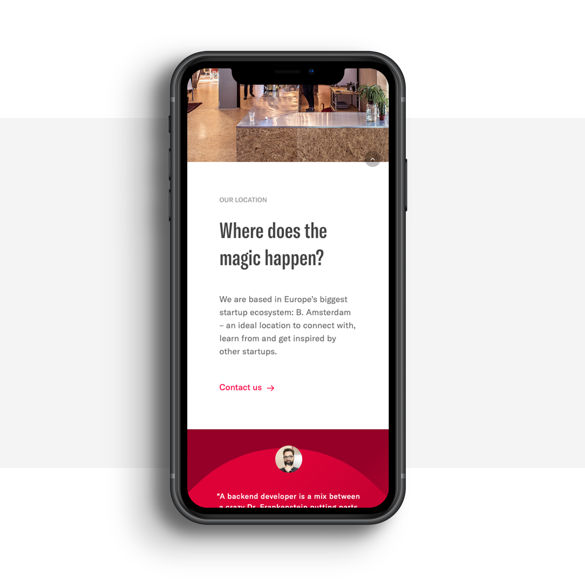
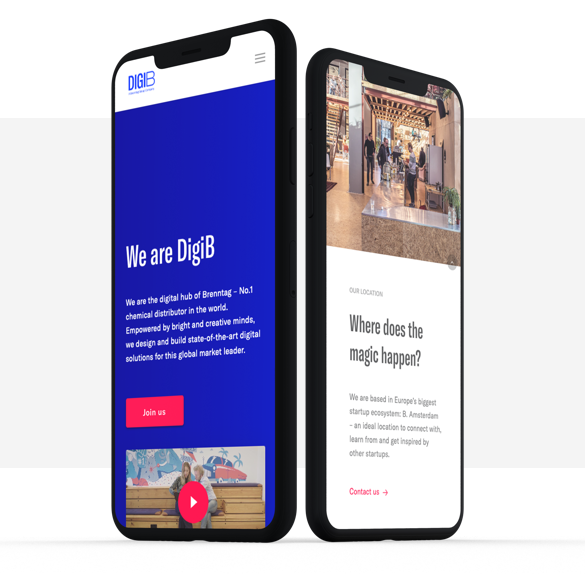
The guiding motto of DigiB is “create it, launch it, learn from it.” Rather than taking the time to perfect every single release, adding months to the lead time, DigiB focuses on putting new projects into the marketplace. Release a smaller scale project. If it works, scale it up, if it doesn’t, take a step back and learn from the problems that users experienced. This way, every project is a worthwhile endeavor, creating a ‘succeed or learn’ mentality that fosters a strong corporate mentality.
Being able to create a company-wide culture that believes in the digital transformation project matters, as each department is able to offer input on how the key business goals can be achieved. Sales teams will be speaking to current and potential customers day in, day out. Operational teams will be using the internal tools each day, able to give feedback on what works and what is still missing.
Each business will have a different priority when it comes to building a B2B ecommerce platform. This depends on the customer needs in each sector, and any pressures that are placed on the business by industry regulations. The list below looks at some of the most common priorities, though each business is different.
Making product discovery clear and simple
Companies with a wide array of available products or services will benefit from making sure that the site is built to provide easy-to-understand information on each product. On each product page, aim to answer any question the customer could have; keeping the customer on the product page means more proximity to the checkout.
Easy product discovery also means clear categorisation of products. Many B2B suppliers and distributors provide highly specialised products; it is the company’s responsibility to make finding the appropriate specialised product simple. The less friction in the buyer’s journey, the more likely they are to purchase.
Enabling site search
An undervalued benefit of building an e-commerce platform, site search is an obvious boost to user experience, but also an important data gathering tool. For many visitors, site search is how they engage with the site. It’s the bridge between each page, expediting the process of finding a product to buy. In terms of user experience, various features can be implemented to aid their search, such as autofill, search correction suggestions, and the ability to filter results. For visitors that are used to the features offered by Google, these additions to site search are less an added bonus and more of an expectation.
With site search implemented, make sure to review the analytics software to follow the journeys that users take around the site. Each business spends a good chunk of time trying to understand buyer journeys; this feature gives users the ability to track each journey to purchase.
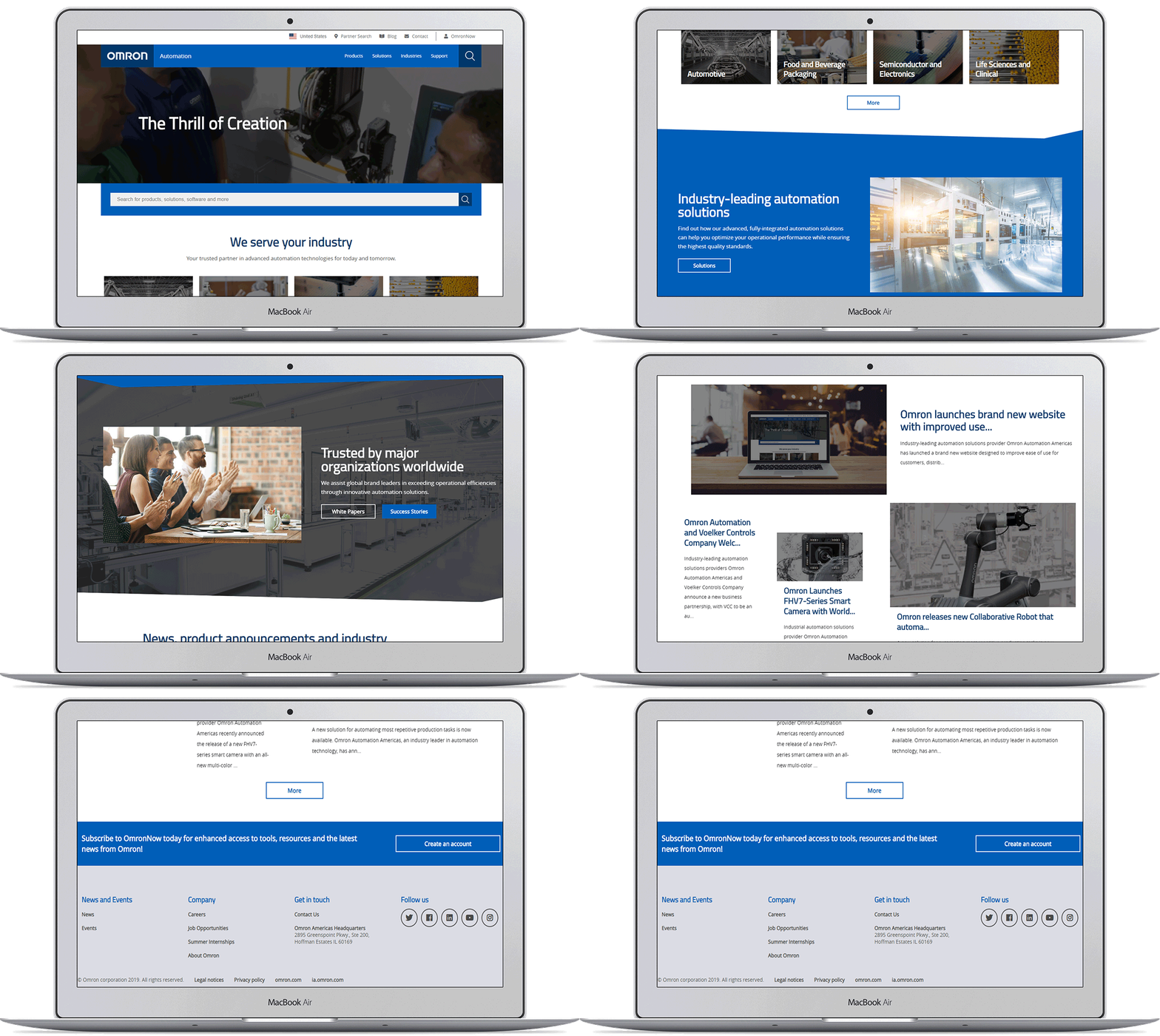
By putting an advanced search tool in place, your business is able to see the key information that customers gravitate towards. It also Indicates missing content that the business should create – the questions customers are asking but not finding the answer to. The business can also see which additional purchases are considered, but not added to the basket, showing potential sales activations to use. Working with Omron, DEPT® used site search analytics and the onsite tracking software Hotjar to see how the architecture of the site was impeding users from checking out.
Putting all this together, the information can be used to provide a much more personalised experience for each visitor. Personalising the shopping experience boosts e-commerce sales, in DEPT®’s ‘What Do Consumers Really Think Of Personalisation?’ study, we found that 38% of consumers would spend more if a brand uses personalisation relevant to their needs. For Omron, this resulted in a tailored experience based on whether the visitor self-identified as a distributor, a system integrator, an employee, an end user, or a member of the press. Giving the appropriate information led to a 20% fall in bounce rate and a doubling of the average number of pages visited per session.
Logistics, lead time and availability
For a B2B commerce platform, providing detailed information on the manufacturing, shipping and delivery time is a key addition. Availability too, as nothing is more frustrating than finding the right product only to see it’s unavailable. This information is vital to future planning. It helps the customer plan their purchases and ensures they fit the time scale of their project. In an increasingly eco-conscious economy, being able to review shipping options and sourcing of products also allows the company to make the right decision based on environmental impact.
As a B2B supplier, think of the common questions that customers would ask, and that your business would ask of a supplier. Aim not only to answer these queries, but to make the answers highly visible and in close proximity to the purchase.
Product comparison
For suppliers that offer a wide range of similar products, particularly those that specialise in a particular niche, giving site visitors the ability to compare products is an important benefit. Not only can they compare in detail each product, they are also more likely to make the right purchase, boosting their opinion of the brand and making the customer more likely to return.
Crawl, walk, run
Whether your business is highly fluent in digital projects or new to the space, the journey to running a market-leading e-commerce platform begins with the first step. Rather than aiming to release the perfect platform, begin with agile projects. Focus on making an impact sooner rather than later and seeing what can be proved and what can be learned. Steady rollout of further features will create a system of constant improvement, always aiming to iterate and optimise. Each success will be reflected by customer sales and preference for your business.
More Insights?
View all InsightsQuestions?
Global EVP Technology